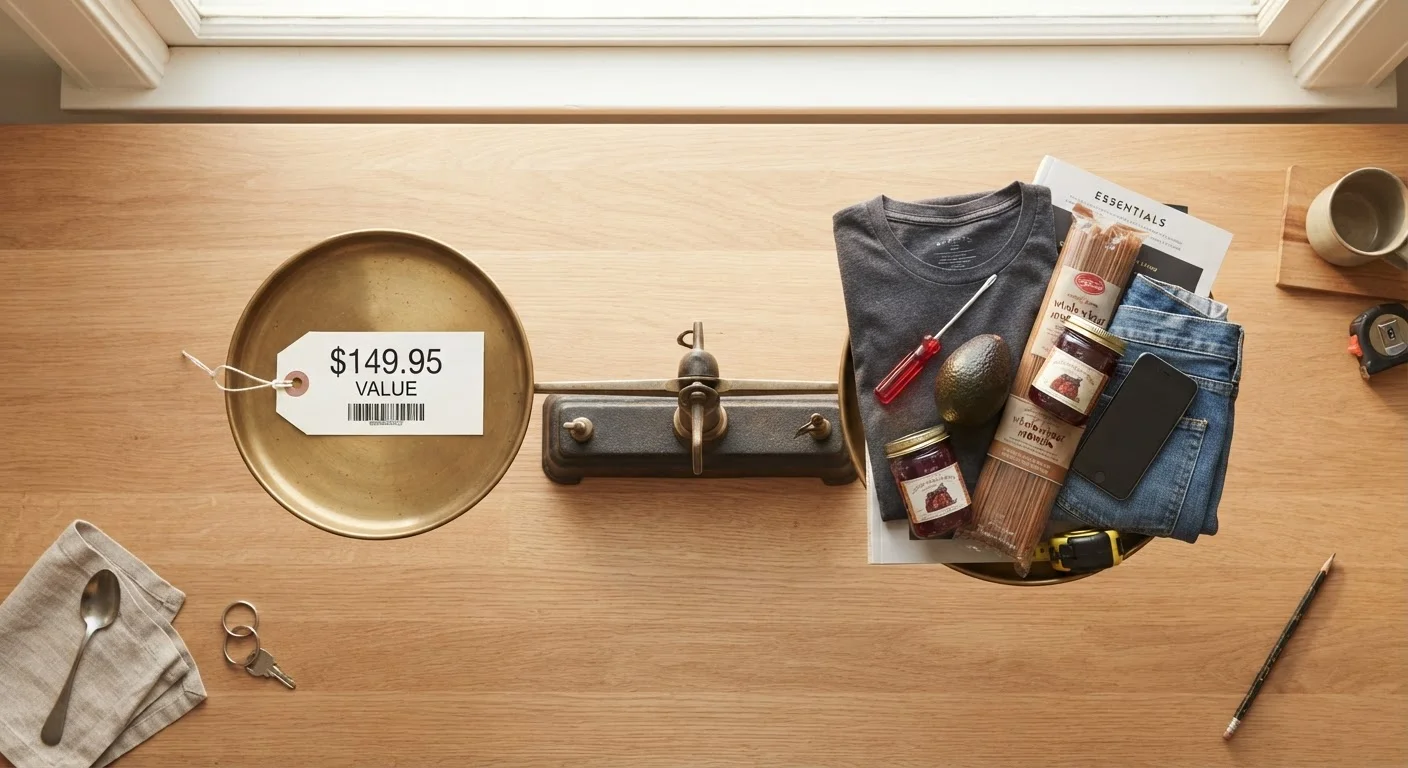
Why 'Value' Is More Than a Synonym for 'Cheap'
When a retailer advertises something as a 'great value,' what they usually mean is that it's inexpensive. But price alone tells you very little. A $15 kitchen gadget that breaks in a month is not valuable - it's just cheap. Real value for money means your purchase delivers meaningful benefit relative to what it cost you.
Consumers who conflate value with low price often end up spending more over time. They replace cheap items repeatedly, buy products they never use because the price seemed irresistible, or choose the budget option in categories where durability actually matters. Understanding what value genuinely means is the foundation of better purchasing decisions - and of building and sticking to a sound budget. See the budgeting basics hub for practical frameworks on tracking where your money actually goes.
Pause Before the Purchase
A 24-to-48-hour delay on non-essential purchases is one of the most reliably effective ways to separate genuine value from impulse. Ask yourself: would you drive across town specifically to buy this item at full price? If the honest answer is no, the deal framing - not actual value - is doing most of the work.
The Four Dimensions of True Value
Measuring value for money requires looking at four factors together, not in isolation:
- Cost: The upfront price, plus any ongoing costs like maintenance, subscriptions, or consumables.
- Quality: How well the item performs its intended function, assessed by specs, materials, and independent reviews - not marketing copy. This connection between price and quality is less automatic than many assume. Price and quality don't always move together - it's worth knowing when that correlation holds and when it doesn't.
- Longevity: How long the item will realistically remain functional and useful before needing replacement or repair.
- Personal utility: How often and how meaningfully you will actually use it, given your real habits - not your aspirational ones.
No single dimension tells the full story. A durable, high-quality item that you use twice delivers poor value. A moderately priced item you use every day for five years can deliver exceptional value.
72%
Consumers who regret impulse purchases
According to a 2023 CreditCards.com survey, nearly three in four Americans reported making at least one impulse purchase they later regretted.
5-10×
Cost difference: replacement vs. repair
Consumer research broadly finds that replacing a durable goods item outright costs five to ten times more over a decade than maintaining and repairing a quality original.
Cost-Per-Use: A Practical Measuring Tool
One of the most actionable ways to evaluate value is cost-per-use math: divide the purchase price by the realistic number of times you'll use the item over its lifespan. The result reframes what 'expensive' actually means.
A $180 pair of work shoes worn five days a week for two years works out to roughly $0.35 per use. A $40 pair worn twenty times before falling apart costs $2.00 per use - nearly six times more per actual use. Rethinking what expensive actually means through cost-per-use is a core skill in avoiding the cheap-equals-valuable trap.
This framework also forces honesty about personal utility. A $300 piece of exercise equipment has strong value potential - but only if you actually use it regularly. Overstating projected use is one of the most common ways consumers talk themselves into low-value purchases.
What Distorts Our Sense of Value
Several forces reliably push consumers toward purchases that feel valuable but aren't:
- Anchor pricing: Showing a high 'original' price makes a discounted price feel like a deal, even if the original was inflated. The comparison distorts your perception of what the item is actually worth to you.
- Scarcity and urgency cues: 'Only 3 left' or 'sale ends tonight' short-circuits deliberate evaluation, which is exactly what retailers intend.
- Brand premium confusion: Brand reputation is sometimes a reliable quality signal - but often it reflects marketing spend more than product performance. The words we use about money shape our thinking too: understanding the difference between cheap and affordable helps clarify what you're actually evaluating.
- Sunk cost reasoning: Buying accessories for a product you've already purchased - even when you rarely use the original - feels logical but often isn't.
Value Varies by Category
The relationship between price and real-world benefit isn't uniform across all product types. In some categories - tools, footwear, mattresses - quality premiums often translate directly into longer useful life. In others - basic pantry staples, many cleaning supplies, generic medications - the premium version rarely outperforms the standard one in practical use. Knowing which category you're shopping in changes the calculus significantly.
Applying a Value Lens Before You Buy
Before any significant purchase, a short set of questions can reorient your thinking toward genuine value:
- What specific problem does this solve, and do I actually have that problem regularly?
- What is the realistic cost-per-use over the item's expected lifespan?
- Am I paying for quality I'll notice in use, or for branding and packaging?
- What is the cost of not buying this - is there a lower-cost alternative already in my life?
Value for money is ultimately personal. Some spending categories reward paying more; in others, the premium adds little real-world benefit. Knowing which is which - and matching that knowledge to your own habits - is what separates informed spending from reactive spending.