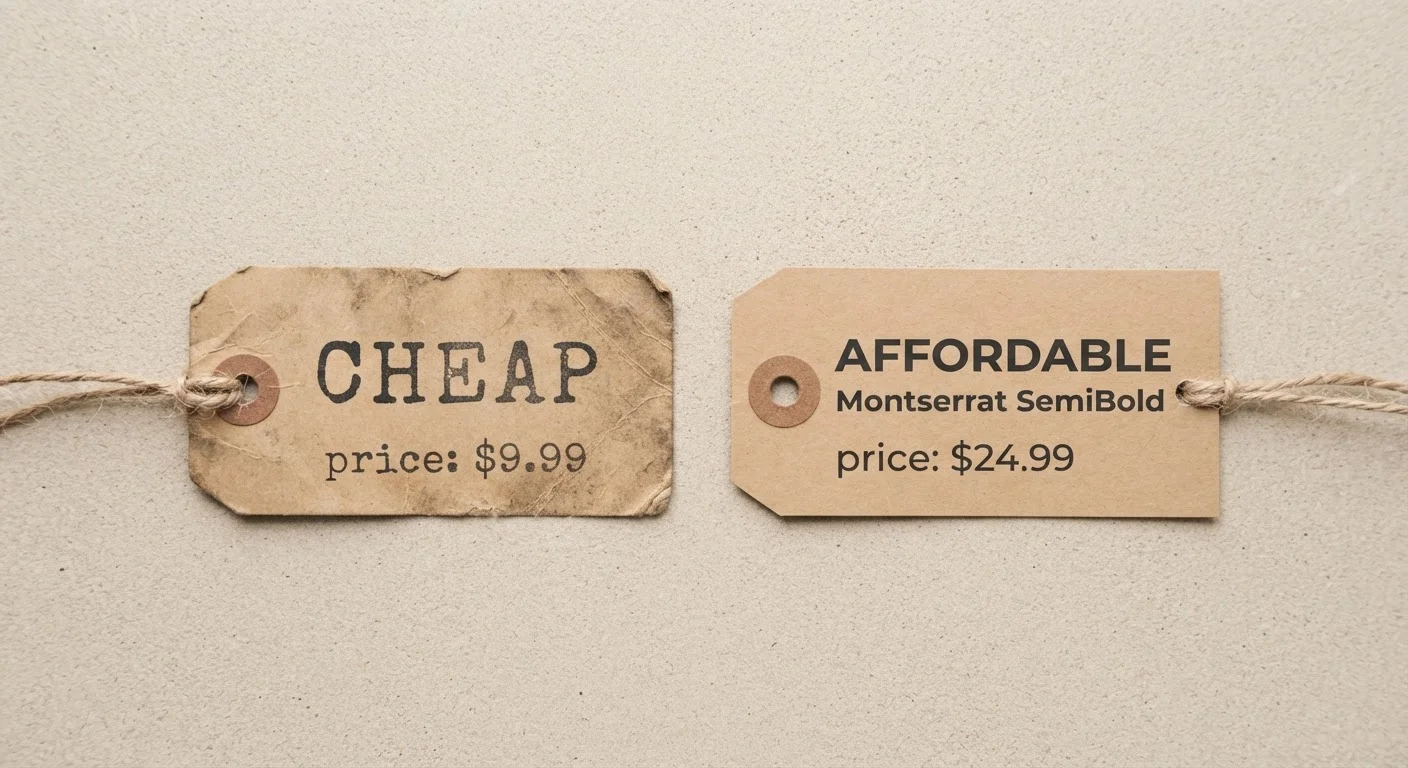
Two Words, Two Very Different Frameworks
"Cheap" and "affordable" appear in the same conversational breath so often that most people treat them as synonyms. They're not. The distinction is more than semantic - it reflects fundamentally different ways of evaluating whether a purchase makes financial sense.
Cheap is a descriptor of absolute price. It means the number on the tag is low relative to other options in that category. That's the entire analysis. Whether the item fits your budget, whether it will last, whether it delivers the utility you need - none of that is embedded in the word "cheap."
Affordable is a relational concept. It means a price is manageable within your actual financial circumstances. An item is affordable when acquiring it doesn't strain your budget, compromise other financial priorities, or require you to absorb costs - in quality, durability, or replacement - that will outweigh the initial savings.
This matters practically. See our guide to measuring true value for a framework that applies this distinction across everyday purchases.
| Criterion | Cheap | Affordable |
|---|---|---|
| Primary focus | Lowest absolute price | Fit within personal budget |
| Quality consideration | Not factored in | Weighed against cost |
| Time horizon | Immediate transaction | Total cost over time |
| Budget awareness | Not required | Central to the decision |
| Risk of buyer's remorse | Higher | Lower |
| Decision process | Price comparison only | Needs, budget, and value |
Why "Cheap" Can Be Expensive
The paradox of cheap is that it frequently costs more over time. A low sticker price can mask a high total cost of ownership - the sum of purchase price, maintenance, replacement frequency, and any downstream costs the item generates.
Consider a $15 kitchen tool versus a $45 version of the same item. If the $15 version fails within a year and needs replacing twice before the $45 version would need its first replacement, you've spent $30 on the "cheap" option to achieve the same functional lifespan - and paid more. Cost-per-use math makes this concrete: divide the price by the number of times you'll realistically use the item.
This dynamic shows up in clothing, too. The difference between cheap and inexpensive clothing illustrates how fiber content, construction quality, and care requirements all affect what you actually pay across a garment's useful life.
1 in 3
Americans report impulse purchases they regret
Consumer behavior research consistently finds that price-first decisions - rather than budget-first decisions - are a leading driver of post-purchase regret.
2-3x
Potential replacement cost of cheap vs. durable goods
When low-cost items fail significantly earlier than better-constructed alternatives, the replacement cycle often doubles or triples the apparent savings.
How to Apply "Affordable" as a Decision Filter
Treating affordability as your benchmark - rather than lowest price - requires a short checklist before committing to a purchase:
- Does it fit my budget without displacing a higher-priority expense? If buying this means skipping a savings contribution or delaying a bill payment, the price is not affordable for you right now, regardless of how low it is.
- What is the likely total cost? Factor in accessories, maintenance, replacement parts, and how often you'll need to repurchase. A higher upfront price sometimes correlates with lower total cost.
- Does it serve the actual need? A cheap version that partially meets the need - requiring workarounds or extra purchases - isn't affordable. It's incomplete.
Building this habit connects directly to foundational budgeting basics: knowing what you can spend before you shop changes how you evaluate price entirely.
Affordable Is Always Personal
What's affordable for one household may be a genuine financial strain for another - and vice versa. The same $80 item can be a sensible investment or an irresponsible splurge depending entirely on someone's income, fixed expenses, and savings goals. There is no universal affordability threshold. That's precisely why building a working budget before evaluating prices - rather than after - is the foundational move.
Language as a Financial Tool
The words we use internally when shopping influence the questions we ask. "That's cheap" tends to short-circuit analysis - low price signals approval and the decision moves forward. "Is this affordable for me?" prompts a different internal process: it requires you to reference your budget, weigh alternatives, and consider long-term fit.
This isn't purely theoretical. Consumers who frame purchases in terms of personal financial fit - rather than absolute price - are more likely to avoid buyer's remorse and impulse spending. Understanding this is part of broader saving and debt management literacy.
For a broader look at how financial language shapes decisions, our overview of commonly confused financial terms covers other word pairs where small distinctions carry significant practical weight.
This article is for general informational and educational purposes only and does not constitute financial advice. For guidance tailored to your personal financial situation, consult a qualified financial professional.