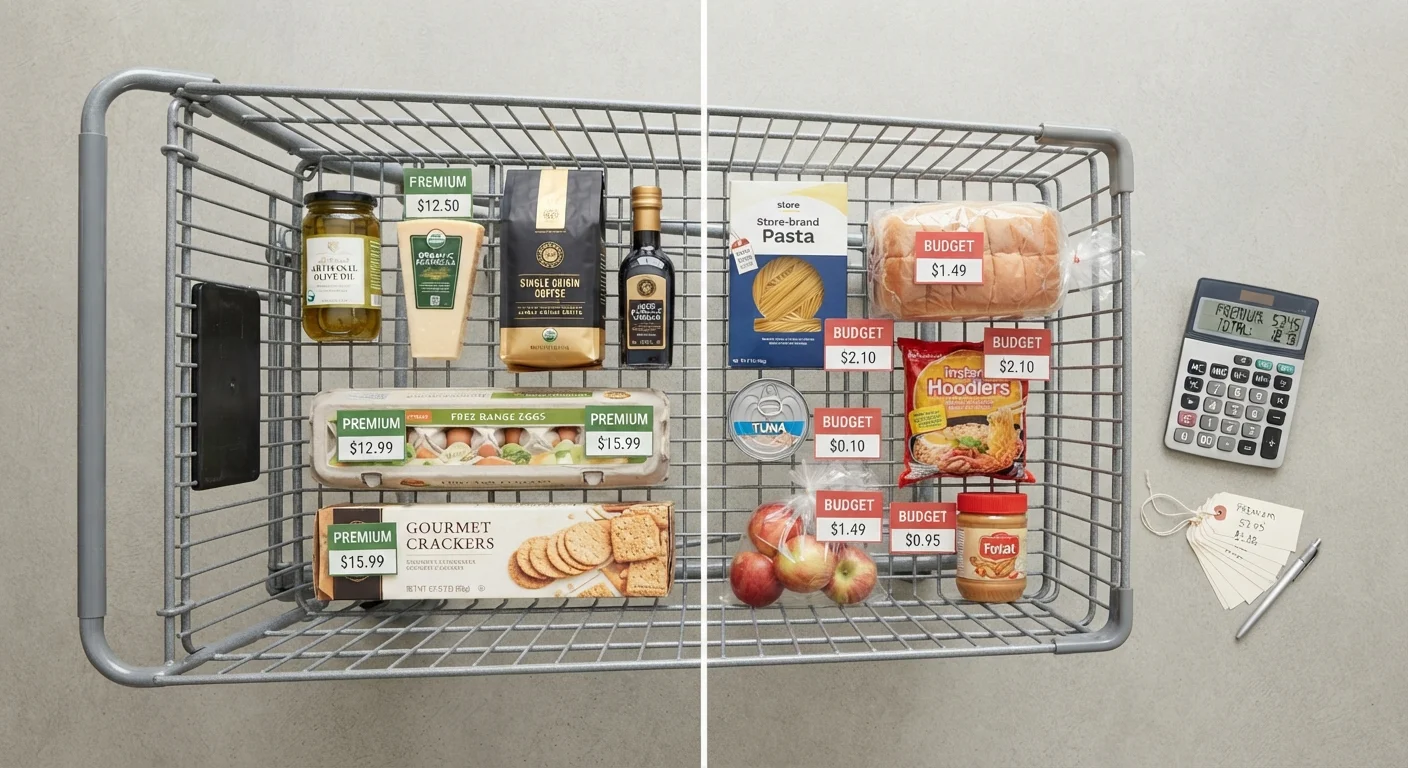
Why the Same Rule Doesn't Apply Everywhere
The instinct to equate higher price with higher quality is deeply ingrained - and not entirely wrong. But it's applied far too broadly. Research in consumer behavior consistently shows that the price-quality correlation is strong in some product categories and nearly nonexistent in others. The result is that shoppers routinely overpay for things where spending more yields no real benefit, while sometimes cutting corners in areas where quality genuinely matters.
This isn't about being cheap or splurging - it's about being precise. As our analysis in Higher Price, Higher Quality? Examining a Stubborn Assumption explains, the correlation between price and quality holds under specific conditions: when quality is hard to assess before purchase, when the product must endure stress over time, or when safety is involved. Outside those conditions, you're often paying for branding, packaging, or placement.
The list below breaks spending categories into two groups - those where a quality premium is generally justified, and those where it rarely is - giving you a practical framework to apply before any significant purchase.
Footwear for daily use - worth the premium
Shoes you wear every day are in direct contact with your feet for hours at a stretch and bear real structural stress. Mid- to upper-tier footwear typically uses denser midsole foam, more durable outsole rubber, and better arch-support construction - differences that translate into reduced foot fatigue and longer product life. A pair lasting three to four years at a higher upfront cost often works out cheaper per wear than a budget pair replaced annually. Safety footwear for work environments (steel-toe, slip-resistant) is an especially clear case where cutting corners on price creates measurable risk.
Durable footwear lasts years longer, making the higher upfront cost a genuine long-term saving.
Mattresses and sleep surfaces - worth the premium
Sleep quality has well-documented effects on cognitive function, immune response, and mood. Mattress construction - coil gauge, foam density, edge support - varies significantly across price tiers and affects both comfort and longevity. A mattress that loses support within two years forces replacement costs and potentially contributes to poor sleep. Mid-range and higher options from established manufacturers tend to hold their support longer. This is also a category where warranties and return policies are meaningful indicators of manufacturer confidence in the product.
Mattress quality directly affects sleep, and poor sleep has measurable health consequences worth avoiding.
Cooking oils, staple pantry items - rarely worth the premium
Commodity kitchen staples - cooking oils, flour, salt, sugar, dried pasta, rice - are among the clearest cases where store-brand or generic options match name-brand products by nearly every measurable standard. The underlying commodities are often sourced from identical suppliers; the price difference reflects label and marketing spend. Consumer Reports and similar independent evaluations have repeatedly found that generic pantry basics perform on par with their premium counterparts in taste and cooking tests. Redirect what you save here toward categories where quality differences are real.
Generic pantry staples routinely match name-brand performance - the price gap is largely marketing.
Power tools (regular users) - worth the premium
For occasional DIY projects, a budget drill or saw may be adequate. But for anyone using tools regularly - contractors, serious hobbyists, people tackling repeated home improvement work - higher-quality tools built with better motor windings, chuck tolerances, and housing durability pay for themselves in reduced replacement frequency and more consistent results. The calculation shifts meaningfully with usage frequency: a tool used weekly faces dramatically more wear than one pulled out twice a year. Evaluate purchase decisions on projected use, not on whether the tool works in the store.
Frequent tool use accelerates wear - professional-grade construction pays off the more often you reach for it.
Over-the-counter medications (generics) - rarely worth the premium
The U.S. Food and Drug Administration requires that generic over-the-counter drugs contain the same active ingredient at the same dosage and meet the same efficacy standards as brand-name equivalents. The price difference - often 30-60% - reflects the original brand's marketing and patent recovery costs, not a difference in the medicine itself. Ibuprofen is ibuprofen; antacid active compounds are standardized. Store-brand versions of common OTC medications are one of the most well-supported areas where consumers can confidently spend less. Always read labels and consult a pharmacist for questions about specific formulations.
FDA-regulated generic OTC drugs contain identical active ingredients - the brand premium is purely marketing.
Car tires - worth the premium
Tires are the only contact point between a vehicle and the road, and performance differences between budget and quality tires are measurable in stopping distances, wet-weather handling, and tread longevity. Independent automotive testing organizations have documented meaningful braking distance gaps between low-cost and mid-to-upper-tier tires - differences that matter significantly at highway speeds. Tires are also a category where false economy is dangerous: a set that wears faster or performs poorly in rain creates safety risk, not just inconvenience. For more on where auto spending assumptions go wrong, see our piece on premium gasoline myths - a related case where paying more often yields no benefit at all.
Braking distance differences between budget and quality tires are measurable - and critical in emergencies.
Bottled water and filtered water pitchers - rarely worth the premium
Premium bottled water brands often command significant markups over municipal tap water or basic filtered water, but the safety and mineral content claims behind those markups are frequently overstated. In the U.S., tap water is regulated by the EPA and must meet stringent safety standards; many municipal supplies test comparably to or better than bottled alternatives. High-end water filter pitchers face a similar analysis: basic activated-carbon filters certified to reduce common contaminants perform the core job adequately. Spending more on elaborately marketed water products rarely delivers proportionate improvement in safety or taste.
EPA-regulated municipal tap water meets strict safety standards that expensive bottled alternatives rarely surpass.
Putting It All Together
The clearest takeaway from this framework is that smart spending isn't uniform. It's strategic. Routing dollars toward categories where quality differences have measurable, lasting consequences - and pulling back in commodity categories - is one of the most practical budget moves available to everyday consumers.
Apply the 'failure cost' test
Before paying a premium, ask: what happens if this product fails early or performs poorly? If the answer involves safety, health, sleep loss, or expensive secondary costs, the premium is more likely justified. If failure just means mild inconvenience or easy replacement, the case for spending more weakens considerably. This single question filters most purchase decisions quickly.
If you're evaluating where your overall spending is allocated, the Budgeting Basics hub offers straightforward strategies for tracking and adjusting category-level expenses. And when you're weighing whether loyalty programs or straight-up lower prices deliver more value on routine purchases, see our breakdown in Loyalty Programs vs. Simply Paying Less.
The goal isn't to spend less everywhere - it's to spend well where it matters.