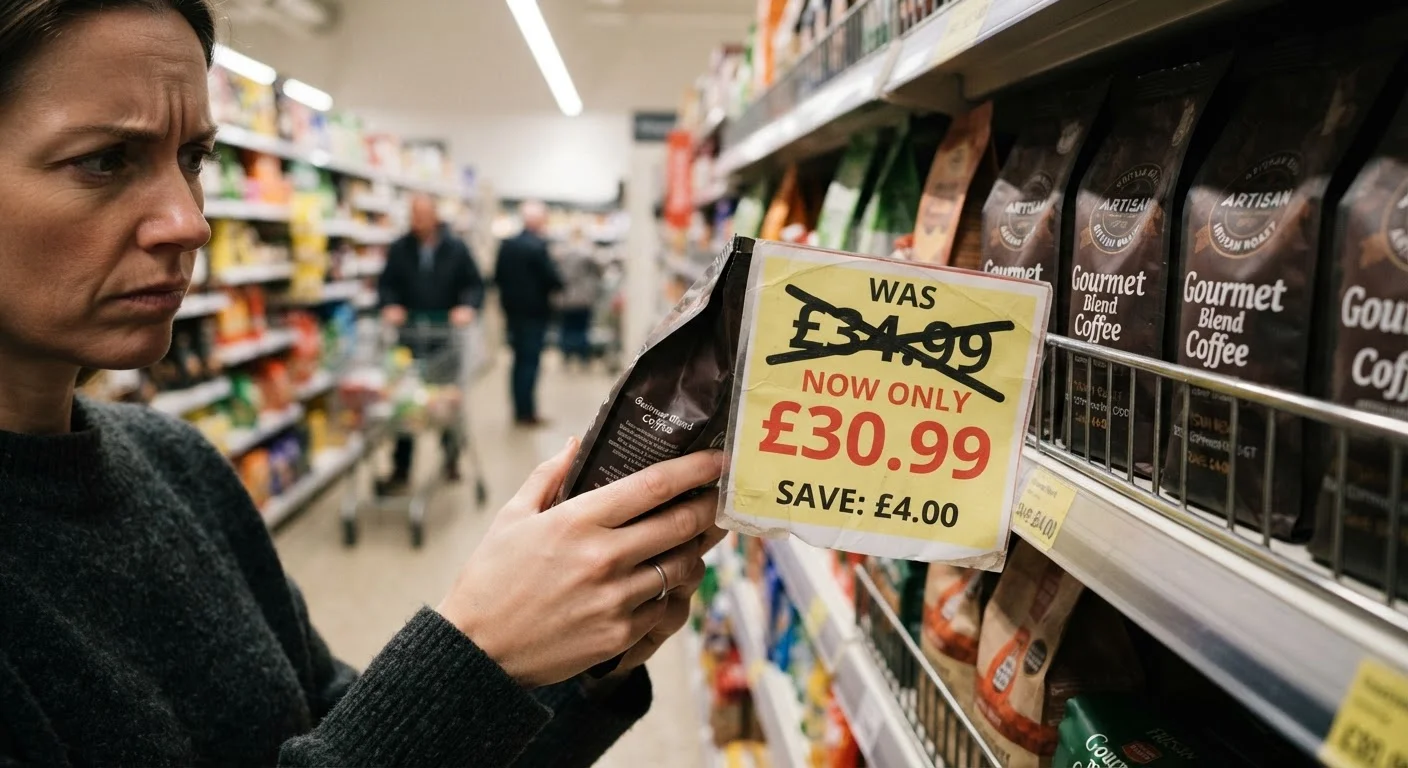
Why Pricing Illusions Are So Effective
Retail pricing is not a neutral exercise. The numbers you see on a tag are often crafted to influence how you perceive value - not simply to reflect what an item costs to produce or what competitors charge. Understanding why these tactics work is the first step toward recognizing them in the wild.
The core mechanism is anchoring: when shoppers see a high 'original' price crossed out next to a lower 'sale' price, they mentally measure the deal against that anchor - even when the anchor was never a real market price. Research in behavioral economics has consistently shown that perceived savings, rather than absolute price, drive purchase decisions for many consumers.
Retailers are not uniformly deceptive, but the practices described here are widespread enough that the Federal Trade Commission (FTC) has issued guidance on what constitutes a deceptive price comparison. Knowing what regulators consider misleading gives you a useful baseline. For a broader look at how discount framing shapes real savings, see what 'on sale' actually means.
~40%
Share of U.S. retail sales made at a discount
Industry analysts have estimated that a large share of retail volume in categories like apparel and home goods moves at a marked-down price, suggesting 'sale' is often the default state rather than an exception.
60-70%
Inflated reference prices on promotional items
Consumer advocacy research has found that a substantial portion of 'sale' items in tested retail environments carried reference prices that were never the item's primary selling price.
Common Mistakes Shoppers Make With Sale Prices
Most pricing illusions succeed not because shoppers are uninformed, but because the tactics exploit normal cognitive shortcuts. The mistakes below are easy to make - and equally easy to correct once you recognize the patterns.
Treating the 'original' or 'compare at' price as a verified market value.
Why it happens: Retailers set their own reference prices, and those prices are not always required to reflect what the item actually sold for at retail. Shoppers assume the crossed-out number was a real, recent price.
Responding to countdown timers and 'only X left in stock' warnings as if they reflect real scarcity.
Why it happens: Urgency cues are designed to compress the evaluation window. When time feels short, shoppers skip price comparisons they would otherwise make.
Assuming 'free shipping' automatically makes a sale price a better deal.
Why it happens: Shipping costs are salient and feel like a concrete savings when removed. Shoppers often don't check whether the base product price was quietly increased to offset the shipping cost.
Buying something primarily because it is on sale, rather than because it meets an actual need.
Why it happens: A compelling discount activates the fear of missing out. Shoppers rationalize a purchase as 'saving money' even when spending money they hadn't planned to spend.
Skipping comparison shopping because a sale badge makes an item feel pre-validated.
Why it happens: A bold 'SALE' label creates an impression that someone has already determined this is a good price. Shoppers offload their own judgment to that signal.
Watch for 'Was / Now' Prices Online
E-commerce platforms can update reference prices frequently and automatically, meaning a 'was' price may reflect only a brief window - sometimes just a day - at a higher price point. Price-history tools that log daily prices over weeks or months give you a more accurate baseline than any retailer-supplied reference price. Check price history before treating any online markdown as a genuine discount.
Building a Practical Defense
A few concrete habits substantially reduce your exposure to misleading price framing:
- Check price history before buying. Free browser extensions and price-tracking websites log historical prices for many online retailers, letting you see whether a 'sale' price is genuinely lower than the item's usual selling price.
- Compare the unit price, not the package price. A larger package at a 'sale' price can still cost more per ounce or per unit than a smaller package at full price nearby.
- Ignore the reference price; evaluate the actual price. Ask yourself: would I consider this price fair if no crossed-out number appeared above it? If the answer is no, the anchor is doing the persuasive work.
- Time purchases around predictable cycles. Many categories follow seasonal markdown patterns that represent genuine price drops. Timing a purchase to avoid overpaying explores how to use those cycles without waiting indefinitely.
Staying consistent with these habits also supports broader financial goals. If you are tracking spending or working toward a savings target, the budgeting basics hub offers frameworks for keeping discretionary purchases aligned with your actual plan.
FTC Rules on Deceptive Pricing Exist - But Enforcement Is Uneven
The Federal Trade Commission's guidelines on deceptive pricing state that a 'former price' used in a comparison should be a genuine, recent selling price - not an inflated figure set briefly to manufacture a discount. However, enforcement is not automatic, and many pricing practices exist in a gray area. As a shopper, you cannot rely on regulatory oversight alone to protect you from misleading markdowns; your own price verification habits are your primary defense.
Once you can separate genuine markdowns from manufactured ones, the next step is knowing what signals a deal that reflects real value. Signals that a deal is genuinely good walks through concrete indicators worth looking for before committing to any purchase.