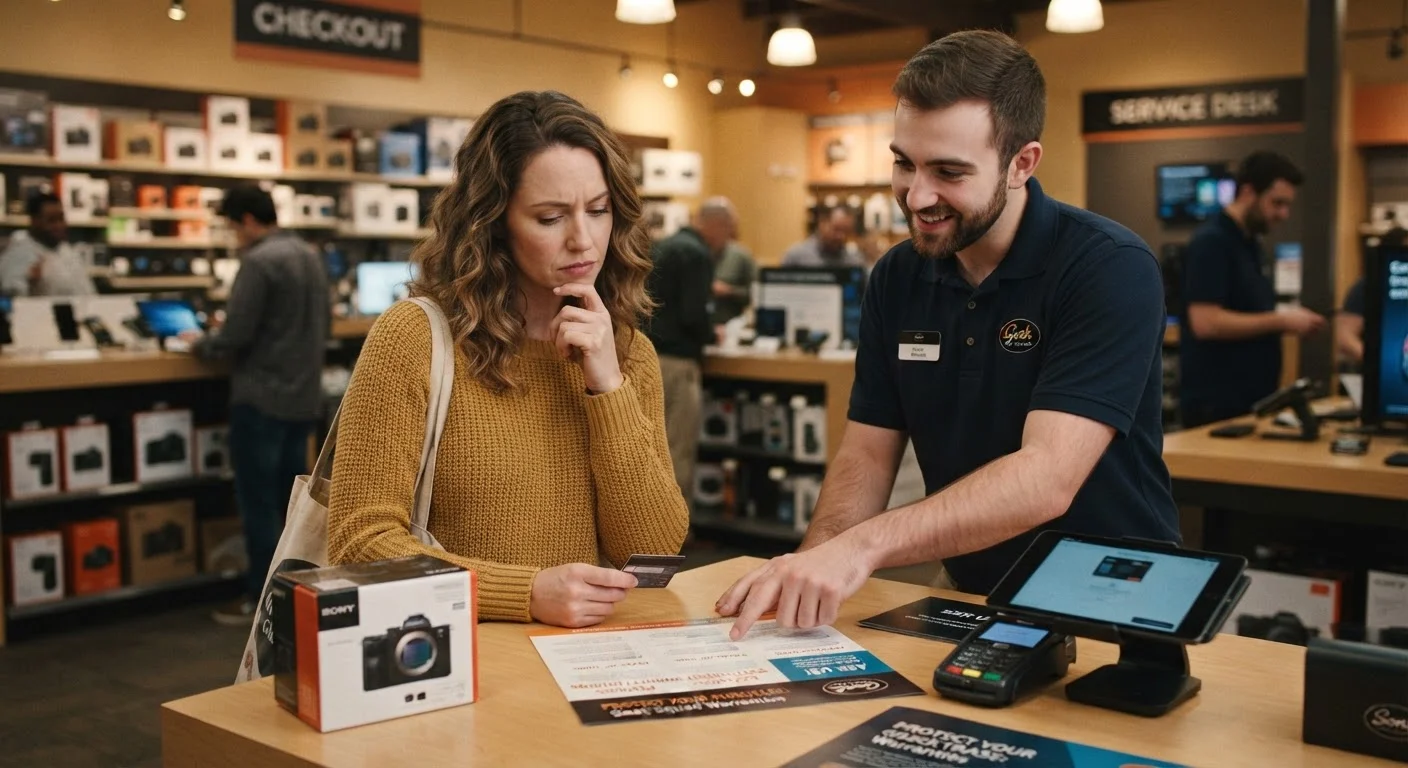
Why Upsells Work-Even on Careful Shoppers
An upsell is any offer that encourages you to spend more than your original intent-an extended warranty, a protective case bundle, a premium tier upgrade, or a complementary service tacked on at checkout. They're not inherently deceptive; some genuinely add value. The problem is the timing.
By the time an upsell is presented, you've already made a primary decision and are mentally wrapping up. That post-decision state lowers resistance. You're thinking about getting home, not running a fresh cost-benefit analysis. Retailers and service providers understand this dynamic well. The tactics used to influence spending at the point of sale are designed specifically to exploit that window.
Recognizing the mechanism doesn't make you immune-but it gives you the fraction of a second you need to shift gears before responding.
What you will need
How to Evaluate Any Upsell in the Moment
The steps below give you a repeatable structure for every add-on offer, whether you're at a big-box electronics register, a car dealership, or an e-commerce checkout screen.
Buy yourself a pause
As soon as an add-on is offered, slow down before speaking. A simple "Give me just a second" is socially acceptable and costs nothing. The goal is to interrupt the automatic response loop that produces an unconsidered yes or a guilt-driven no.
Identify exactly what's being offered
Ask one clarifying question if needed: "What exactly does this cover?" or "What does the upgrade include?" You want a plain-language answer, not a restatement of the brand name. This also gives you information to look up later if you decide to defer the decision.
Apply the three-question filter
Run through these three questions mentally before responding:
- Did I plan for this? If the add-on wasn't in your purchase intent before you walked in, it deserves higher scrutiny.
- Do I already have this covered? Credit cards often include purchase protection and extended warranty coverage. Renters or homeowners insurance may cover certain items. Check before paying for duplicate protection.
- Can I evaluate this separately? Most add-ons can be researched and purchased after the fact. If the answer is yes, deferring is almost always the lower-risk move.
Decline clearly and without apology
"No thank you" is a complete sentence. You don't need to justify the decision or soften it with extensive explanation. Trained staff will note the refusal and continue the transaction. If a follow-up push comes, a calm repetition-"I'll pass for now"-is sufficient.
Log the offer for later review
If the upsell might genuinely be useful-an extended warranty on an expensive appliance, for example-note the details before leaving: what it covers, the price, and the provider. You can then compare it against manufacturer offerings and third-party alternatives at your own pace, without the time pressure of a checkout line.
Deferring Is Almost Always Safe
The vast majority of upsell offers-extended warranties, service plans, accessory bundles-are available for purchase after you've left the store. Choosing to research separately is a legitimate and often smarter path. The one exception to verify: offers that are genuinely bundled at a manufacturer level and not sold separately, which are uncommon but worth confirming.
Handling Pressure and Urgency Framing
Some upsells are delivered with urgency cues: "This price is only available today," or "If you don't add it now, you'll have to pay full price later." These claims are sometimes true-but rarely in a way that materially changes the calculus. Run through a quick checklist before acting on any tight-deadline framing.
Extended warranties, for example, are almost always available for purchase after the sale-often directly from the manufacturer. Protection plan pricing is frequently negotiable or available through competing providers. If the offer were truly one-time, that would be unusual enough to warrant independent verification before accepting.
Urgency Claims Deserve Verification
"Today only" and "only available at checkout" framing is a recognized pressure technique. Before accepting an add-on based solely on urgency, ask whether the same or comparable coverage is available through the manufacturer, your credit card, or a third-party provider. More often than not, it is. See how anchoring and urgency tactics are used to make offers feel more time-sensitive than they are.
If you're unsure about a larger purchase context, our pre-purchase checklist can help you structure your thinking before you even reach the register. And if pricing flexibility on the core item is in play, see how negotiating a lower price on big-ticket purchases works in practice.