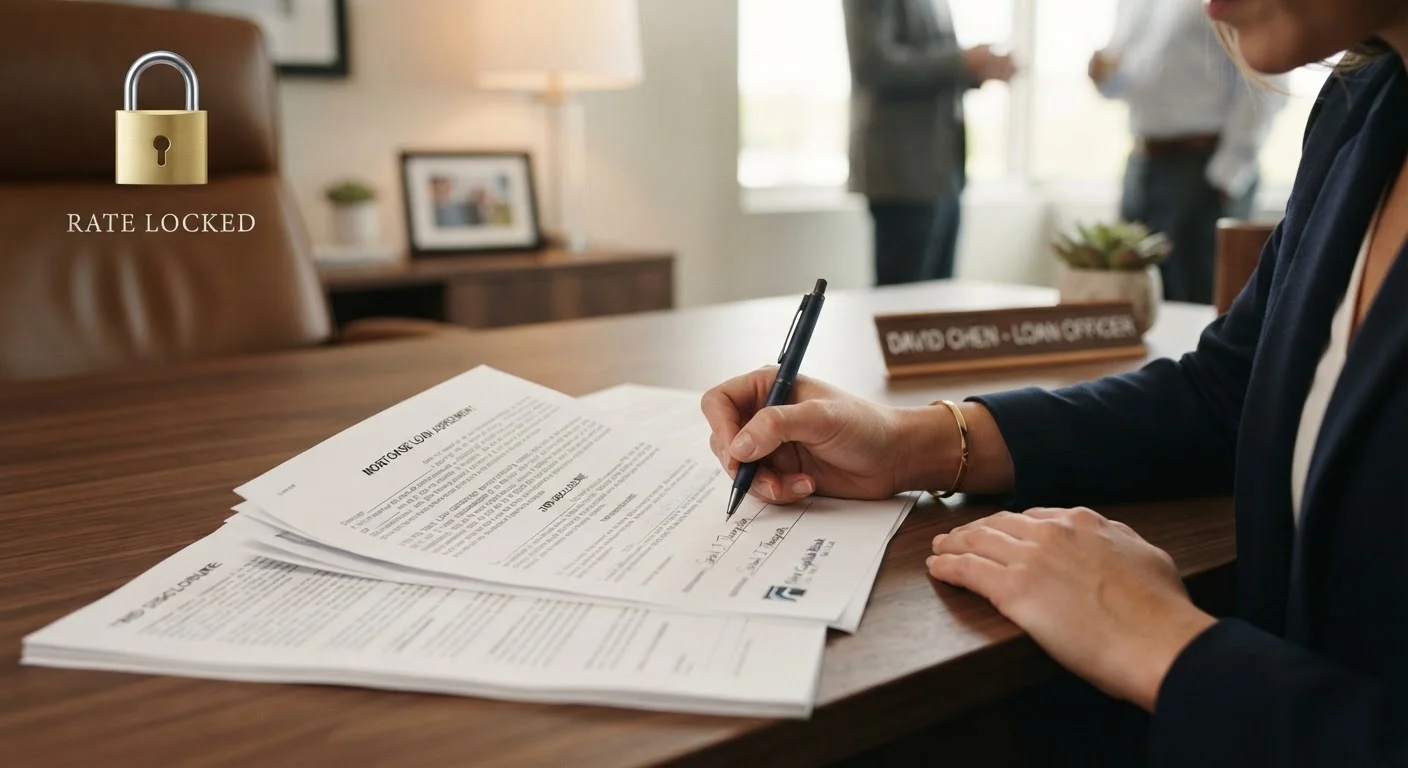
The Problem a Rate Lock Solves
Mortgage interest rates move daily, sometimes significantly, in response to economic data, Federal Reserve policy signals, and bond market activity. From the moment you make an offer on a home to the day you sit at the closing table, weeks or months can pass. Without a rate lock, the rate you were quoted when you applied may bear no resemblance to the rate you actually receive.
A rate lock removes that uncertainty. Once you lock, the agreed rate is guaranteed for the lock period - regardless of what happens in the broader market. If rates climb 0.5% during underwriting, you're insulated. That protection can translate to meaningful savings over the life of a loan. To understand how the rate fits into the full cost picture, see our plain-English overview of how mortgages work.
30-60 days
Typical mortgage rate lock duration
Most standard purchase transactions use a 30- to 60-day lock window, according to industry practice at major U.S. lenders.
0.125%-0.25%
Typical rate premium for a longer lock
Lenders commonly price 60-day locks at a slightly higher rate than 30-day locks to compensate for the extended interest-rate risk they absorb.
~45 days
Average time to close a purchase loan
According to ICE Mortgage Technology's Origination Insight Report, purchase loan closing times have historically averaged around 40-50 days.
How a Rate Lock Actually Works
When you apply for a mortgage, your lender provides a Loan Estimate that includes an interest rate. That rate is typically a live market quote - it can change until you formally lock it. To initiate a lock, you notify your lender (usually in writing or through an online portal) that you want to lock at the current quoted rate. The lender then issues a rate lock confirmation specifying the rate, the loan terms it applies to, and the expiration date.
The lock period is the number of calendar days the guarantee remains in effect. Standard options include 30, 45, and 60 days, though some lenders offer longer windows. The clock starts the day the lock is confirmed - not the day you applied. If your closing happens before the lock expires, the locked rate applies to your loan. If closing is delayed beyond the expiration date, you may need to pay a lock extension fee or re-lock at current rates.
It's worth understanding how your rate type interacts with the lock. Whether you're pursuing a fixed-rate or adjustable-rate loan changes what you're actually locking in. Our article on fixed-rate vs. adjustable-rate mortgages explains the structural difference between the two.
Ask for Your Lock Confirmation in Writing
Always request a written rate lock confirmation from your lender - not just a verbal assurance. The confirmation should clearly state the locked rate, the loan program it applies to, and the exact expiration date. Keep a copy in your closing documents file. Verbal rate quotes are not binding; a written confirmation is.
Lock Duration, Costs, and Trade-Offs
Longer lock periods provide more protection but tend to come at a cost. Lenders price longer locks into the rate itself - a 60-day lock may carry a rate that is 0.125% to 0.25% higher than a 30-day lock for the same loan. That difference may be acceptable if your transaction has a complex timeline, but it adds up over a 30-year loan.
Some borrowers also consider paying upfront to lower their rate through discount points. That's a separate strategy from a rate lock, though the two decisions interact. See our guide on mortgage points and whether buying them down makes sense for a fuller picture.
A few considerations when choosing a lock period:
- Standard purchase transactions typically close in 30 to 45 days, making a 45-day lock a common choice with a cushion for minor delays.
- New construction or delayed closings may require 60- to 90-day locks or specialized extended-lock programs.
- Refinances often close faster than purchases, so a 30-day lock may be sufficient.
When Rates Fall After You Lock
One of the most common frustrations borrowers face: they lock a rate, and then rates drop. In most standard rate lock agreements, the lender is under no obligation to pass along the improvement - you locked in to protect against increases, and the rate is set.
Some lenders offer a float-down option, which gives you the right to capture a lower rate if rates decline by a defined amount during the lock period. This feature typically carries an upfront fee and activates only when rates fall beyond a specific threshold. If you're in a market environment where rates are uncertain or trending down, asking your lender whether a float-down is available - and what it costs - is worth doing before you lock.
If your loan is an adjustable-rate mortgage, understanding how your rate could change after the initial fixed period is equally important. Our article on how ARM rates adjust over time covers caps, index rates, and adjustment schedules in detail.
Practical Steps Before You Lock
A rate lock is a binding agreement, so timing and preparation matter. Before you pull the trigger, work through these considerations:
- Confirm your closing timeline. Talk to your real estate agent and lender about a realistic closing date. Build in a buffer - a 45-day lock on a deal expected to close in 42 days leaves little room for appraisal delays or title issues.
- Compare lock terms across lenders. Different lenders structure lock fees, extension policies, and float-down options differently. This is part of the overall cost comparison, not just the rate.
- Read the lock confirmation carefully. Verify that the rate, loan program, loan amount, and expiration date all match what you discussed. Errors in lock confirmations do occur.
- Communicate proactively if delays arise. If you see a closing delay coming, contact your loan officer early. Extensions arranged in advance are usually cheaper than emergency re-locks after expiration.
This article is for general informational purposes only and does not constitute financial or legal advice. Mortgage terms, rate lock policies, and fees vary by lender and loan type. Consult a licensed mortgage professional about the options specific to your situation.