Why These Factors Get Overlooked
When evaluating a neighborhood, most buyers focus on school ratings, commute times, and walkability scores. Noise and light pollution rarely appear on any checklist - yet they shape daily experience in a home more than many visible attributes. A sun-drenched kitchen loses its appeal if garbage trucks rumble past at 4 a.m., or if streetlight glow makes the bedroom feel like a hotel corridor all night.
Part of the problem is timing. Most home showings happen during daylight hours on weekday afternoons - among the quieter, lower-traffic windows in any neighborhood. Buyers make significant financial decisions based on a snapshot that may look nothing like a Tuesday at 7 p.m. or a Saturday at midnight.
As part of a broader evaluation strategy, visiting a neighborhood at multiple times of day is one of the most underused and highest-value research steps a buyer can take.
Make Evening Visits Non-Negotiable
Schedule at least one visit to any serious property candidate after 9 p.m. on a weeknight. Bring a decibel meter app on your phone and stand near bedroom-facing windows with them open. Note whether streetlights shine directly at sleeping areas - this takes less than 15 minutes but can prevent years of disrupted sleep.
The Real Health Stakes
This is not just a comfort issue. Environmental noise and light exposure - especially at night - are recognized contributors to measurable health outcomes. Research published in public health literature has associated chronic noise exposure with elevated cortisol, disrupted sleep architecture, and increased cardiovascular risk over time. Night shift workers and urban residents near airports are among the most studied populations.
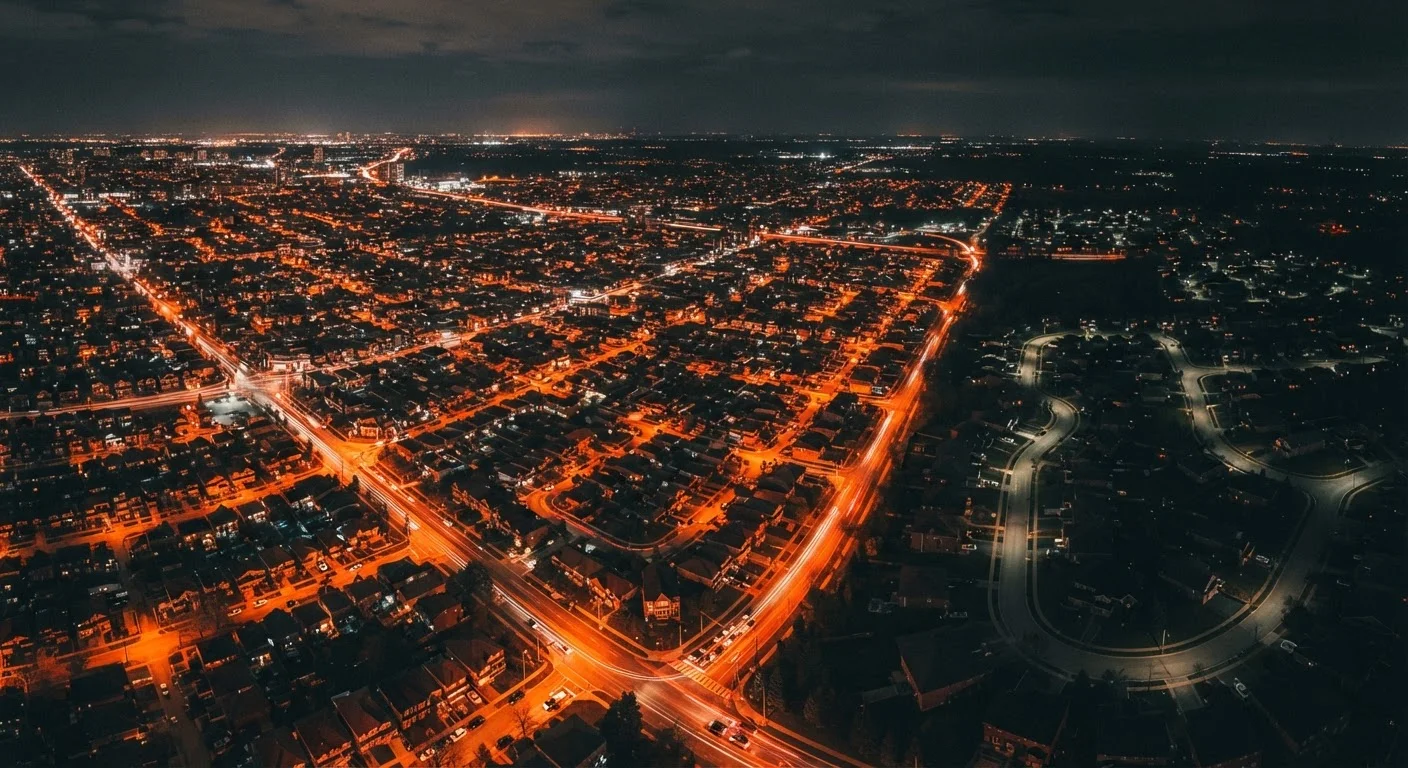
Light pollution operates through a different mechanism: artificial light at night suppresses melatonin production, which regulates the sleep-wake cycle. Even low-level ambient glow from streetlamps or a neighbor's floodlight can interfere with sleep quality, particularly in lighter sleepers and children.
For readers interested in how environment shapes mental wellbeing and stress management, the connection between chronic sensory stressors and emotional health is increasingly supported by research.
1 in 3
U.S. adults who don't get enough sleep
According to the CDC, approximately one-third of American adults report regularly sleeping less than the recommended amount, with environmental factors including noise cited as a contributing cause.
40 dB
WHO nighttime noise guideline threshold
The World Health Organization recommends nighttime outdoor noise remain below 40 decibels to protect sleep - a level exceeded by many urban and near-highway residential areas.
80%
U.S. population living under light-polluted skies
Research published in Science Advances estimated roughly 80% of North Americans live under skies bright enough to impair natural night vision, with urban residents experiencing the highest exposure.
How to Assess Noise and Light Before You Commit
Several practical research methods exist before making an offer on a home:
- Noise maps: The U.S. Department of Transportation publishes road and rail noise data by geography. The FAA provides flight path information relevant to homes near airports. These tools won't capture neighborhood-level granularity but identify major sources.
- Satellite and map tools: Light pollution maps (publicly available through organizations like Globe at Night) show artificial sky brightness by ZIP code and can reveal whether a neighborhood sits in a high-glow corridor.
- Timed visits: Arrive after 9 p.m. on a weeknight. Sit in the driveway or walk the block. Note which streetlights are directly in front of bedroom-facing windows, and listen for traffic, rail, or industrial sounds.
- Talk to current residents: Neighbors are often forthcoming about ongoing noise issues - delivery routes, weekend bar crowds, or a nearby industrial facility operating night shifts.
These steps connect naturally to the broader question of what truly defines a livable neighborhood beyond surface-level metrics.
Buffers and Mitigating Factors Worth Noting
Not all noise and light exposure is equal, and some neighborhood features offer meaningful natural buffers. Dense tree canopy along streets reduces both sound reflection and light spillover. Homes set back from arterial roads or shielded by other buildings may experience significantly lower exposure than a direct street-facing property a block away.
Access to parks and green corridors is often associated with quieter residential pockets - parks impose a natural sound break and typically generate less artificial light than commercial zones.
Local government choices around street lighting - including the shift toward downward-directed LED fixtures that reduce sky glow - vary by municipality. How actively a local government manages its built environment can determine whether a neighborhood's sensory conditions improve or worsen over time.
This article is for general informational purposes only. Health-related claims reflect general research trends and should not be taken as personal medical advice. Readers with health concerns related to environmental exposures should consult a qualified healthcare professional.