Why Planning Meetings Reveal What Listings Cannot
A property listing tells you what a home looks like today. A planning meeting tells you what the neighborhood may look like in five years. Proposed high-density housing, commercial rezoning, road widening projects, and utility corridor expansions are all decided in public forums - often months or years before they affect property values or daily life. No real estate disclosure form covers a variance application filed the week before you made an offer.
Planning commissions and city councils operate under state open-meetings laws (commonly called sunshine laws), which means their proceedings, agendas, and recorded votes are public by design. Buyers who use this access gain an asymmetric informational advantage: they understand what is coming while most competing buyers are only looking at what is already there.
This matters beyond just development. How a municipality handles infrastructure requests, code enforcement complaints, and park maintenance proposals reflects the governance culture you'll live under as a homeowner. Pair meeting attendance with the kind of on-the-ground neighborhood assessment described in our neighborhood evaluation checklist for a complete picture.
What you will need
What to Look for and What It Means
Not every agenda item is equally consequential. Focus your attention on the categories most likely to affect livability and value near the property you're evaluating:
- Zoning variances and rezonings: A neighbor applying to convert a single-family parcel to multi-family use, or a developer seeking a commercial zone change, can materially alter the character of a block. These applications are often contested and signal the direction the city is willing to push land use in that area.
- Large project environmental reviews: Projects above a certain size trigger environmental impact analysis under state law. These reviews are publicly noticed and often debated over multiple meetings. They cover traffic, noise, shadow impact, and infrastructure capacity.
- Infrastructure and capital improvement proposals: Road closures, transit route changes, utility upgrades, and park redesigns all surface in council sessions. A planned freeway interchange expansion two streets over may not appear in any listing, but it will appear in a capital improvement budget discussion.
- Code enforcement patterns: Some municipalities report on enforcement actions at regular intervals. A neighborhood with a high volume of unresolved violations can indicate deferred maintenance, absentee ownership, or weak enforcement capacity.
You can deepen your understanding of what these findings mean by also reviewing permit histories and land use records - a process covered in our article on using public records to uncover a neighborhood's history.
Search for Archived Meeting Recordings
Many municipalities now livestream or record council and planning meetings and post them on the city's official YouTube channel or website. If you can't attend in person, watching even one archived session covering the target neighborhood's district can give you a clear sense of pending issues, official priorities, and community concerns.
Public Meetings Are Open to Anyone
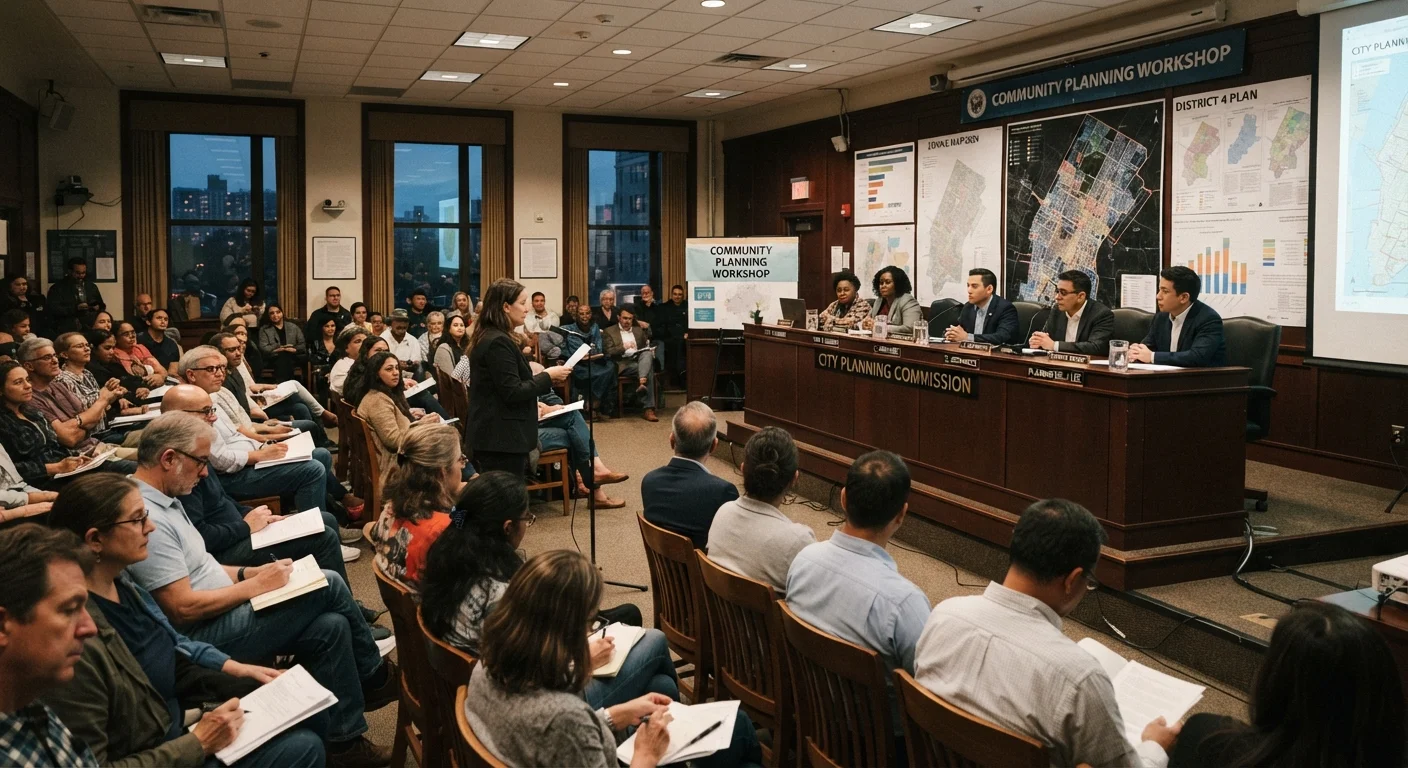
You do not need to own property, be a registered voter, or identify yourself to attend most city council or planning commission meetings. As a prospective buyer, you can sit in the audience, observe, and take notes without speaking. However, if you want to ask a question or comment, most bodies offer a public comment period - check the agenda in advance to understand the format and any sign-up requirements.
Municipality's official website
Find meeting schedules, agendas, past minutes, and contact information for planning staff.
County GIS or parcel map viewer
Cross-reference parcel numbers and zoning designations mentioned in meeting agendas with the property you're evaluating.
State public notice portal
Many states maintain centralized portals listing public hearings for environmental reviews, large developments, and zoning variances.
Notebook or note-taking app
Record project names, case numbers, speakers' concerns, and any follow-up actions announced during the meeting.
Identify the correct governing body for the property
Depending on where the home is located, land-use decisions may be made by a city council, a planning commission, a county board of supervisors, or a combination of all three. Search the municipality's name plus "planning commission" or "zoning board" to identify which body handles development approvals in that jurisdiction. Some cities separate legislative decisions (city council) from land-use recommendations (planning commission) - both are worth monitoring.
Download and review the upcoming meeting agenda
Agendas are typically posted 72 hours to one week before a meeting and are publicly available on the municipality's website. Scan for items that mention streets, parcel numbers, or project names in or near the neighborhood. Look specifically for: variance requests (permission to deviate from standard zoning rules), conditional use permits (approval for uses not automatically allowed by right), general plan amendments, and environmental review notices. Understanding zoning basics will help you interpret what these items mean - see our article on understanding zoning laws for a primer.
Search archived minutes for the past 12-24 months
Before attending a live meeting, review archived minutes from the past one to two years. Search for the street name, neighborhood name, or any parcel numbers near the target property. Look for repeated agenda items - a project that keeps reappearing often signals an unresolved controversy. Note which applications were approved, denied, or deferred and whether any conditions were attached.
Attend the meeting and observe both content and conduct
Arrive a few minutes early to collect any physical handouts and locate the sign-in sheet if public comment interests you. During the session, pay attention to: what projects are approved without discussion versus which draw substantial debate; how officials respond to residents who raise concerns; and whether any items are tabled repeatedly, which can indicate political friction. The quality of that exchange is itself a signal about local governance - something explored further in our piece on the role of local government in neighborhood quality.
Cross-reference findings with public records and your due diligence checklist
After the meeting, match any project names or case numbers you noted against the county's parcel map and permit database. If a large mixed-use development was approved two blocks from the property, verify its stage in the entitlement process - approval doesn't guarantee construction, but it does confirm intent. Incorporate these findings into your broader due diligence. Our guide on due diligence before buying a home outlines the full range of records worth reviewing before closing.
Don't Rely Solely on Meeting Minutes
Written minutes summarize decisions but often omit the texture of debate - who opposed a project, how contentious the vote was, or what concerns were raised but not formally recorded. Attending in person, or watching a live-streamed or recorded session, gives you significantly more context than reading minutes alone.