Why Window Labels Exist and What They Cover
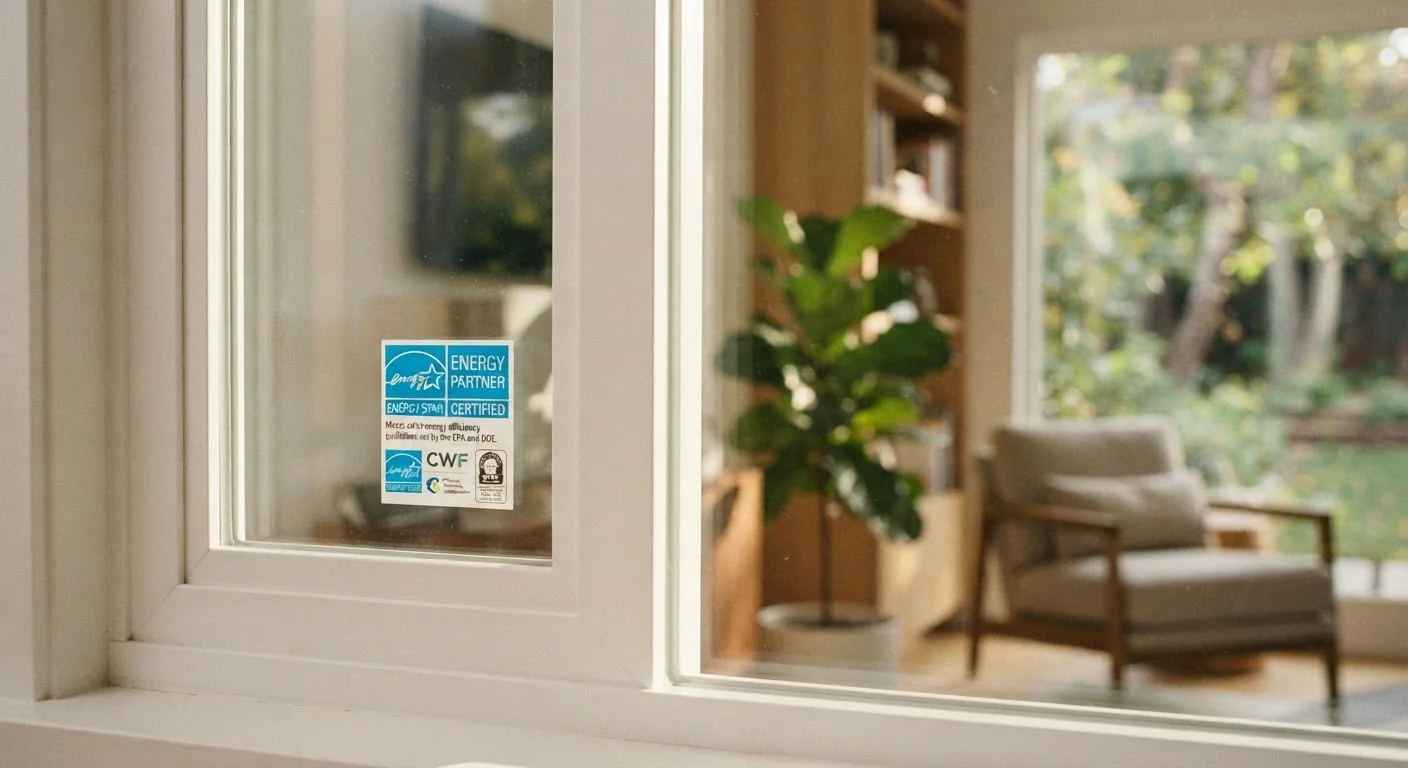
When you shop for replacement windows, you'll find a small label - usually bearing the NFRC logo - listing several numbers. Two dominate the label: U-factor and SHGC. Together, they describe how a window manages heat, and choosing the wrong combination for your climate can mean higher utility bills and rooms that are uncomfortable year-round.
The National Fenestration Rating Council developed these standardized ratings so consumers could make apples-to-apples comparisons. Before this system existed, manufacturers described windows with vague terms like "energy efficient" without measurable backing. Today, the label gives you actual performance data - but only if you know what the numbers mean.
Frame Material Also Affects Overall Performance
The NFRC label rates the entire window assembly, including the frame. Vinyl, fiberglass, and wood frames typically outperform aluminum in thermal performance because aluminum conducts heat readily. When comparing U-factor ratings, ensure you're comparing whole-window ratings - not just the center-of-glass values that some manufacturers may highlight separately.
U-Factor: Your Window's Resistance to Heat Escape
U-factor measures the rate at which a window conducts non-solar heat flow - in plain terms, how easily heat passes through the glass and frame from inside to outside (or vice versa). The scale typically runs from 0.20 to 1.20. A lower U-factor means the window transfers less heat, so your home stays warmer in winter without your furnace working overtime.
Single-pane windows commonly have U-factors near 1.0 or higher. Standard double-pane units typically fall between 0.40 and 0.60. High-performance double- or triple-pane windows with low-e coatings and gas fills (usually argon or krypton between panes) can achieve U-factors of 0.20 to 0.30.
For homeowners in cold-weather states, U-factor is often the more critical of the two ratings. A window with a U-factor of 0.25 loses roughly half the heat of one rated at 0.50, which compounds meaningfully over a heating season. See our guide to energy efficiency upgrades that move the needle on utility bills for how window improvements compare to other home upgrades in documented energy savings.
SHGC: How Much Sun Heat Gets In
Solar Heat Gain Coefficient measures the fraction of solar radiation admitted through a window - both directly transmitted and absorbed, then re-radiated inward. An SHGC of 0.40 means 40% of available solar energy enters the home. The scale runs from 0 to 1.
Whether a lower SHGC is better depends entirely on your climate and the window's orientation:
- Hot climates (South, Southwest): A low SHGC (0.25 or below) reduces cooling loads by blocking solar heat gain - a significant driver of air conditioning costs in summer-heavy climates.
- Cold climates (Midwest, Northeast, Northwest): South-facing windows with a moderate SHGC (0.40-0.55) can contribute passive solar heating in winter, offsetting some heating costs.
- Mixed climates: A balanced SHGC around 0.30-0.40 is often appropriate, though orientation still matters.
Check Your Climate Zone Before You Buy
ENERGY STAR's website provides a zip-code lookup tool that identifies your climate zone and the corresponding U-factor and SHGC thresholds for certification. Matching windows to your zone - rather than buying based on a general 'energy efficient' claim - ensures you're getting ratings calibrated to your actual weather conditions. This step takes less than a minute and can meaningfully narrow your selection.
It's worth noting that low-e coatings are the primary technology used to lower SHGC. There are two main types: passive low-e coatings allow more solar gain (better for cold climates) and solar control low-e coatings block more solar energy (better for hot climates). The label won't specify the coating type, but the SHGC number reflects it.
Reading Both Numbers Together for Your Climate
U-factor and SHGC work as a pair. ENERGY STAR certifies windows by climate zone - Northern, North-Central, South-Central, and Southern - with different thresholds for each. A window perfectly suited for Minnesota may underperform in Texas, and vice versa.
~25-30%
Heat loss through windows in a typical home
According to the U.S. Department of Energy, windows account for roughly 25-30% of residential heating and cooling energy use.
0.25
U-factor threshold for ENERGY STAR Northern zone
ENERGY STAR's Northern climate zone requires a U-factor at or below 0.25 for window certification, reflecting the demands of cold-weather performance.
As a practical framework: in heating-dominated climates, prioritize a low U-factor first, then select an SHGC that takes advantage of solar orientation. In cooling-dominated climates, prioritize a low SHGC, since heat gain drives the bulk of energy costs. In mixed climates, both numbers deserve roughly equal weight.
The label also shows Visible Transmittance (VT), which indicates how much daylight comes through - useful if natural light is a priority - and Air Leakage (AL), another efficiency factor. But U-factor and SHGC remain the headline performance indicators.
For a broader view of how building envelope improvements interact - including how windows and insulation work together - see our insulation types and R-value reference. Understanding both helps you prioritize where to invest for the greatest thermal comfort gains.