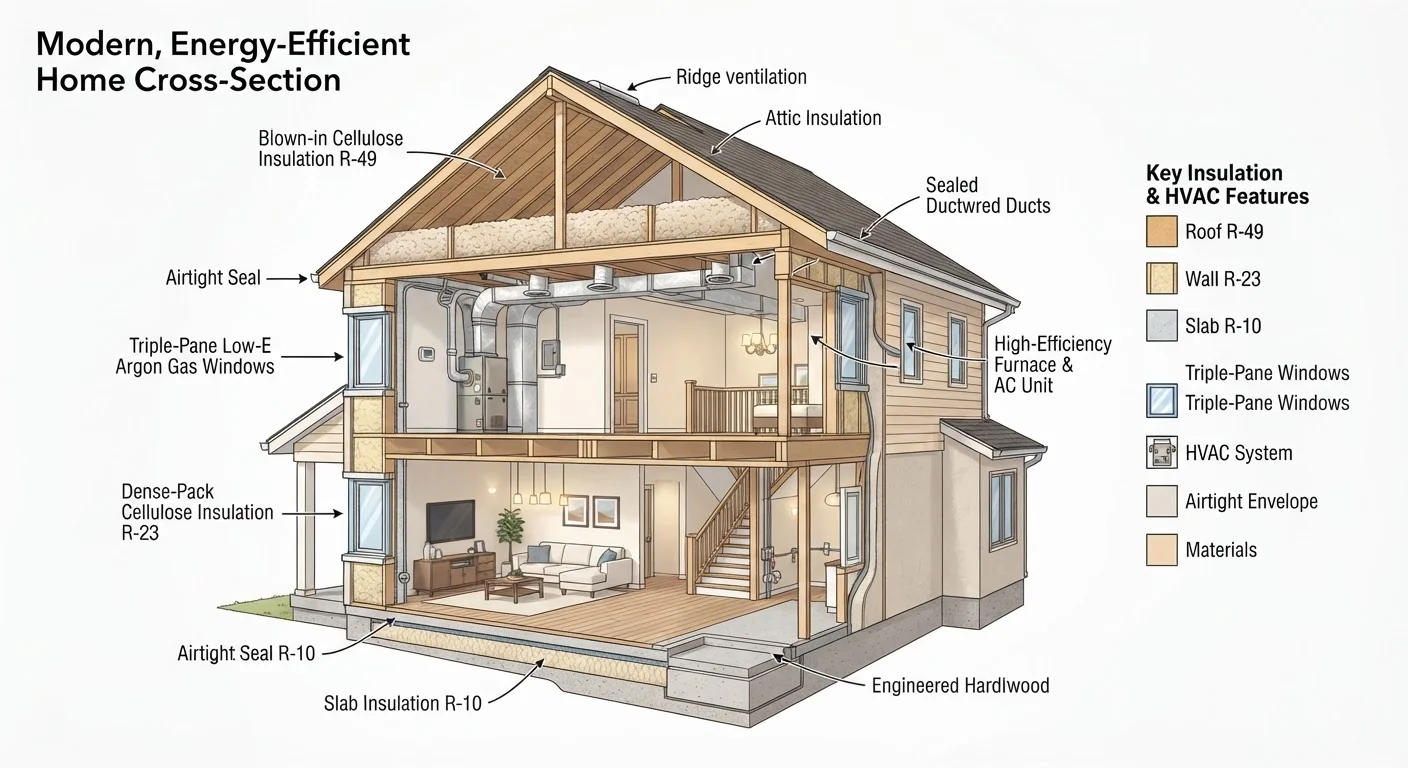
Why Some Upgrades Deliver Real Savings While Others Disappoint
Every hardware store and HVAC contractor has a pitch for the upgrade that will transform your utility bills. The reality is more nuanced: the same improvement that saves a neighbor $40 a month may save you almost nothing, depending on your climate zone, home construction, and existing equipment. Understanding where your home actually loses energy is the starting point for any meaningful return.
The U.S. Department of Energy estimates that heating and cooling account for about 43% of a typical household's energy bill. Air leaks, under-insulated attics, and aging mechanical systems are the primary culprits. By focusing on upgrades with documented, measurable impact - rather than marketing-driven claims - homeowners can make choices that genuinely move the needle.
If you're thinking about pairing efficiency upgrades with smarter home controls, it's worth reading about common smart thermostat misconceptions before assuming automation alone will cut costs. The physical envelope of your home matters far more than any connected device.
Air Sealing: The Overlooked First Step
Before adding insulation or replacing equipment, sealing the unintentional gaps in your home's envelope stops conditioned air from escaping. Common leakage points include attic hatch frames, recessed light fixtures that penetrate the ceiling, plumbing and electrical penetrations, and the rim joists where your floor framing meets the foundation.
Weatherstripping doors, caulking window frames, and using spray foam around penetrations are largely DIY-accessible tasks. The U.S. Environmental Protection Agency's ENERGY STAR program estimates that sealing and insulating can save homeowners an average of 15% on heating and cooling costs - making it one of the highest-return starting points regardless of climate.
Air sealing is often the highest-return starting point before any other upgrade.
Attic Insulation: The Biggest Heat-Loss Surface
Heat rises, which means an under-insulated attic is one of the largest contributors to wasted energy in most American homes. The Department of Energy recommends R-38 to R-60 insulation in attics depending on climate zone - many older homes fall well short of this, with R-11 or less.
Adding blown-in fiberglass or cellulose insulation is relatively affordable and often completed in a single day by a professional. Homeowners in colder climates frequently see the most dramatic payback periods. Importantly, insulation only performs as intended when air sealing is addressed first - insulation slows heat transfer but does not stop airflow through gaps.
Attic insulation paired with air sealing delivers the most consistent payback across climate zones.
HVAC Efficiency: Equipment That Fits the Load
Heating and cooling equipment is the single largest energy consumer in most homes. Replacing an aging system with a higher-efficiency unit - measured by SEER2 rating for cooling and AFUE for furnaces - can reduce energy use substantially. Heat pumps, which move heat rather than generate it, have become increasingly viable in climates that were historically too cold, and can serve both heating and cooling needs.
Equally important is proper sizing. Oversized equipment short-cycles, wearing out faster and leaving humidity uncontrolled. A Manual J load calculation by a licensed HVAC contractor ensures the new system matches your home's actual needs. Regular maintenance - clean filters, sealed ducts, calibrated refrigerant charge - also preserves efficiency in existing systems.
Properly sized, high-efficiency HVAC equipment can cut heating and cooling energy use significantly.
Duct Sealing and Insulation: Recovering Lost Conditioning
In homes with forced-air systems, leaky or uninsulated ducts running through unconditioned spaces - attics, crawl spaces, garages - can waste 20% to 30% of conditioned air before it reaches living spaces, according to ENERGY STAR estimates. Mastic sealant or metal tape (not standard duct tape, which degrades quickly) applied at joints and seams, combined with duct insulation, recaptures that lost performance.
Aeroseal is a pressurized sealing technology applied from inside ducts that can reach leaks inaccessible by hand - a professional option worth considering in complex duct systems. This upgrade pairs well with HVAC replacement and can improve comfort in rooms that previously ran too hot or cold. Room-by-room tech solutions can complement these improvements once the mechanical system is performing properly.
Leaky ducts in unconditioned spaces can waste nearly a third of your system's output.
Window Upgrades: Real Benefits, Realistic Expectations
Double- or triple-pane windows with low-emissivity (low-e) coatings meaningfully reduce heat gain in summer and heat loss in winter compared to single-pane glass. They also reduce condensation and improve comfort near the glass surface. However, the economics require honest assessment: new windows are expensive, and payback periods frequently extend to 20 years or more on energy savings alone.
If existing windows are structurally sound, interior or exterior storm windows and quality weatherstripping can capture most of the thermal benefit at a fraction of the cost. Full replacement makes the most financial sense when windows are failing, leaking, or driving comfort complaints that insulation and air sealing haven't resolved. Frame the decision around total value - not energy savings alone.
Storm windows and weatherstripping often deliver comparable thermal gains to full replacements at far lower cost.
Making the Right Investment for Your Home
Before committing to any single upgrade, a professional home energy audit - often available at low or no cost through utilities - uses a blower door test and thermal imaging to identify exactly where your home loses conditioned air. That data turns guesswork into a prioritized action list.
Start With a Home Energy Audit
Many utilities offer subsidized or free home energy audits that use blower door testing and infrared cameras to pinpoint exactly where your home loses energy. The results give you a ranked list of improvements specific to your home - far more reliable than general estimates. Ask your utility provider whether audits or rebate programs are available in your area before scheduling any contractor work.
Efficiency upgrades can also have financial planning implications. If you're budgeting for a major project, resources on budgeting basics and managing savings and debt can help you plan the outlay without undermining other financial goals. Many utility companies and state programs offer rebates that reduce upfront costs - check with your local utility before scheduling any work.
This article is for general informational and educational purposes only. Costs, savings estimates, and incentive programs vary significantly by region, home type, and provider. Consult a licensed contractor or certified energy auditor for advice specific to your home and circumstances.