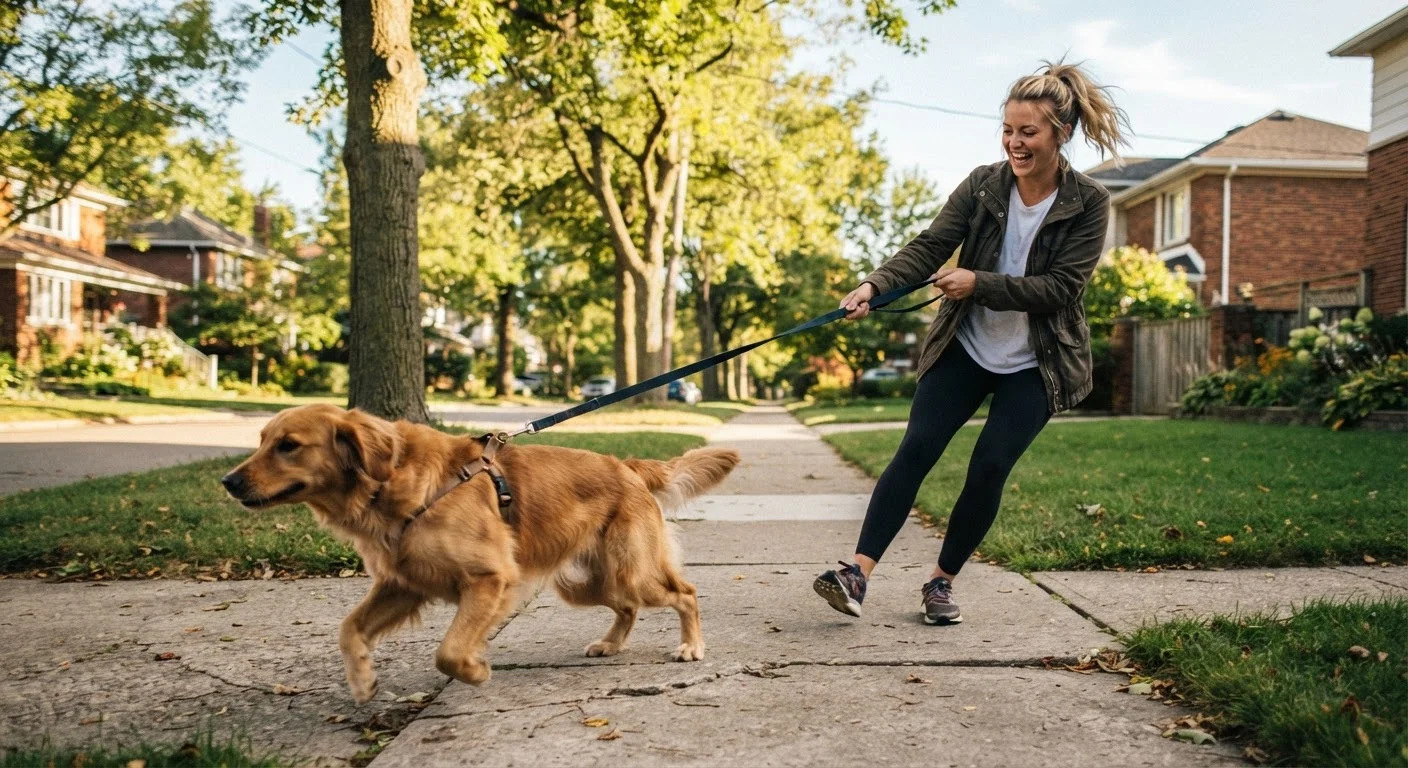
The Simple Reason Dogs Pull: It Gets Them Where They Want to Go
From a dog's perspective, a walk is one of the most stimulating events of the day - a rich landscape of smells, sounds, and social opportunities. When a dog lunges forward and the owner follows, the dog has just learned something powerful: pulling produces access to rewarding things. That lesson gets repeated on every walk.
This is the core of the leash-pulling problem. It isn't stubbornness, and it isn't a challenge to the owner's authority. It's straightforward learning. To understand it fully, it helps to know a little about how dogs actually learn - specifically the concept of positive reinforcement, where a behavior is strengthened by the consequence that follows it.
Each time the dog pulls and the walk continues, the reinforcement cycle runs again. Over months and years, the behavior becomes deeply habitual.
#1
Most commonly reported dog behavior problem
Leash pulling is consistently cited by trainers and veterinary behaviorists as the top complaint among dog owners seeking training help.
~80%
Dogs that pull within the first year
Behavioral surveys suggest the majority of dogs develop some degree of leash-pulling behavior without structured early training.
Variable
Weeks to improvement with consistent training
Progress depends on the dog's history, consistency of training, and the handler's technique - there is no universal timeline.
What's Actually Maintaining the Habit
Many owners assume they haven't been rewarding pulling - but the reward isn't coming from them. It's coming from the environment. The moment a pulled leash results in the dog reaching a fire hydrant, a patch of grass, or a passing dog, the behavior has been paid off. Owners are often unknowingly funding the habit simply by continuing to walk.
A few specific patterns keep the behavior locked in:
- Intermittent reinforcement: Even if an owner stops sometimes, the moments when pulling succeeds are often enough to keep the behavior strong. Irregular rewards can actually make habits more persistent, not less.
- Physical mismatch: Owners who feel they physically cannot stop a large dog from pulling often give up trying. The dog learns that harder pulling overcomes resistance.
- Inconsistency across handlers: If one family member allows pulling while another tries to stop it, the dog receives mixed signals. The behavior persists because it still works with some people.
Stop Forward Movement - Every Time
The single most effective habit change an owner can make is to stop walking the moment the leash goes taut. Stand still, wait for leash slack, then proceed. This directly interrupts the reinforcement that maintains pulling. Consistency across all handlers in the household is essential for the message to register.
It's also worth noting that anxiety can sometimes play a role. A dog that is fearful or overstimulated may pull to escape or approach situations driven by stress rather than excitement. This is a different dynamic that warrants a closer look - similar in some ways to how separation anxiety involves its own reinforcement cycle rooted in emotional distress.
Why Common Corrections Often Miss the Mark
A common instinct is to pull back, jerk the leash, or scold the dog when it lunges forward. These corrections can suppress the behavior temporarily, but they typically don't address what's maintaining it. If the dog still arrives at the interesting thing after a correction, the reinforcement has still occurred.
Punishing pulling can also introduce problems of its own - including frustration and anxiety on walks - especially if the dog doesn't clearly understand what it should be doing instead. The training myths surrounding dominance and correction-based approaches have led many owners to apply methods that are less effective than behavioral science supports.
Effective change requires making pulling not work - consistently - while simultaneously teaching and rewarding an alternative. That's the foundation of what teaching a calm leash walk actually involves in practice.
Setting Realistic Expectations
Leash pulling that has been reinforced for months or years won't disappear after a single training session. Behavioral change takes repetition, and early sessions often feel slow. But every walk where pulling is interrupted and a loose leash is rewarded moves the behavior in the right direction.
Owners should also recognize that some dogs require more management tools during the training process - certain harness designs, for instance, can reduce the mechanical advantage of a pulling dog without causing discomfort. These are management aids, not solutions on their own, but they can make the training process safer and more consistent while new habits form.
The most important insight is this: pulling is a behavior the dog has learned, which means it can be unlearned. Approaching the problem with that understanding - rather than frustration or the assumption that the dog is being willfully difficult - puts owners in a much better position to make lasting progress.
This article is for general informational and educational purposes only. For guidance on individual pet behavior concerns, consult a qualified veterinarian or certified professional animal trainer.