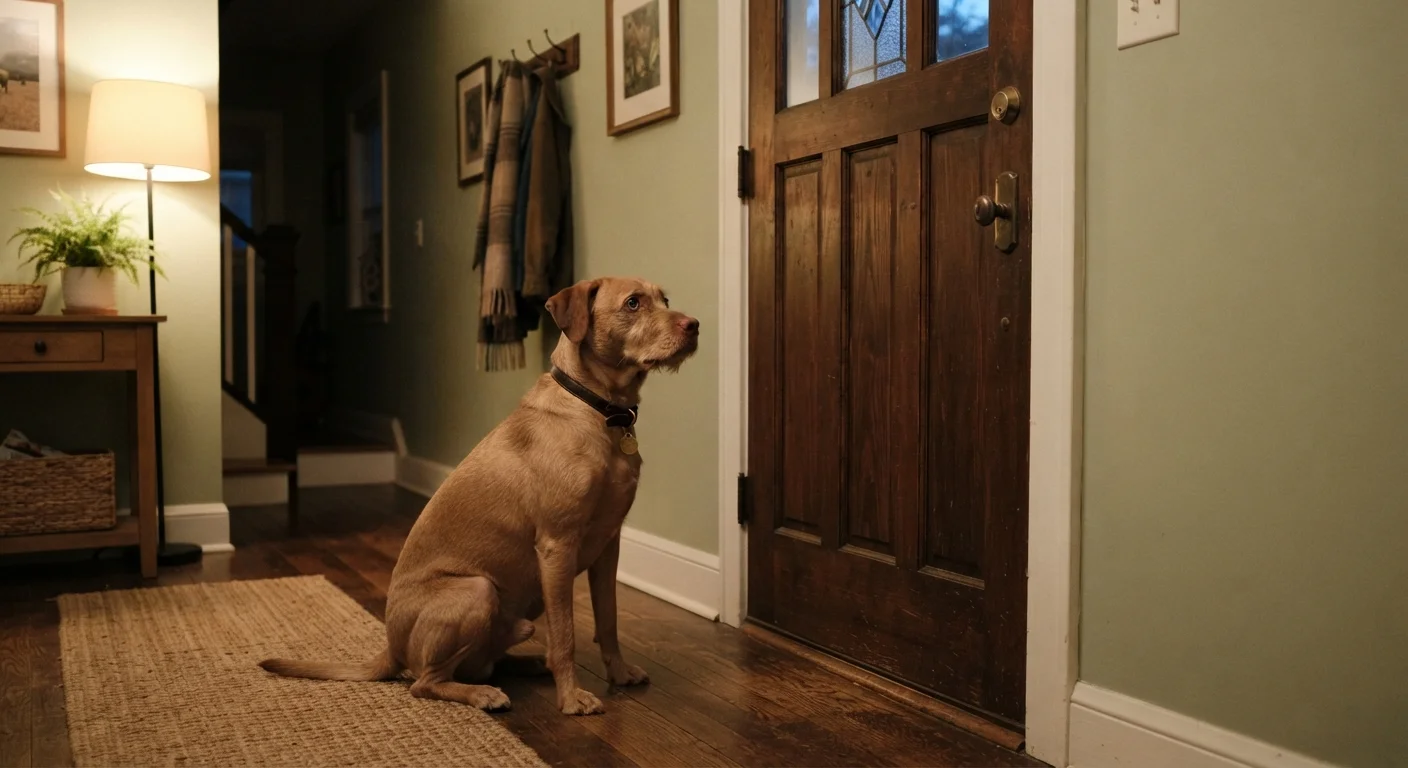
What Separation Anxiety Actually Looks Like
The hallmark of separation anxiety is that the problem behaviors happen only - or dramatically worsen - when the dog is alone or separated from their primary attachment person. Owners often return home to evidence of what looks like chaos: chewed furniture, scratched door frames, soiled floors, or neighbors reporting hours of barking. What makes these behaviors clinically significant is their consistent connection to the owner's absence.
Common signs include:
- Destructive behavior concentrated near exits (doors, windows, crates)
- Excessive vocalization - barking, howling, or whining that continues long after departure
- House-training accidents in dogs that are otherwise reliably trained
- Pacing, drooling, or trembling during or before departures
- Attempts to escape confinement that can result in self-injury
Pre-departure anxiety is also telling. Many dogs with separation anxiety begin showing stress the moment their owner picks up keys, puts on shoes, or grabs a bag - learned cues that predict being left alone.
Video Monitoring Can Clarify the Picture
Many owners are surprised by what video footage reveals - either the behavior is more severe than they realized, or what they assumed was separation anxiety turns out to be noise reactivity or boredom. Recording your dog during a short, deliberate absence gives you objective information and is genuinely useful to share with your vet or a certified trainer.
If you are unsure whether your dog's behavior occurs exclusively in your absence, consider setting up a phone or tablet to record video while you step out briefly. This kind of objective evidence is also valuable to share with your veterinarian or trainer.
Why Some Dogs Develop Separation Anxiety
There is rarely a single cause. Separation anxiety tends to emerge from a combination of temperament, history, and circumstance.
Predisposing factors can include:
- A naturally anxious or highly social temperament
- Insufficient early socialization with being alone
- A history of rehoming, sheltering, or sudden loss of a family member
- Abrupt changes in routine - a return to an office after working from home, for example, is a well-recognized trigger
- A traumatic event experienced while alone
Rescue and shelter dogs are sometimes assumed to be more prone to separation anxiety, though research findings are mixed. What is clear is that any significant change in the bond between a dog and their household can destabilize a dog's sense of security.
~20%
Dogs estimated to show separation-related behaviors
Various prevalence studies suggest roughly one in five dogs displays some form of separation-related behavior, making it among the most common behavioral concerns reported to veterinarians.
Top 3
Reason dogs are relinquished to shelters
Behavioral problems, including separation anxiety, consistently rank among the leading reasons owners surrender dogs to shelters, according to shelter intake surveys.
Months
Typical duration of a full treatment program
Behavior modification for separation anxiety is a gradual process; most structured programs require weeks to months of consistent practice before significant improvement is observed.
It is also worth noting that separation anxiety is distinct from under-stimulation or boredom. A dog that has not had adequate physical and mental exercise may act out when left alone, but that is a different problem requiring a different solution. Exercise plays an important role in a dog's overall behavioral health, but it is not sufficient on its own to resolve true separation anxiety.
How Separation Anxiety Is Typically Addressed
Effective treatment is usually multimodal - meaning it involves more than one strategy working together. The approach most supported by animal behavior science is systematic desensitization and counterconditioning: gradually exposing the dog to being alone in very small increments, pairing each exposure with something positive, and building duration only as fast as the dog can tolerate without distress.
Key elements of a typical treatment plan include:
- Assessment: Establishing the dog's current tolerance threshold - how long they can be alone before distress begins - is the essential starting point.
- Departure cue work: Neutralizing the pre-departure signals (keys, shoes, coats) that currently trigger anxiety before the owner even leaves.
- Graduated alone-time practice: Systematic, short separations that stay below the dog's distress threshold and are gradually extended.
- Environmental enrichment: Puzzle feeders, long-lasting chews, or food-stuffed toys given only during alone time can help build a positive association.
- Veterinary consultation: For moderate to severe cases, anti-anxiety medications prescribed by a veterinarian may be used alongside behavior modification to reduce the dog's baseline anxiety enough for training to be effective.
This is one area where professional guidance pays off. Evidence-informed training strategies for separation anxiety are well-documented, but applying them correctly requires patience and often professional support. If the behavior is severe, self-injurious, or not responding to initial efforts, it is worth consulting a certified veterinary behaviorist or a certified applied animal behaviorist. Knowing when to bring in expert help can make the difference between prolonged struggle and meaningful progress.
Start With a Veterinary Visit
Before beginning any behavior modification program, schedule a checkup with your veterinarian. Some medical conditions - including pain, cognitive dysfunction in older dogs, or thyroid issues - can mimic or worsen anxiety symptoms. Your vet can also discuss whether anti-anxiety support is appropriate for your dog's specific situation.
This article is for general informational purposes only and is not a substitute for professional veterinary or behavioral advice. If your dog is showing signs of separation anxiety, consult your veterinarian as a first step.