Why Your Environment Is a Training Tool
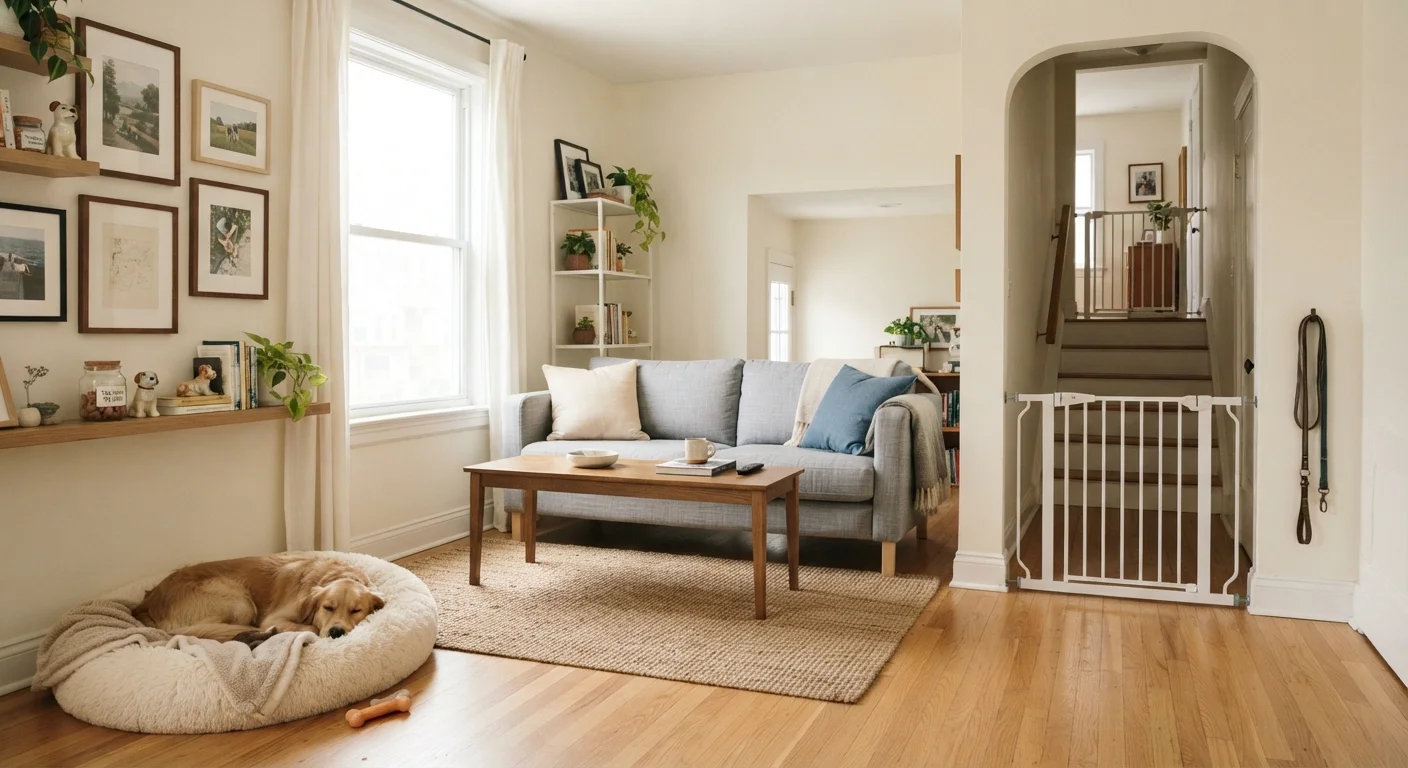
Before your pet learns a single command, your home is already shaping their behavior. Every open trash can, every unsupervised room, every inconsistent rule is either reinforcing a habit you want - or one you don't. Environmental management means deliberately arranging your space so good choices are easy and problem behaviors become structurally difficult. This is not a substitute for training; it's the foundation that makes training stick.
Animal behaviorists sometimes describe this approach as antecedent arrangement - modifying the conditions that come before a behavior to influence whether that behavior occurs at all. Put simply: it's easier to prevent your dog from counter-surfing by clearing the counter than to train a reliable leave-it after the habit is formed. The same principle applies to cats, rabbits, birds, and other companion animals. Use the checklist below to audit your home before your next session.
If you're working with multiple pets, these setup principles become even more critical - see Training Across Multiple Dogs in the Same Household for guidance on managing complexity when more than one animal shares the space.
Defining Spaces and Setting Boundaries
Reducing Distractions During Sessions
Organizing Reinforcers and Supplies
Household Rules and Consistency
Tools That Make the Setup Easier
Physical management tools do much of the heavy lifting when your pet is unsupervised or when you're early in the training process. Think of these as scaffolding - temporary structures that keep your pet safe and successful while the real behavioral learning takes hold.
Baby gates or pet barriers
Block access to rooms or areas where unsupervised problem behaviors are most likely to occur.
Exercise pen (ex-pen)
Creates a safe, contained area for your pet when full supervision isn't possible during the day.
Crate (appropriately sized)
Provides a den-like resting space and prevents destructive behavior during unsupervised periods.
Treat pouch or bait bag
Keeps reinforcers accessible during training so you can reward quickly without breaking your pet's focus.
Clicker or marker device
Marks the exact moment of a correct behavior with a consistent, distinct signal before the treat is delivered.
Non-slip mat or defined training spot
Establishes a physical anchor for your training location so your pet learns to associate the space with focused work.
Keep in mind that no tool replaces training; it just buys you time to do the training well. As your pet's reliability improves, you can gradually reduce management scaffolding. That process of raising criteria while loosening environmental controls is part of what makes training feel rewarding - for both of you.
For a session-by-session approach to readiness, Before Each Training Session: A Practical Readiness Checklist covers timing, your pet's state, and how to structure each practice block.
Getting Your Household on the Same Page
Even a perfectly arranged environment will undermine training if household members aren't following the same rules. One person allowing the dog on the sofa while another doesn't creates confusion and slows progress - often significantly. Why Consistency Across All Household Members Is the Hardest Training Rule explores the behavioral science behind why mixed signals are so costly and how families can build shared protocols.
Inconsistency Can Undo Weeks of Progress
If some household members enforce the rules and others don't, your pet learns that the rules are negotiable - and will test them constantly. It only takes one exception to a boundary (such as allowing the dog on the couch 'just this once') to reset expectations. Before beginning any new training plan, get explicit agreement from everyone in the home about the rules, the cues, and the reinforcers being used.
Post a short household rules summary somewhere visible - a refrigerator note or a shared phone note works - so everyone reinforces the same behaviors in the same way. And remember: short, regular training sessions build more reliable behavior than occasional long ones. Set your home up to make those small, daily moments easy to execute.
This article provides general pet care and training information. It is not a substitute for guidance from a qualified veterinarian or certified animal behavior professional. If your pet displays aggressive, fearful, or compulsive behaviors, consult a professional before implementing management strategies.