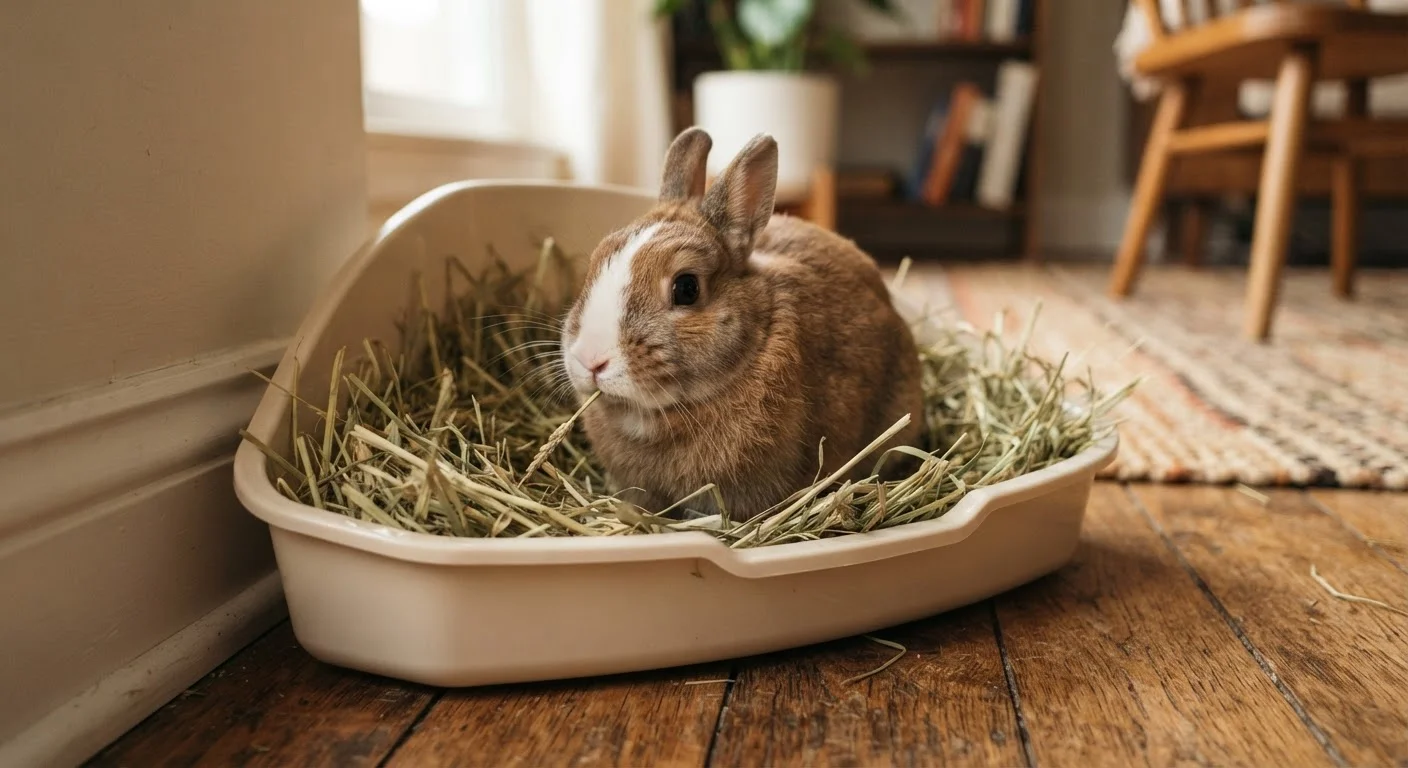
Why Rabbits Are Actually Good Candidates for Litter Training
Many new rabbit owners are surprised to learn that litter training a rabbit is genuinely achievable - and often easier than expected. Unlike dogs, rabbits are not trained to eliminate on cue outdoors. Instead, they rely on a natural tendency to return to the same spot repeatedly to do their business. This territorial instinct becomes the foundation of the entire training process.
That said, setting realistic expectations matters. Most rabbits can be trained to use a litter box reliably for urine. Fecal pellets are a more nuanced story: rabbits produce two types of droppings. The firm, round pellets you'll see scattered around are dry waste; the cecotropes (softer droppings eaten directly from the body for nutrition) are not a litter concern. Some pellet scattering outside the box is a normal rabbit behavior and may not disappear entirely even in well-trained rabbits.
For a broader look at rabbit health and what a wellness routine should include, see our guide on rabbit and small pet health basics.
What you will need
What You'll Need Before You Start
Getting the right materials in place before you begin will make training significantly smoother. The setup itself does most of the work.
Corner litter box
Fits neatly into the corners rabbits naturally prefer; gives the rabbit a dedicated, easy-to-access elimination spot.
Paper-based or wood pellet litter
Safe for rabbits to dig in and absorbs odor effectively; avoid clay, clumping, or scented litters.
Timothy hay
Placed in or directly over the litter box to encourage the rabbit to spend time there, since rabbits eat and eliminate simultaneously.
Rabbit-safe exercise pen or enclosure
Limits the rabbit's free-roam area during the initial training phase, reinforcing the habit of returning to one spot.
Enzymatic cleaner
Breaks down urine odor at the molecular level so accident sites don't continue to attract the rabbit back.
Hay rack or feeder that mounts over the box
Keeps hay accessible directly above the litter box, extending time spent in the correct spot.
Hay and the Litter Box Work Together
Placing hay in or directly over the litter box isn't just a training trick - it aligns with how rabbits naturally behave. Because rabbits eat and eliminate at the same time, positioning their primary hay source at the box keeps them returning there consistently. This setup also encourages the high-fiber hay intake that supports healthy digestion.
Step-by-Step: How to Litter Train Your Rabbit
Follow these steps in order. Rushing through the early stages - particularly the confinement phase - is the most common reason training stalls. Patience and consistency pay off faster than you might expect.
Have your rabbit spayed or neutered if possible
Before training begins in earnest, talk to your veterinarian about spaying or neutering your rabbit. Intact rabbits - especially those going through adolescence (typically four to six months) - are strongly driven by territorial instincts that work against litter training. Altered rabbits show markedly more consistent litter habits. This is one of the most impactful single steps you can take, and it carries other health benefits your vet can walk you through.
Start with a small, confined space
Set up a pen or enclosure that gives the rabbit just enough room for a litter box, a sleeping area, food, and water. Place the litter box in a corner - rabbits gravitate toward corners instinctively. Fill it with an inch or two of safe litter and add a generous layer of hay on top or in a rack positioned directly over the box.
Do not give full free-roam access at this stage. A large open space dilutes the returning-to-one-spot instinct and makes accidents far more likely.
Redirect accidents immediately and without punishment
When you catch your rabbit eliminating outside the box, calmly pick them up and place them in the litter box. Do not scold, startle, or physically correct the rabbit - this creates stress and undermines trust without teaching anything useful. If you find an accident after the fact, simply clean it up with an enzymatic cleaner. Delayed responses have no training value for rabbits.
After cleaning an accident spot, place a small amount of the rabbit's own droppings inside the litter box. The scent signals that the box is the right place.
Gradually expand free-roam space as habits solidify
Once your rabbit is consistently using the litter box within the confined area - typically after one to two weeks - begin expanding their accessible space incrementally. Add one room or one additional zone at a time. Place a second litter box in the new area, again in a corner. Watch for any regression; if accidents increase, reduce the space again and rebuild from the smaller area.
Maintain the litter box consistently
Rabbits are clean animals and may avoid a soiled box. Scoop or spot-clean the litter box daily, and do a full litter change every two to three days, or more frequently if needed. When you do a full clean, leave a small amount of used litter in the bottom - the scent reminder helps reinforce that this is the designated spot.
Avoid These Common Litter Materials
Clay clumping litters, scented litters, and bedding made from cedar or pine shavings are not safe choices for rabbit litter boxes. Clay litters can cause digestive issues if ingested, and phenols in cedar and pine have been linked to respiratory and liver concerns in small mammals. Paper-based pellet litters and plain wood pellets (kiln-dried, without additives) are the most widely recommended options - confirm with your veterinarian if you're unsure about a specific product.
Troubleshooting Common Setbacks
Even well-started rabbits hit rough patches. Here are the situations owners encounter most often and what to do about them.
- Your rabbit is using a corner you didn't choose.
- Place a litter box in that corner. Rabbits will often choose a preferred spot regardless of where you put the box initially. Working with their preference is faster than fighting it.
- Accidents are increasing after things were going well.
- This is common in intact (unspayed or unneutered) rabbits, especially during hormonal surges in adolescence. If your rabbit hasn't been altered, consult your veterinarian about spaying or neutering - it's one of the most effective steps you can take. Sudden regression in a previously reliable rabbit can also signal a health issue, so a vet check is appropriate if behavioral explanations don't fit.
- Your rabbit is kicking litter out of the box.
- Try a box with higher sides or a top-entry design. Some rabbits are energetic diggers and need a deeper or more enclosed setup.
- The rabbit ignores the box entirely.
- Return to the confinement step and reduce the free-roam area. If the space is too large, the instinct to return to one spot weakens. Smaller space, more success.
The principles here mirror what works for other species too. If you're also navigating bathroom training with a dog, our guide on housetraining an adult dog covers a similarly structured, patience-first approach. And just as home environment setup shapes outcomes for dogs and cats, management of your rabbit's space is doing most of the heavy lifting here.
This article is for general informational purposes only and does not constitute veterinary advice. Always consult a licensed veterinarian for guidance specific to your rabbit's health and care needs.