What Resource Guarding Actually Is
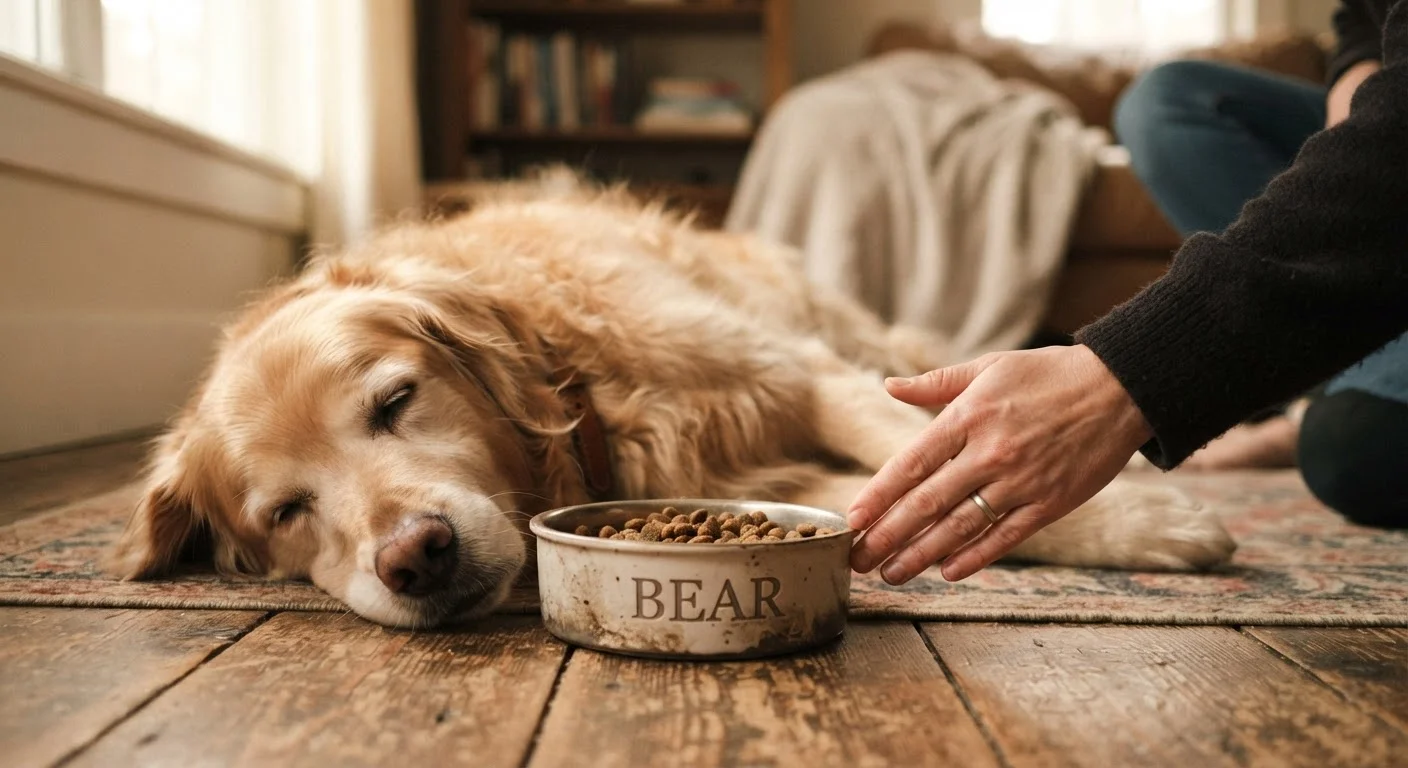
Resource guarding describes a dog's behavior of protecting valued items - food, toys, resting spots, even people - from perceived competitors. Stiffening, growling, snapping, or lunging are common signals. While alarming to witness, these behaviors are rooted in normal survival instinct: in the wild, protecting a meal or a safe resting place had real survival value.
Understanding this origin matters because it changes how owners respond. A dog guarding its bowl isn't being defiant or dominant - it's communicating discomfort using the only vocabulary it has. Treating it as a disobedience problem leads owners toward strategies that are both ineffective and counterproductive. For a deeper look at why popular but flawed responses tend to backfire, see our article on common training myths that behavioral science has debunked.
Guarding behavior exists on a spectrum. Mild guarding - a dog moving away with a chew - is very different from a dog that freezes, stares, and snaps when approached. Accurately reading where your dog falls on that spectrum shapes how you proceed.
Why Punishment Makes It Worse
The instinct to correct a growling dog by taking the item away, using a stern voice, or physically intervening is understandable - but it reliably escalates guarding over time. When a dog is punished for growling, it doesn't learn that guarding is wrong; it learns that warning signals are dangerous to display. The result is a dog that skips growling and bites with little or no warning.
Behavior science is clear on this point: suppressing warning signals removes a dog's communication tool without addressing the underlying anxiety driving the behavior. This is why approaches like the "dominance roll" or forcibly removing items as a "correction" are not recommended by veterinary behaviorists or certified applied animal behaviorists.
“Growling is not aggression - it is communication. When we punish a dog for growling, we remove a warning signal without removing the underlying discomfort that caused it. That's when biting without warning becomes more likely.”
— Jean Donaldson, Founder of the Academy for Dog Trainers and author on canine behavior
If your dog has a history of fear or has come from a neglectful environment, guarding may be especially pronounced. Our guide on training dogs with fear histories covers how to adjust your approach accordingly.
Core Training Approaches: Desensitization and Counter-Conditioning
The two foundational tools for reducing resource guarding are desensitization (gradually reducing a dog's sensitivity to the trigger) and counter-conditioning (changing the emotional response to that trigger from negative to positive). Used together, they shift how the dog feels when someone approaches a valued resource - not just what the dog does.
Start below threshold - work at a distance where the dog stays relaxed
If your dog is already stiffening or growling, you're too close to the resource for learning to happen. The dog's stress response overrides any positive associations you're trying to build. Beginning at a distance where the dog notices you but stays calm gives the training a foundation to build from.
Use the 'approach and retreat' method to build positive associations
Repeated pairings of your approach with something the dog values (a treat, praise) teach the dog that a person coming near its resource predicts good things rather than loss. Over time, the dog's emotional response shifts from anxiety to anticipation.
Practice voluntary drop-it and leave-it using positive reinforcement
Teaching a reliable 'drop it' gives owners a tool that doesn't require physical confrontation. When a dog willingly releases an item and is rewarded, the behavior of releasing - rather than guarding - becomes the practiced habit.
Avoid taking items without trading - always offer something in return
Repeatedly removing items from a dog without offering anything in exchange confirms the dog's anxiety that approach means loss. Trading - offering a high-value food reward before removing the item - maintains trust and reinforces the habit of releasing voluntarily.
Involve a certified professional when guarding is severe or has escalated to biting
Behavior modification for serious guarding carries real safety risk if done incorrectly. A certified applied animal behaviorist (CAAB) or veterinary behaviorist can conduct a proper assessment and design a safe, individualized protocol. Attempting to work through a bite-level case without professional guidance may worsen the behavior or result in injury.
Progress in this work is measured in weeks and months, not days. Consistency and patience are non-negotiable. If your household setup is making training harder, reviewing how to structure your home environment to reduce conflict before it starts is a practical companion step.
Management: The Safety Layer That Supports Training
Training changes behavior over time; management prevents dangerous situations right now. Both are necessary. Management means structuring the environment so that guarding triggers are minimized while behavior modification is underway.
Households with children need particular attention here. Kids are more likely to inadvertently trigger guarding - approaching a dog's bowl, reaching toward a chew, or climbing near a sleeping dog. Our article on age-appropriate dog training with kids covers how to involve children safely and set clear household rules around the dog's space.
This article provides general educational information about dog behavior and training. It is not a substitute for professional advice from a certified veterinary behaviorist or applied animal behaviorist. If your dog's guarding behavior has resulted in biting or you feel unsafe, please consult a qualified behavior professional before attempting any training.