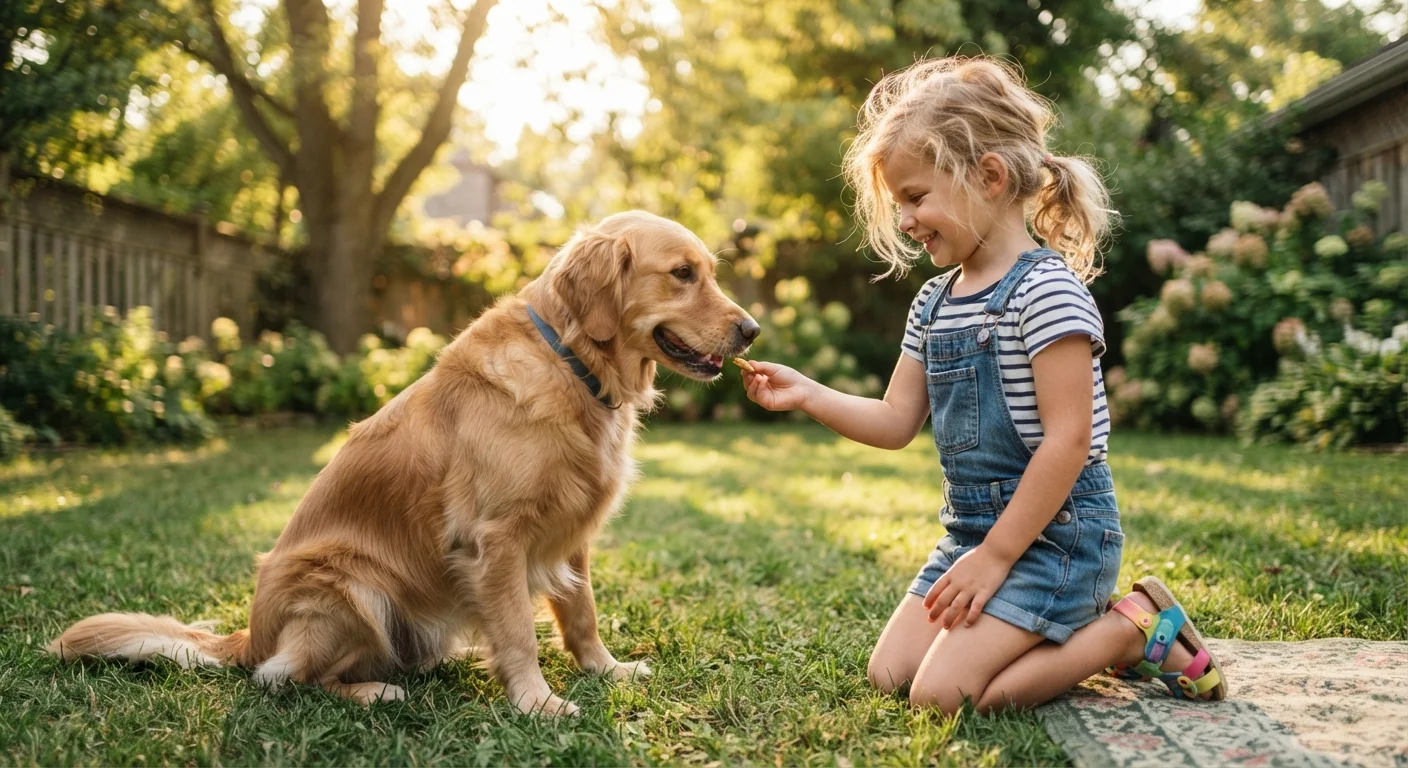
Why Involving Kids in Dog Training Makes Sense
When children participate in training, two things happen at once: the dog gets more practice, and the child develops a deeper understanding of how to communicate with animals. Dogs learn through repetition and consistency, so the more family members who reinforce the same cues and rules, the faster those behaviors become reliable. A child who understands what "sit" means to the dog - and how to ask for it correctly - is far less likely to inadvertently reward jumping, mouthing, or pushy behavior.
There's also a safety dimension. Kids who learn to read a dog's body language and understand what overwhelms or excites a dog are better equipped to avoid situations that lead to bites. This is especially worth considering if your household includes a dog with a complex background - see our guide on training a dog with a history of fear or neglect for context on how past trauma can shape a dog's reactions.
“Children who learn to interact respectfully with animals during their early years develop empathy and impulse control that extends well beyond their relationship with pets.”
— American Veterinary Medical Association, Professional veterinary and animal welfare organization
Age-by-Age Breakdown: What Kids Can Realistically Do
Matching the task to the child's developmental stage is the key to safe, successful involvement. Below is a practical framework:
- Ages 3-5: Toddlers and preschoolers should only participate with a parent physically present and in control of the session. Appropriate roles include dropping a treat on the floor after a parent cues the dog, or saying a cue word in unison with a parent. Keep interactions brief - under two minutes - and always choose a calm, food-motivated dog in a low-distraction setting.
- Ages 6-9: Early school-age children can begin delivering cues independently for well-practiced behaviors like sit, down, and stay, as long as an adult is watching and ready to redirect. They can also help with simple leash manners in a fenced yard, holding a loose leash while a parent coaches from a step away.
- Ages 10-12: Preteens can take on a more active training role, including working through short five-minute sessions on their own for known behaviors. They may also begin learning how to use a marker (like a clicker or a verbal "yes") with adult guidance.
- Ages 13+: Teenagers can participate in structured training sessions, practice new behaviors under adult oversight, and help troubleshoot mild issues. They may also benefit from attending a group obedience class alongside a parent.
Every Dog Is an Individual
Age guidelines are a starting point, not a guarantee. A high-energy or reactive dog may need more adult involvement even with older children, while a calm, experienced family dog might safely engage younger kids in structured activities. Always assess your specific dog's temperament and training history before increasing a child's role. If you have any uncertainty about how your dog will respond, consult a certified professional dog trainer before proceeding.
Best Practices for Safe, Effective Family Training
No matter a child's age, the following practices should guide how your family approaches training together:
Always supervise interactions between children and dogs, even for trained behaviors.
Even the most well-trained, reliably gentle dog can react unpredictably if startled, in pain, or overstimulated. Adult supervision ensures that if either the child or the dog shows stress signals, an adult can intervene before the situation escalates. This is not a lack of trust in the dog - it's responsible management.
Teach children to use the same cue words and hand signals the dog already knows.
Dogs learn specific words and gestures paired with rewards. If a child invents new phrases or gestures, the dog doesn't have a learned response to connect them to. Consistent language reinforces the dog's training rather than introducing confusion.
Use only positive reinforcement methods when children are involved.
Aversive techniques - including leash corrections, raised voices, or physical pressure - require timing and skill to apply without causing harm or eroding trust. Children lack the physical coordination and emotional regulation to use them safely. Positive reinforcement, by contrast, is safe for any age to deliver and builds a dog's confidence rather than suppressing it.
Establish and enforce clear rules about when children may not approach or train the dog.
Dogs need undisturbed time during meals, sleep, and recovery from stress. Teaching children to recognize and respect these boundaries prevents the majority of bite incidents, most of which occur when a dog feels cornered or startled rather than during intentional training.
Keep training sessions short and end on a success.
Children have shorter attention spans than adults, and dogs tire of repetition quickly too. Short sessions - two to five minutes depending on the child's age - maintain enthusiasm and prevent frustration for both the child and the dog. Ending when the dog has just succeeded sets a positive tone for the next session.
Quick Wins to Get Started Today
You don't need a formal training plan to begin involving your child. These simple starting points build the habit safely:
As your dog becomes more reliable with household cues, consider how those same skills carry over into more complex situations - our article on training across multiple dogs in the same household covers how consistency matters even more with more than one pet in the home.
This article is for general educational purposes. Always supervise children and dogs together, and consult a certified professional dog trainer or veterinary behaviorist if you have concerns about your dog's behavior around children.