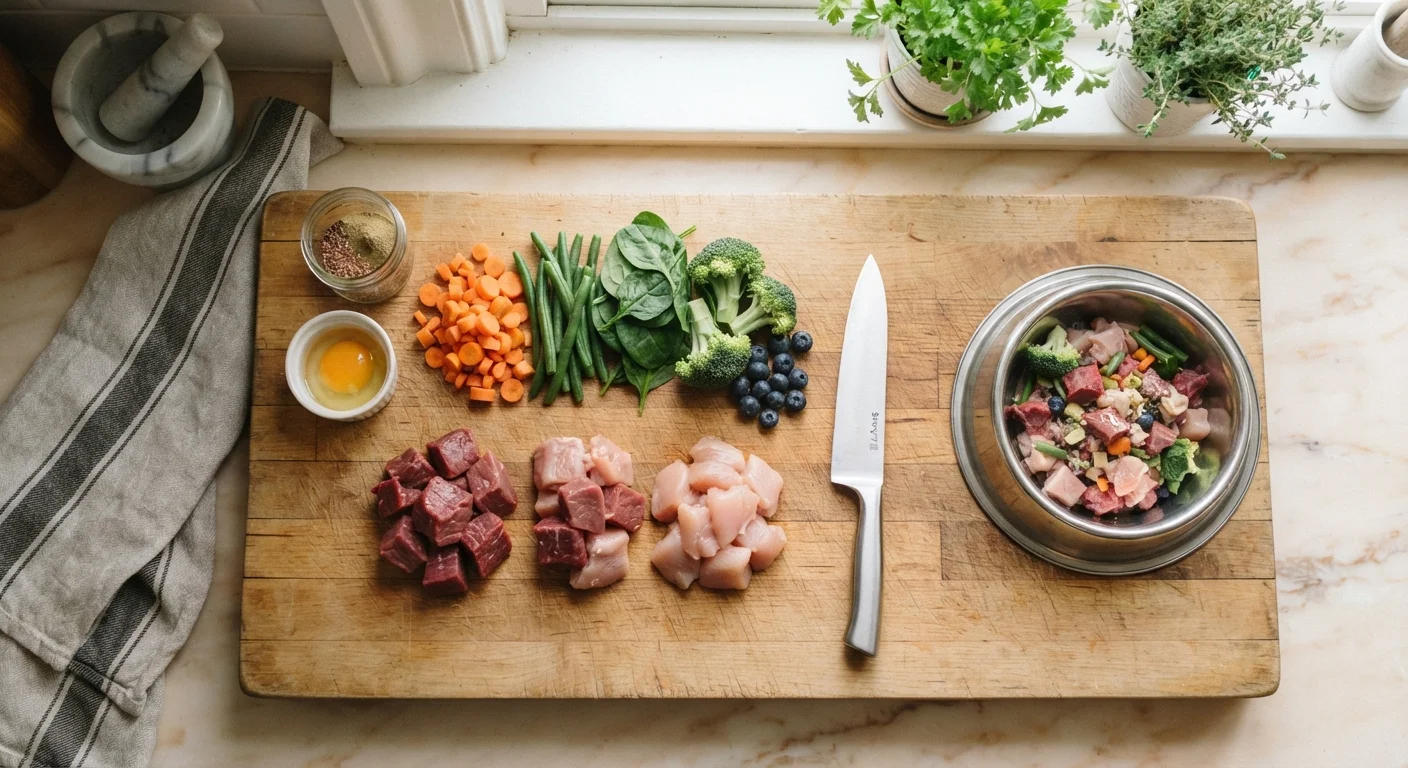
Why Raw Feeding Is So Contested
Few topics in pet nutrition generate more passionate debate than raw feeding. Proponents describe shinier coats, better digestion, and greater vitality. Critics - including most major veterinary organizations - point to measurable risks that owners may not fully appreciate. The truth, as with most complex nutrition questions, sits somewhere in the middle but leans heavily toward caution.
Raw diets typically include uncooked muscle meat, organ meat, raw bones, and sometimes raw eggs, dairy, or produce. They're sold commercially as frozen or freeze-dried products, or prepared at home. Either way, the core concerns center on two overlapping issues: microbial safety and nutritional completeness. Both deserve an honest look. See our guide to reading pet food labels for help evaluating any commercial diet's nutritional claims.
Myth
Raw diets are natural, so they must be healthier and safer for dogs and cats.
Fact
"Natural" does not mean safe or nutritionally complete. Raw meat commonly harbors dangerous pathogens regardless of its source.
The appeal to nature is a logical fallacy in nutrition as much as in human medicine. Many natural substances are harmful; many carefully processed foods are safe and beneficial. Raw meat - even from high-quality sources - routinely tests positive for Salmonella, Listeria monocytogenes, and Campylobacter in published studies. Cooking eliminates most of these pathogens without meaningfully degrading the protein quality pets need.
Myth
Dogs descended from wolves, so a wolf's raw prey diet is the right diet for pet dogs.
Fact
Domestic dogs have undergone thousands of years of genetic divergence from wolves and have adapted to digest a broader range of foods.
Selective breeding and co-evolution with humans have given dogs measurably more copies of the amylase gene than wolves - a direct adaptation for digesting starch. Wolves in the wild also have significantly shorter lifespans and routinely suffer from parasites and nutritional deficits. Their diet represents survival, not an optimized health model. Modern companion dogs have distinct nutritional needs that research-backed commercial diets are specifically formulated to meet.
Myth
A pet on a raw diet won't get sick from bacteria because their digestive systems can handle it.
Fact
Pets can contract clinical illness from raw-diet pathogens and can shed bacteria in their feces, posing a household transmission risk.
While dogs and cats do have shorter GI tracts and more acidic stomachs than humans, this does not make them immune to foodborne illness. Published case reports document dogs and cats developing Salmonella gastroenteritis after eating contaminated raw food. Asymptomatic shedding - where the pet appears healthy but passes bacteria in stool - is particularly concerning in households with vulnerable people. The CDC explicitly cites raw pet food as a source of human salmonellosis cases.
Myth
Homemade raw diets are nutritionally superior to commercial pet foods because you control the ingredients.
Fact
Homemade raw diets are frequently nutritionally imbalanced and often lack essential minerals and vitamins unless formulated by a board-certified veterinary nutritionist.
Studies analyzing homemade raw recipes - including those sourced from popular pet health websites and books - have found that the majority do not meet AAFCO nutrient profiles for their intended life stage. Common deficiencies include calcium, iodine, vitamin E, and zinc. Surpluses of certain nutrients (such as vitamin A from excessive organ meat) can be equally harmful over time. The appeal of ingredient control is real, but execution without professional formulation routinely produces an unbalanced diet.
Myth
Feeding raw bones is safe and beneficial for dental health.
Fact
Raw bones carry real risks of tooth fractures, GI obstruction, and perforation, and are not endorsed by veterinary dental organizations as a safe cleaning method.
Veterinary dentists distinguish between "chewing" and "dental cleaning." While gnawing on hard objects does remove some plaque mechanically, raw bones - and other hard chews - are a leading cause of slab fractures of the carnassial teeth (the large shearing teeth). Bone fragments can also cause esophageal or intestinal obstruction. The Veterinary Oral Health Council (VOHC) publishes a list of products with demonstrated evidence for plaque and tartar control; raw bones are not among them.
The Safety and Nutrition Picture
The FDA, CDC, and the American Veterinary Medical Association (AVMA) have all published formal guidance advising against raw meat-based diets, citing confirmed cases of Salmonella, Listeria, and E. coli contamination in commercial raw products. Importantly, the risk extends beyond the pet: household members - particularly children, elderly individuals, and immunocompromised people - can be exposed through contact with contaminated food, bowls, or surfaces.
74%
Raw pet food products testing positive for pathogens
A 2018 FDA sampling survey found that approximately 74% of raw pet food samples tested positive for at least one pathogen, compared to less than 10% of other pet food types.
~60%
Homemade raw recipes lacking key nutrients
Multiple published analyses have found that the majority of homemade raw diet recipes available to pet owners fail to meet AAFCO minimum nutrient profiles for at least one essential nutrient.
Nutritional balance is the second major concern. A homemade raw diet assembled without veterinary nutritionist input frequently lacks critical micronutrients such as calcium, phosphorus, zinc, and vitamin D. Deficiencies in these nutrients can cause serious skeletal and metabolic disease, particularly in growing animals. Even commercially prepared raw products have shown inconsistencies in nutrient profiles when tested against established standards.
If you are weighing raw feeding against other options, our comparison of wet food versus dry food outlines what both conventional formats offer. For cat-specific considerations, separating fact from fiction about cat nutrition addresses feline-specific claims directly. And if raw-adjacent trends interest you, grain-free diet research for dogs offers a similarly evidence-grounded look.
Vulnerable Households Face Higher Risk
The FDA and CDC specifically advise against raw pet diets in households with infants, elderly individuals, pregnant people, or anyone who is immunocompromised. Contamination spreads through food handling, pet licking, and contact with food bowls or preparation surfaces. If anyone in your household falls into a higher-risk category, discuss the implications with both your veterinarian and your own healthcare provider before introducing a raw diet.
This article is for general informational purposes only and is not veterinary medical advice. Always consult a licensed veterinarian before making significant changes to your pet's diet.