How Wet and Dry Food Are Made - and Why It Matters
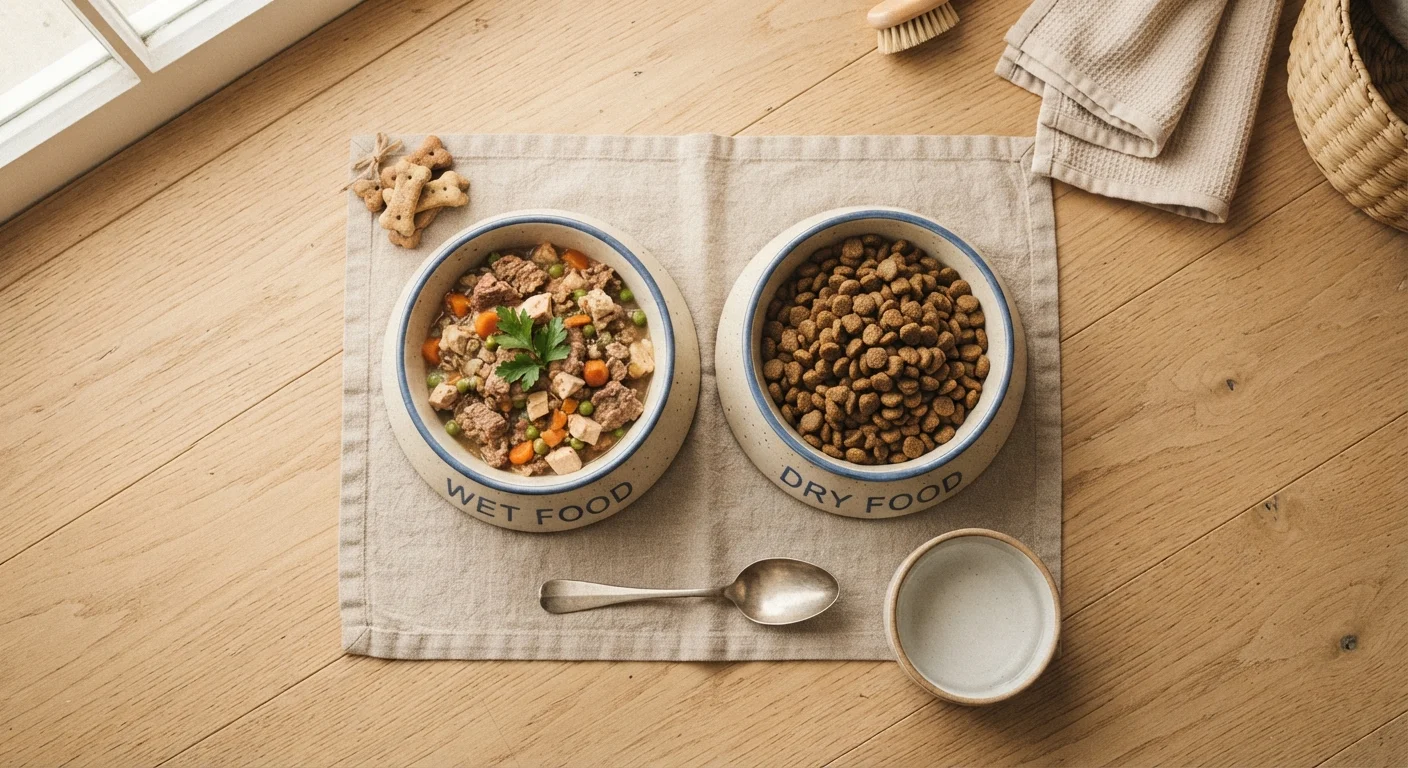
Wet and dry pet foods start from similar raw ingredients - proteins, fats, carbohydrates, vitamins, and minerals - but manufacturing processes produce very different end products. Wet food is cooked inside sealed cans or pouches, preserving moisture and creating a soft texture. Dry kibble is extruded: the ingredient mixture is pushed through a machine under heat and pressure, then dried to reduce moisture to roughly 10% or less.
That difference in moisture content is the most consequential distinction. Wet food typically contains 70-78% water by weight, while dry food sits at around 6-10%. This has downstream effects on nutrition, palatability, calorie density, and how your pet's body processes each meal.
For a deeper look at how to evaluate any pet food - wet or dry - see our guide on reading a pet food label. Understanding the guaranteed analysis and ingredient list applies equally to both formats.
| Criterion | Wet Food (Canned) | Dry Food (Kibble) |
|---|---|---|
| Moisture Content | 70-78% water | 6-10% water |
| Calorie Density | Lower per volume | Higher per volume |
| Cost Per Serving | Generally higher | Generally lower |
| Shelf Life (Unopened) | 1-5 years | Up to 18 months |
| Storage After Opening | Refrigerate; use within 2-3 days | Sealed container; weeks to months |
| Palatability | High aroma; often preferred | Variable; less aromatic |
| Dental Benefit | Minimal mechanical action | Modest abrasion; not a substitute for brushing |
| Suitability for Picky Eaters | Generally better | Varies by pet |
Hydration, Dental Health, and Nutritional Considerations
Hydration: Because cats evolved as desert animals, they have a naturally low thirst drive and often rely on food to meet their fluid needs. Wet food can meaningfully contribute to daily water intake for cats and dogs alike. This is particularly relevant for pets prone to urinary crystals or kidney concerns, though dietary management for those conditions should always be directed by a veterinarian. For a broader perspective on how food contributes to hydration, our article on hydration and diet covers the concept in useful detail.
Dental Health: Dry food is often credited with cleaning teeth through mechanical abrasion. The evidence here is modest - standard kibble has limited plaque-reducing effect, though specially formulated dental diets with larger, textured pieces show more consistent results in veterinary studies. Wet food does not provide this mechanical action. Neither format replaces tooth brushing or professional dental cleanings as the gold standard for oral health.
Calorie Density and Weight Management: Because kibble has most of its moisture removed, it is calorie-dense relative to its volume. This means portion control is essential - a small cup of kibble packs significantly more calories than the same volume of wet food. For pets managing their weight, the higher water content of wet food can create a greater sense of fullness with fewer calories per serving.
~78%
Moisture content in typical canned pet food
Compared to roughly 6-10% in dry kibble, the water difference is substantial and directly affects urinary and kidney health support.
3-4×
Estimated cost difference per calorie
Wet food commonly costs several times more per calorie than dry kibble, a difference that compounds significantly in larger or multi-pet households.
Cost, Storage, and Practical Feeding Realities
On a per-calorie basis, dry food is almost always less expensive than wet food. A pet fed exclusively on canned food will typically cost noticeably more to feed over a year. For multi-pet households or large breeds, this difference can be substantial.
Storage is another practical factor. An unopened bag of dry kibble keeps for months at room temperature in a sealed container. Opened canned food must be refrigerated and used within a few days. Wet food also cannot be left out for extended periods without becoming a food safety concern, making it less suited to free-feeding arrangements.
Many pet owners land on a mixed feeding approach - dry food as the daily base, with wet food added as a topper or separate meal. This balances the cost advantages of kibble with the hydration and palatability benefits of canned food. If you're trying to build a consistent routine around your pet's feeding schedule, our guide to building a healthy pet routine offers a practical framework.
Cats and Wet Food: A Special Consideration
Veterinary nutritionists often highlight wet food as particularly beneficial for cats because of their low natural thirst drive. Cats that consume primarily dry food may have chronically lower fluid intake, which some research associates with increased risk of lower urinary tract issues. This doesn't mean dry food is harmful to cats - many cats thrive on it - but hydration is a meaningful factor to discuss with your vet. For more on the cat-specific debate, see our article on wet food vs. dry food for cats.
This article is for general informational purposes and is not a substitute for veterinary advice. Consult your veterinarian before making significant changes to your pet's diet, especially if your pet has existing health conditions.