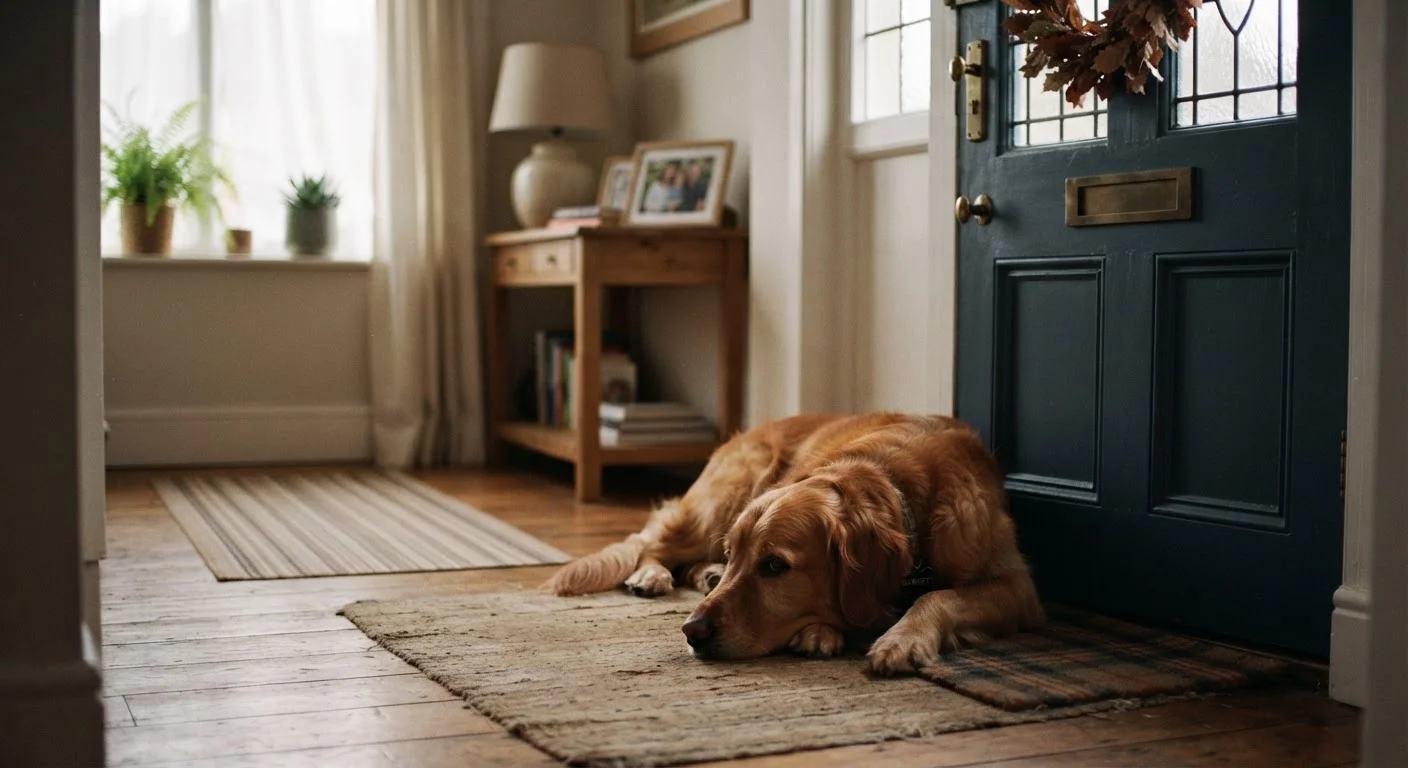
Understanding What Separation Anxiety Actually Is
Separation anxiety occurs when a dog experiences significant distress specifically because they are left alone or separated from their primary attachment person. It goes beyond ordinary boredom - dogs with true separation anxiety show measurable stress responses: panting, pacing, destructive behavior at entry points, excessive vocalization, or house-soiling that happens only when the owner is absent.
It's worth distinguishing separation anxiety from other behavior problems. A dog that chews furniture generally may simply need more enrichment. But a dog that destroys only the door frame after you leave, or one that a neighbor reports howls for hours, is showing a different pattern entirely. For a deeper look at how anxiety presents across different situations, see our article on how anxiety looks and what triggers it in pets.
Understanding the root cause matters because it shapes the solution. Anxiety is a physiological and emotional state - not a choice the dog is making - and training strategies need to address that underlying state, not just suppress the visible behavior.
Core Training Strategies That Work
The following practices are grounded in applied animal behavior science and are consistent with guidance from organizations such as the American Veterinary Society of Animal Behavior (AVSAB). They work best when applied consistently over weeks, not days.
Practice graduated absences starting at just a few seconds
Dogs with separation anxiety often begin to panic before you even close the door. By starting departures at durations so brief the dog barely registers them (5-10 seconds), you teach that your leaving predicts your return - not prolonged distress. Incrementally extending time only when the dog stays calm prevents rehearsal of the anxious response.
Make departure cues emotionally neutral through desensitization
Most dogs learn to associate specific cues - picking up keys, putting on shoes, grabbing a bag - with the distress of being left. Repeatedly performing these actions without leaving strips them of their predictive power and reduces pre-departure anxiety.
Keep departures and arrivals low-key and emotionally flat
Enthusiastic goodbyes and excited greetings amplify the emotional contrast between your presence and absence. A calm, matter-of-fact departure teaches that leaving is unremarkable. Similarly, a quiet return helps your dog settle faster after reunification.
Use food-dispensing enrichment to create positive associations with alone time
Pairing alone time with something the dog genuinely values (like a stuffed food toy) builds a counter-association: being alone predicts something good. This works best when the enrichment item is offered only during absences, preserving its novelty and value.
Build confidence through independent settling practice throughout the day
Dogs that are constantly in physical contact with their owner may have difficulty self-regulating when alone. Gradually teaching a dog to settle on a mat in a different room - while you're still home - builds the muscle of independence before it's required under stress.
Consult a professional for moderate to severe cases before continuing solo
Poorly timed or overly fast desensitization can inadvertently worsen anxiety by repeatedly pushing the dog past their stress threshold. A certified applied animal behaviorist or veterinary behaviorist can create a structured protocol tailored to your dog's specific baseline and progress rate. In some cases, behavioral medication prescribed by a veterinarian is a clinically appropriate component of treatment.
“Separation anxiety is not a dominance or spite problem - it is a fear problem. The dog is not acting out; the dog is suffering. Treatment must address the emotional state, not just the behavior.”
— American Veterinary Society of Animal Behavior, Professional organization for veterinary behavior science
Quick Wins You Can Start Today
While long-term desensitization takes time, a few immediate adjustments can reduce your dog's daily stress load right away.
Multi-Dog Households: A Different Dynamic
If you have more than one dog, separation anxiety can still occur - even when one dog remains home. Some dogs bond specifically to a person, not just to canine company, so having another dog present doesn't automatically resolve distress. For guidance on managing training across multiple dogs, visit our article on training across multiple dogs in the same household. If you're working with a rescue dog showing anxiety alongside other fear-based behaviors, our guide on training dogs with a history of fear or neglect covers adapted approaches.
This article is for general informational purposes and does not constitute veterinary or behavioral advice. If your dog's symptoms are severe or not improving, consult a licensed veterinarian or certified applied animal behaviorist for personalized guidance.