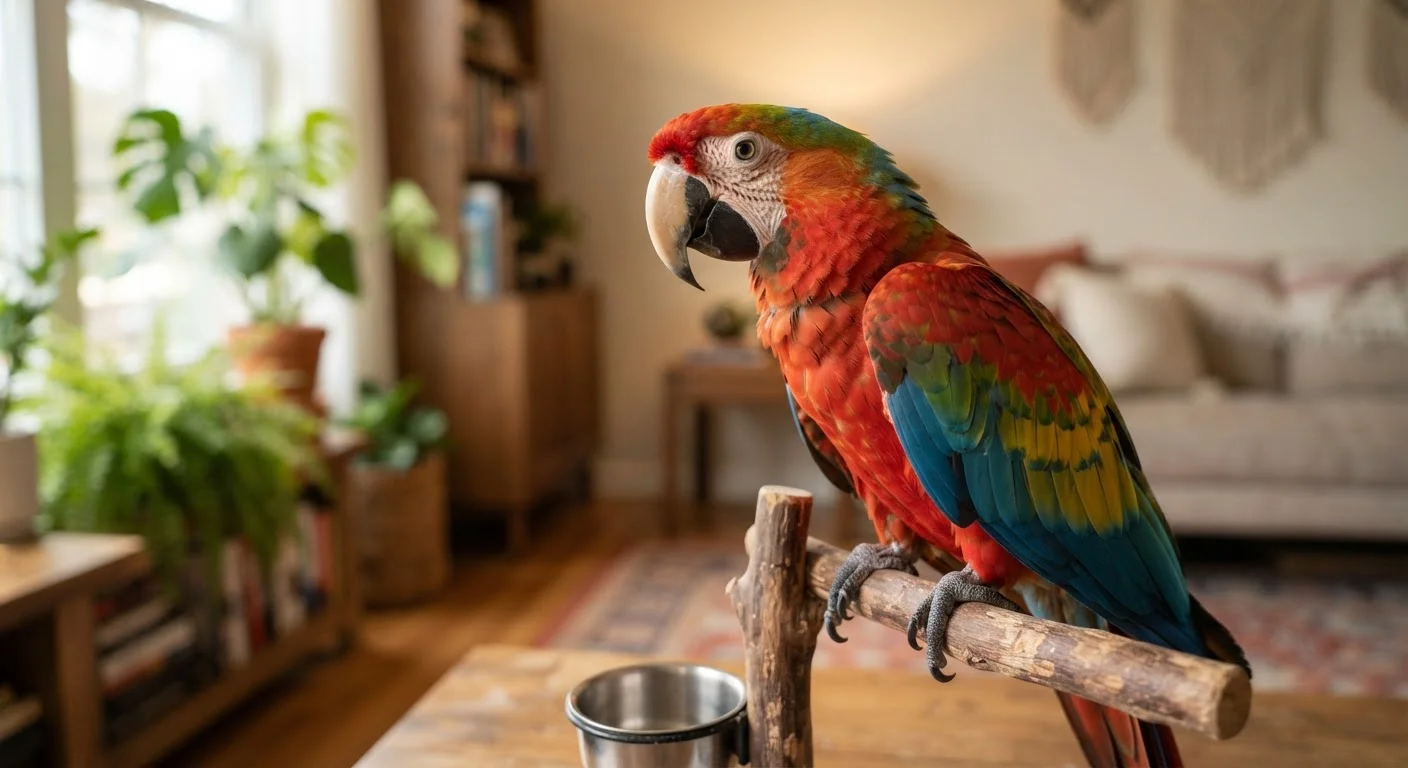
Why Birds Are So Good at Looking Fine
Unlike dogs and cats, pet birds belong to a lineage shaped by prey-animal instincts. Showing weakness in the wild signals vulnerability to predators, so birds have evolved to suppress visible signs of illness until they can no longer compensate. In a home setting, that same instinct works against owners trying to monitor their pet's health.
This masking behavior is the single most important concept every bird owner needs to understand. A bird that looks fine may have been sick for days or even weeks. By the time signs are undeniable - a bird sitting on the cage floor, breathing with effort, or refusing food entirely - the animal may already be in a critical state. Early detection depends on owners learning to notice the subtle signals their bird cannot completely hide.
For context on how this compares to other small pets, see our overview of overlooked health needs in small animals, which covers similar masking tendencies in rabbits and guinea pigs.
Establish a "Normal" Baseline Early
When you first bring a bird home, spend time observing its typical behavior, posture, and vocal patterns before any health concerns arise. Knowing what healthy looks like for your individual bird makes it far easier to recognize when something is wrong. Write down baseline weight, activity level, and dropping appearance so you have a reference point.
Early Warning Signs Every Bird Owner Should Know
Learning to read your bird's baseline behavior is essential. Once you know what's normal, deviations become easier to spot. The following are among the most reliable early indicators of illness in companion birds:
- Fluffed feathers at rest: Birds fluff briefly when cold or sleepy, but prolonged fluffing throughout the day suggests the bird is conserving energy due to illness.
- Reduced or absent vocalization: A bird that has gone unusually quiet - particularly one that is normally chatty - deserves attention.
- Changes in droppings: Monitor the color, consistency, and volume daily. Watery droppings, discolored urates, or undigested food in feces are meaningful red flags.
- Decreased appetite or food avoidance: A bird leaving food it normally enjoys is worth noting, especially over consecutive days.
- Sitting low or on the cage floor: This is a serious sign that the bird may lack the energy to perch normally.
- Tail bobbing: Rhythmic bobbing of the tail at rest can indicate respiratory effort and should be evaluated promptly.
These signs often overlap with general pet pain signals. The signs your pet may be in pain guide offers additional behavioral cues that apply across species.
~65%
Birds showing illness only in late stages
Avian veterinary literature consistently notes that many pet birds do not display overt illness signs until disease is significantly advanced due to instinctive masking behavior.
Annual
Recommended wellness exam frequency
The Association of Avian Veterinarians recommends at minimum one wellness exam per year for apparently healthy adult birds to establish baselines and detect subclinical disease.
30 days
Recommended quarantine period for new birds
Standard avian veterinary guidance calls for a 30-day isolation period for any new bird before introduction to existing household birds, to reduce disease transmission risk.
Monitoring Your Bird at Home
Active monitoring is your most powerful tool for catching illness early. A few practical habits make a real difference:
- Weigh your bird weekly. A gram scale designed for small animals lets you track weight accurately. Birds can lose significant body mass before it becomes visually apparent, and consistent weight records give a vet critical baseline data.
- Observe droppings daily. Line the cage tray with clean paper to make dropping assessment easy. Drastic changes in appearance or volume should prompt a vet call.
- Note changes in activity level. Is your bird climbing, foraging, and playing as usual? Reduced engagement with enrichment or social interaction can signal that something is off.
- Check feathers and skin. Broken, missing, or dull feathers; abnormal growths; or changes in beak and nail condition can reflect underlying health issues.
Keeping a simple health log - even brief daily notes - gives you objective data to share with a veterinarian. Owners who track trends are far more likely to catch problems before they escalate. This kind of attentive care also builds a foundation for positive daily interaction with your bird, which makes handling for health checks much easier.
Quarantine New Birds Before Introducing Them
If you have multiple birds, any new arrival should be housed separately for at least 30 days before introduction - even if the bird appears healthy. Many avian infections are contagious and may not produce visible symptoms immediately. An avian vet exam during this quarantine period is strongly advisable.
When to Call an Avian Veterinarian
Because birds deteriorate quickly once illness progresses, erring on the side of caution is always appropriate. Contact an avian veterinarian if you observe any of the warning signs listed above, or if something about your bird simply seems "off" even if you can't pinpoint what.
For situations where signs are more severe - labored breathing, inability to perch, bleeding, or collapse - treat the situation as urgent. Our guide on emergency vs. urgent care for pets can help you determine how quickly to act and where to go.
Annual wellness exams are strongly recommended for all pet birds, even those appearing completely healthy. These visits allow a vet to establish a weight baseline, assess organ function through basic diagnostics, and catch subclinical disease early. New birds should be examined within the first few weeks of acquisition, ideally before contact with any other pet birds in the household.
When choosing a vet, look specifically for one with avian experience or board certification in avian practice. Avian medicine involves specialized knowledge - from interpreting bird-specific lab values to safe handling and anesthesia - that goes beyond general small-animal training.
“Birds are masters of disguise when it comes to illness. By the time a bird looks sick to its owner, it has often been sick for quite a while. The window for effective treatment can be narrow, which is why owners who know their bird's normal behavior are at a real advantage.”
— Association of Avian Veterinarians, Professional organization for avian veterinary medicine
This article is for general informational purposes only and is not a substitute for professional veterinary advice. Always consult a qualified avian veterinarian for concerns about your bird's health.