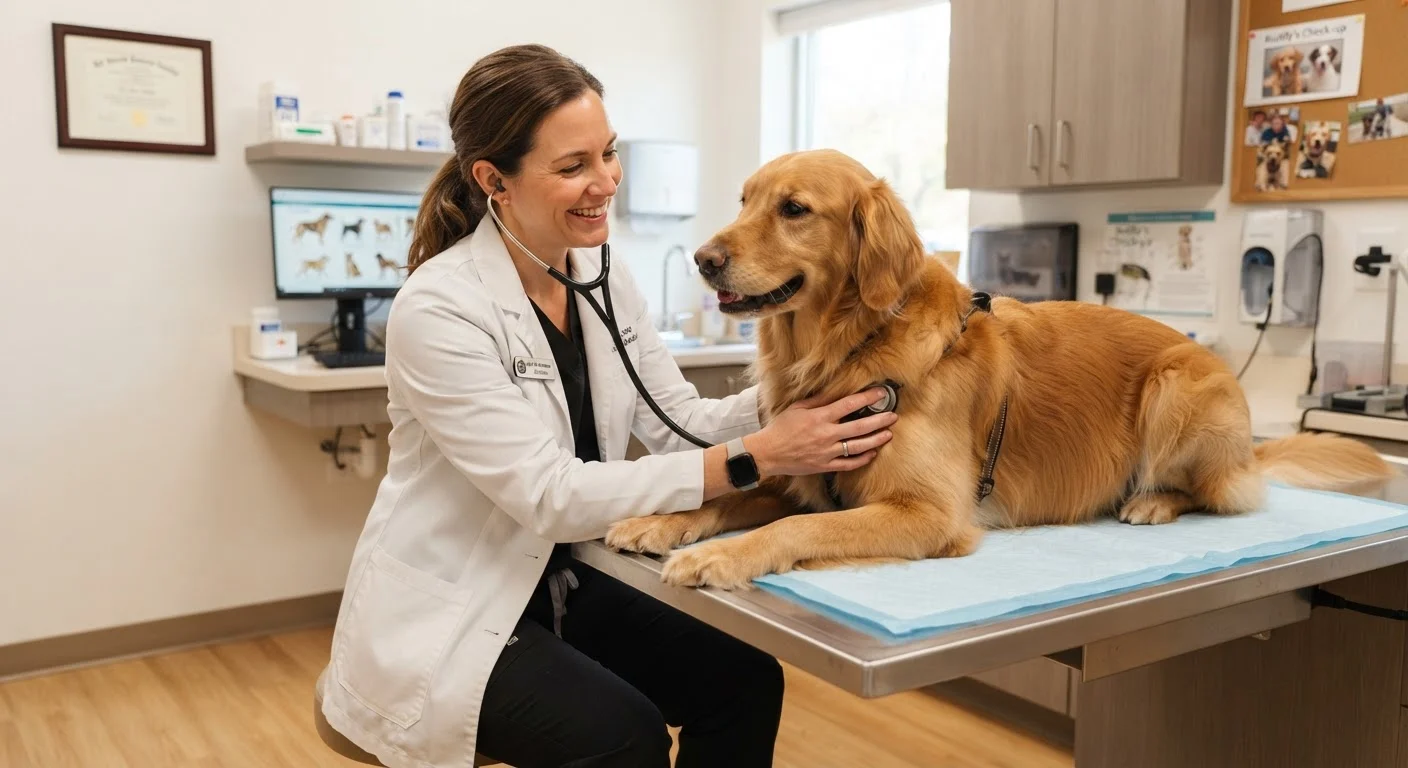
What Vets Are Actually Doing During That Exam
To an observer, a routine wellness exam can look like a quick once-over - the vet listens with a stethoscope, checks the ears, looks at the teeth, and sends you home. In reality, a thorough wellness exam is a structured, methodical assessment of every major body system.
A typical exam proceeds roughly as follows:
- Weight and body condition: Weight is compared to previous visits. Vets also assign a body condition score - a standardized 1-9 scale that assesses fat coverage and muscle mass more precisely than weight alone.
- Eyes, ears, and nose: Checked for discharge, cloudiness, redness, odor, or signs of infection and inflammation.
- Mouth and teeth: Dental disease is the most commonly diagnosed condition in adult pets. Vets assess tartar buildup, gum health, tooth fractures, and oral masses. See our complete annual wellness plan guide for how dental checks fit into broader yearly care.
- Skin and coat: Assessed for parasites, abnormal lumps, hair loss, or signs of allergies and hormonal issues.
- Lymph nodes: Palpated for enlargement, which can signal infection or, in some cases, cancer.
- Heart and lungs: Auscultation (listening with a stethoscope) can reveal murmurs, arrhythmias, or abnormal breath sounds that owners would never detect at home.
- Abdomen: The vet palpates the belly to assess organ size, check for pain, and feel for unusual masses.
- Joints and gait: Especially important in older pets or large breeds. Early arthritis often shows up here before it causes obvious limping.
Throughout the exam, the vet is also comparing findings to your pet's own historical record - changes over time are often more informative than any single data point.
What Counts as a 'Routine' Visit Varies by Practice
Some clinics include bloodwork and a fecal exam as part of every annual wellness appointment; others offer these as add-ons. Before your visit, it's worth asking what the exam includes and whether any additional diagnostics are recommended for your pet's age and history. Understanding what's covered helps you make informed decisions without surprises at checkout.
Preventive Care: What Gets Updated at Each Visit
A wellness exam isn't only about the physical assessment. It's also the scheduled checkpoint for keeping your pet's preventive care current.
Vaccines are reviewed against your pet's lifestyle and risk profile. A dog that frequents dog parks has different needs than one that rarely leaves the yard. Core vaccines (like rabies and distemper) follow legally mandated or professionally recommended schedules; lifestyle vaccines are individualized.
Parasite prevention is discussed and updated - flea, tick, heartworm, and intestinal parasite control are all evaluated. Your vet may run a fecal exam to check for internal parasites, or a heartworm antigen test, depending on the region and your pet's history.
Nutrition and weight are revisited. Life-stage needs change, and what worked for your 2-year-old dog may not be appropriate for a 9-year-old with early kidney concerns.
Vets may also flag whether your pet is due for any diagnostic screening. For senior pets in particular, annual bloodwork and urinalysis can catch organ changes before symptoms appear. For more on what those tests reveal, see our guide to veterinary diagnostic tests.
Bring a Written List to Every Visit
Before each annual exam, jot down any changes you've noticed - appetite shifts, increased water consumption, behavior differences, new lumps, or changes in activity. Even observations that seem minor can provide meaningful context for your vet. Most appointments are 30 minutes or less; a written list ensures nothing important gets left unmentioned.
Why Skipping Annual Exams Costs More Than You Might Expect
The most common reason owners skip annual wellness exams is cost - and it's a legitimate concern. But the financial math often works against skipping.
Conditions caught at stage one rarely cost the same to treat as conditions caught at stage three or four. Dental disease treated with a routine cleaning is far less expensive than extractions after years of neglect. A heart murmur identified early allows for monitoring and early intervention; one discovered during an emergency visit often means the disease has progressed significantly.
~80%
Dogs showing dental disease by age 3
The American Veterinary Medical Association estimates dental disease affects the majority of dogs by age three, often without obvious symptoms to owners.
1 in 3
Pets diagnosed with a serious condition annually
Veterinary industry data consistently estimates that roughly one in three pets will receive a significant health diagnosis each year - many detected during routine wellness exams.
7 years
Human-equivalent years per pet year for seniors
A general veterinary rule of thumb is that senior dogs and cats age roughly 5-7 human-equivalent years per calendar year, making annual exams the equivalent of a checkup every several human years.
There's also the question of what owners simply don't notice. Pets are instinctively inclined to mask discomfort - a trait inherited from wild ancestors for whom visible weakness was a liability. Weight loss of a pound or two in a small dog is significant; it's also easy to miss when you see the animal every day. A vet who has records going back three or four years will catch that trend.
For owners managing the cost of veterinary care, understanding your options in advance helps. Our article on pet insurance vs. veterinary payment plans explains two common ways to make routine and unexpected care more manageable.
It's also worth understanding what an in-person exam can do that virtual options cannot. Telehealth for pets has expanded in recent years and is genuinely useful for follow-up questions and minor concerns - but it cannot replace the hands-on physical assessment of a wellness exam.
This article is for general informational and educational purposes only and does not constitute veterinary medical advice. Always consult a licensed veterinarian for guidance specific to your pet's health needs.