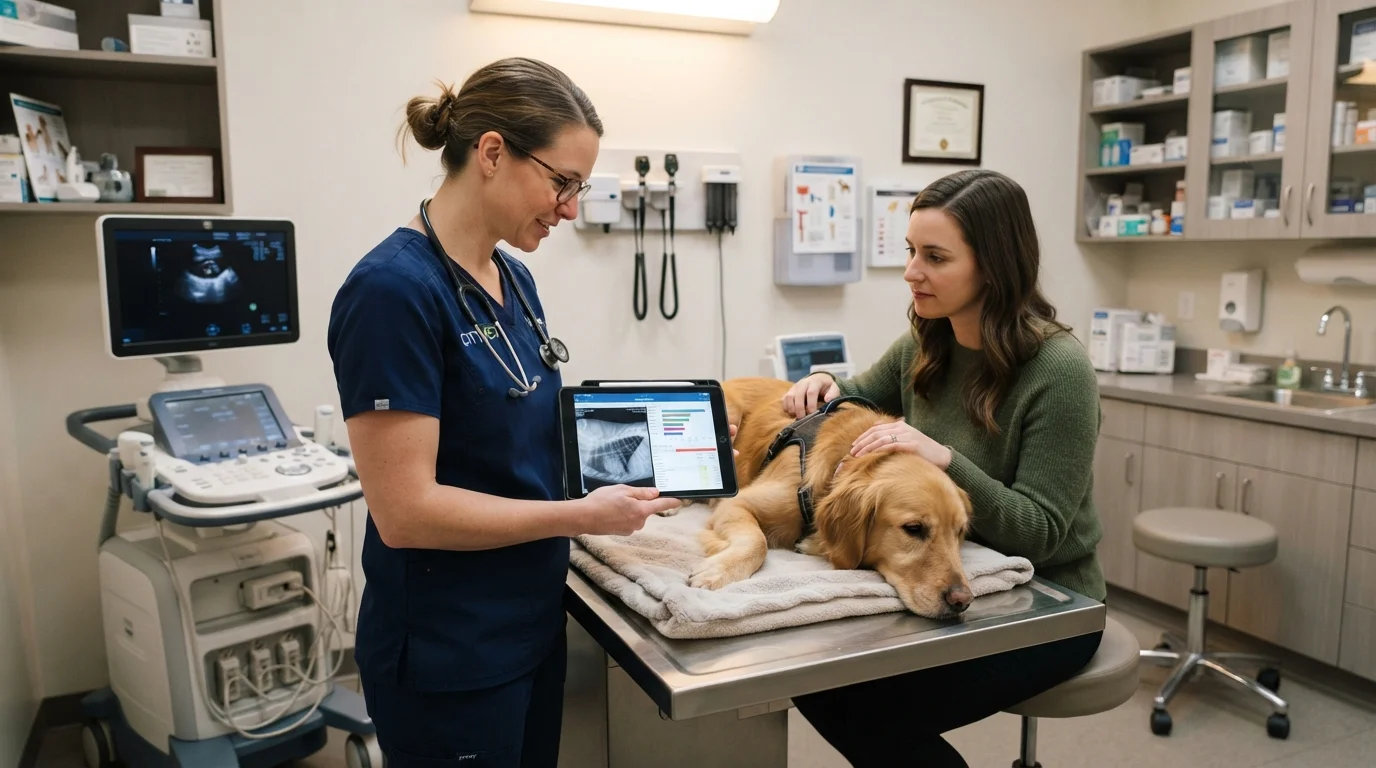
Why Vets Order Diagnostic Tests
When your pet seems off - or even during a routine wellness exam - your veterinarian may recommend diagnostic testing. These tests give clinicians objective data that physical examination alone cannot provide. A dog can't describe where it hurts; a blood panel or urinalysis can fill in critical gaps.
Diagnostics serve two broad purposes: screening (catching problems before symptoms appear) and diagnosis (confirming or ruling out a suspected condition). Understanding what each test looks for makes it easier to have an informed conversation with your vet and to interpret results without alarm or false reassurance.
| Most common routine panel | CBC + Chemistry Panel |
| Pre-anesthesia testing recommended | Yes - blood work before surgery is standard practice |
| Most common senior cat endocrine test | T4 (thyroid hormone) |
| Fecal testing frequency (dogs/cats) | At least once yearly, per most veterinary guidelines (American Veterinary Medical Association guidance) |
| Imaging types most used in practice | Radiograph (X-ray) and ultrasound |
| Turnaround time for in-house panels | Typically 20-30 minutes at most clinics |
Common Diagnostic Tests and What They Measure
Complete Blood Count (CBC)
A CBC measures the cellular components of blood: red blood cells (which carry oxygen), white blood cells (which drive immune response), and platelets (which aid clotting). Abnormally low red cell counts may suggest anemia; elevated white cell counts can point to infection or inflammation. Results are always interpreted alongside clinical signs - a single elevated value rarely tells the whole story.
Blood Chemistry Panel
Also called a serum chemistry or metabolic panel, this test evaluates organ function. Key markers include BUN (blood urea nitrogen) and creatinine for kidney health, ALT and ALP for liver function, and glucose for metabolic status. Vets often pair a chemistry panel with a CBC for a complete internal snapshot, particularly before anesthesia or in older pets.
Urinalysis
Urine tells your vet a lot about kidney concentrating ability, hydration status, and whether infection, crystals, or blood are present. A urine specific gravity reading helps assess how well the kidneys are filtering waste. When an abnormality is found, vets may follow up with a urine culture to identify specific bacteria.
Thyroid Testing
In cats, hyperthyroidism (overactive thyroid) is common in middle-aged to older animals. In dogs, hypothyroidism (underactive thyroid) is more frequently diagnosed. A T4 test measures circulating thyroid hormone and is typically the first-line screen for both species.
Fecal Examination
A fecal flotation test checks stool samples for intestinal parasites - roundworms, hookworms, whipworms, coccidia, and Giardia. Because many parasites shed eggs intermittently, a negative result doesn't guarantee a parasite-free pet; vets may recommend repeat testing or preventive treatment based on risk factors.
Imaging: X-Ray and Ultrasound
Radiographs (X-rays) show bone structure, organ size, and the presence of foreign objects or fluid in body cavities. Ultrasound adds soft-tissue detail that X-rays can't capture - it's particularly useful for evaluating heart chambers, bladder walls, and abdominal organs. These two modalities are often complementary rather than interchangeable.
CBC (Complete Blood Count)
A blood test that quantifies red cells, white cells, and platelets. It helps detect anemia, infection, clotting disorders, and immune system abnormalities.
BUN (Blood Urea Nitrogen)
A marker of kidney function found on chemistry panels. Elevated BUN can indicate that the kidneys are not filtering waste efficiently, though dehydration can also raise it.
ALT (Alanine Aminotransferase)
A liver enzyme measured on chemistry panels. Significant elevations often signal liver cell damage or disease, prompting further investigation.
Urine Specific Gravity
A urinalysis measurement of how concentrated urine is. It reflects the kidneys' ability to concentrate waste; dilute urine in a dehydrated pet can indicate impaired kidney function.
T4 (Thyroxine)
A hormone produced by the thyroid gland. A T4 blood test is the primary screen for thyroid disorders in both dogs and cats.
Radiograph
A veterinary X-ray image used to evaluate bones, organ size, and body cavities. It is especially useful for detecting fractures, foreign objects, and chest or abdominal abnormalities.
Fecal Flotation
A laboratory technique that suspends stool in a solution to separate and identify parasite eggs or cysts under a microscope.
Reading Results and Next Steps
Lab reference ranges printed on reports represent averages for a healthy population - they are guides, not absolutes. A value just outside the normal range in an otherwise healthy, asymptomatic pet may be clinically insignificant, while a value within range could still concern a vet if it has changed notably since a prior test. Trend over time matters as much as a single data point.
Results Always Require Clinical Context
Diagnostic values are most meaningful when interpreted alongside your pet's history, physical exam findings, and symptoms. Resist the urge to search individual numbers in isolation - a value flagged on a lab report isn't automatically a crisis. Ask your vet to walk you through what each abnormality means for your specific pet, and whether retesting or monitoring is the appropriate next step.
If your pet needs ongoing care or specialist referral after diagnostics, understanding how to plan for those costs is worthwhile. See our overview of pet insurance vs. veterinary payment plans for general guidance. For a broader look at routine preventive care, the Pet Care Basics hub is a good starting point.
This article is for general educational purposes only and does not constitute veterinary medical advice. Always consult a licensed veterinarian for guidance specific to your pet's health.