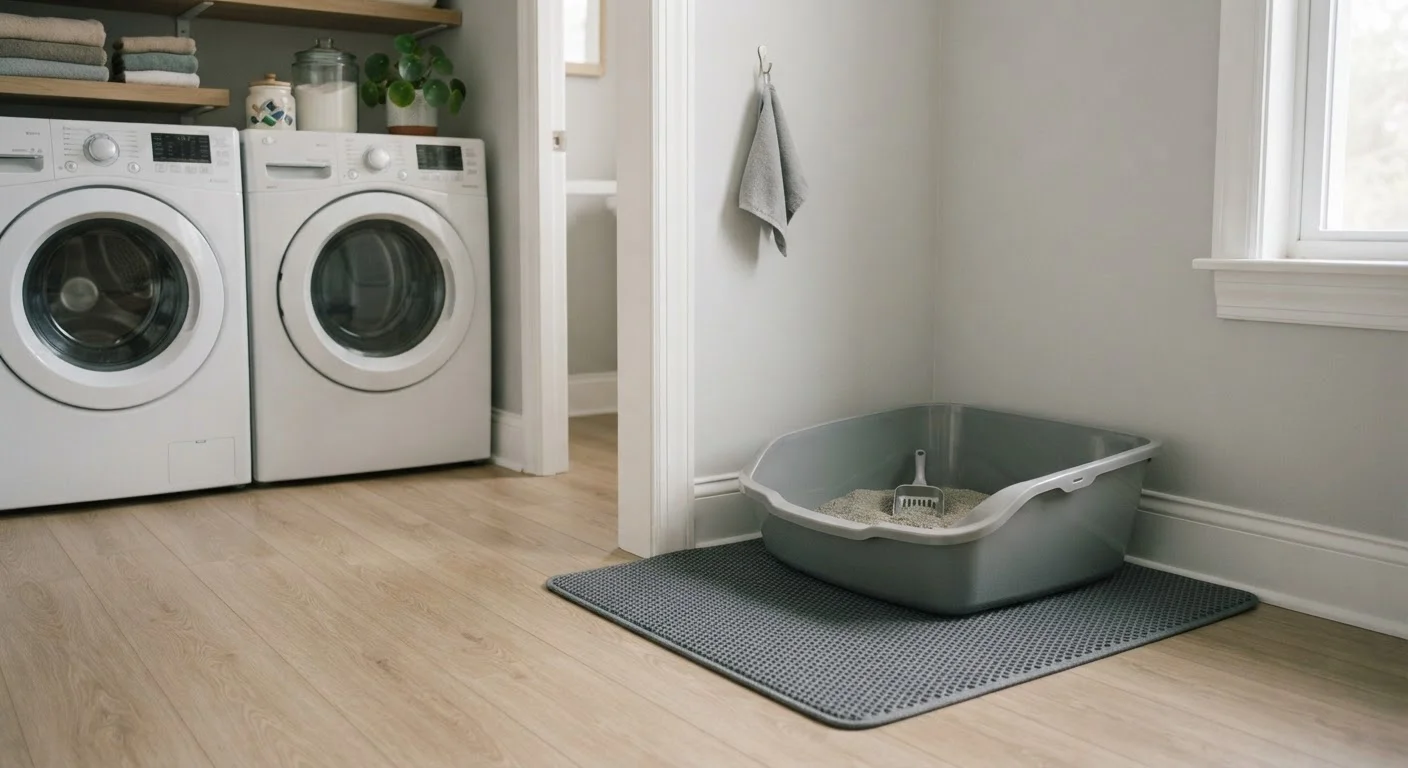
How Many Boxes and Where to Put Them
The widely accepted guideline among veterinary behaviorists is the n+1 rule: provide one litter box per cat in your household, plus one additional box. A single-cat home should have two boxes; a three-cat household should have four. This isn't excessive - cats are territorial and may refuse to share, even when boxes are clean.
Location is just as important as quantity. Spread boxes across different rooms or floors rather than grouping them in one spot. A cat that is chased away from one box by another pet needs a genuinely separate option, not a second box three feet away. Avoid placing boxes near food and water bowls; cats instinctively avoid eliminating near their eating area.
Quiet, low-traffic corners work best. Loud appliances like washing machines or HVAC units nearby can startle a cat mid-use and create an aversion to that location. For homes with multiple floors, place at least one box on each level so a cat is never far from an option - this becomes especially important for older cats or those with mobility issues.
Choosing the Right Box and Litter
Box size is frequently underestimated. The box should be long enough for your cat to turn around and scratch comfortably - roughly one and a half times the length of your cat from nose to tail base. Many commercially available boxes are too small for adult cats, particularly large breeds.
Covered versus open is a common debate. While some owners prefer covered boxes for odor control, research in feline behavior consistently shows that most cats prefer open boxes. Covered designs trap odors inside, which may discourage use even when the box is recently scooped. If your cat seems reluctant to enter a hooded box, try removing the lid for a few weeks and observe whether behavior improves.
Test Litter Preference Before Committing
If you're unsure which litter your cat prefers, try offering two side-by-side boxes with different litter types and observe which one gets used more over a week. Cats will usually vote with their paws. Once you identify a clear preference, standardize across all boxes in your home.
For litter, unscented, fine-grained clumping clay is the type most cats accept readily. Strongly perfumed litters are formulated to appeal to owners, not cats - whose sense of smell is far more acute. Avoid switching litter types abruptly; if you need to transition, mix the new type gradually with the old over one to two weeks. Aim for a litter depth of about two to three inches, which gives cats enough material to dig and cover.
If you're troubleshooting avoidance issues, our guide to behavioral and environmental causes of litter box problems covers the most common explanations in detail.
Cleaning Standards That Actually Work
Cats are considerably more sensitive to box odor than humans are. A box that smells acceptable to you may still be off-putting to your cat. The practical minimum is once-daily scooping - twice daily in multi-cat homes. Beyond scooping, the entire litter should be dumped and replaced on a weekly basis for clumping litters, with the box itself washed using mild, unscented dish soap and warm water. Avoid bleach or strongly scented cleaners; residual odor can discourage use.
~10%
Cats estimated to develop litter box aversion
Veterinary behaviorists estimate that litter box problems affect roughly 10% of cats at some point in their lives, making it one of the most common feline behavior concerns presented to vets.
1.5×
Recommended minimum box length relative to cat
Feline behavior guidelines consistently recommend a box at least one and a half times the length of the cat from nose to tail base to allow comfortable turning and digging.
Plastic litter boxes absorb odors over time even with regular washing, and scratches in the plastic harbor bacteria. Replacing the box entirely once a year is a reasonable maintenance practice. If you notice your cat sniffing the box, pawing at the edges without entering, or eliminating just outside the box, inadequate cleanliness is one of the first factors to rule out.
It's worth noting that some changes in litter box behavior - such as straining, urinating outside the box, or blood in urine - are not behavioral issues at all. These can be signs of urinary tract problems or other medical conditions. Our overview of litter box changes that may be medical red flags explains what to watch for and when to contact your veterinarian.
Building Habits That Stick
Consistency is what transforms a good setup into a reliable routine. Once you've found box placement, litter type, and a cleaning schedule that works, maintain it. Cats are creatures of habit and can develop aversions when their environment shifts unpectedly - a moved box, a new litter brand, or less frequent scooping can all trigger avoidance behavior.
For households adding a new cat, introduce litter boxes before the cats meet. Give each animal access to their own box from the start rather than expecting sharing. Kittens transitioning from a shelter or breeder environment may be used to a specific litter type; ask what was used and start with that before considering any change.
A well-maintained litter box environment is one of the most practical contributions you can make to your cat's overall comfort and long-term health. When combined with attentive feeding routines - see our comparison of free-feeding and scheduled meals - and regular veterinary checkups, it forms part of a straightforward, sustainable care foundation.