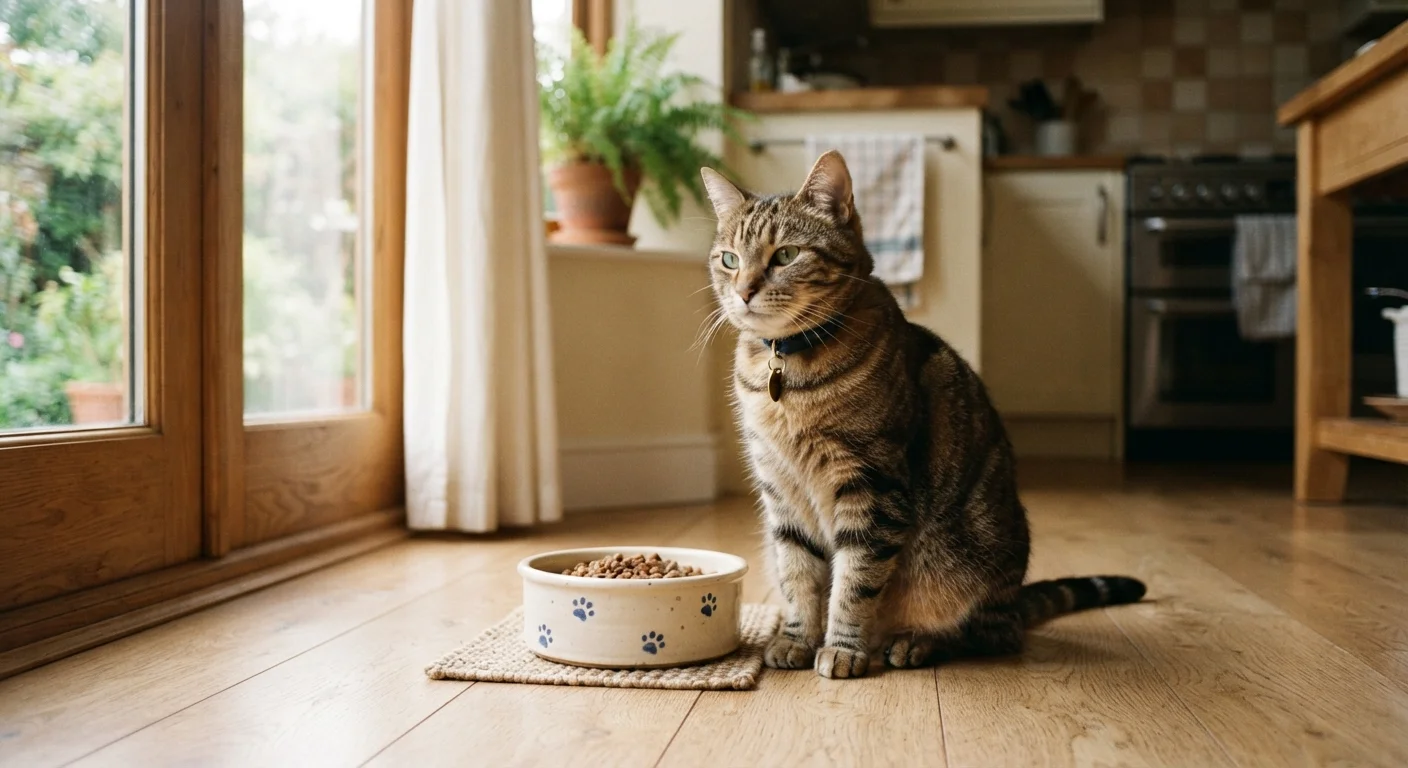
What Each Approach Actually Means
Free-feeding means leaving a measured - or unmeasured - supply of dry food accessible at all times. The cat eats whenever it chooses. Scheduled meals means offering food at set times (usually two to three times daily) and removing what isn't eaten after 20-30 minutes.
Both methods can work in theory. The difference shows up in practice: how much your cat eats, how easily you notice changes in appetite, and how well feeding integrates with other routines. For a broader look at daily care structure, see building a healthy pet routine.
The Case for Free-Feeding
Free-feeding is the most hands-off option, and for a small subset of cats it genuinely suits their biology.
Mimics natural grazing behavior
Cats are instinctively built to eat small amounts frequently. Free-feeding aligns with this pattern, which may reduce mealtime stress in certain cats.
Convenient for busy or irregular schedules
Owners who cannot commit to fixed meal windows can ensure food is always available without worrying about a cat going hungry between long work shifts.
May reduce food-related anxiety
For cats that become anxious or pushy around meal anticipation, constant access can lower that behavioral tension - provided the cat doesn't compensate by overeating.
Cats are natural grazers - in the wild, they consume multiple small meals across the day. Constant access to food can reduce anxiety in cats who become stressed when meals are unpredictable. It also accommodates owners with irregular work schedules who cannot commit to fixed feeding windows.
The catch: free-feeding works only if your cat self-regulates reliably. Many domestic cats - especially indoor ones with low activity levels - do not. Without portion discipline, caloric intake can creep upward unnoticed.
The Case for Scheduled Meals
Scheduled feeding gives you consistent control over two things that matter greatly for feline health: portion size and appetite visibility.
Difficult to monitor daily appetite
Changes in how much a cat eats are a key early health signal. A perpetually available bowl makes it nearly impossible to notice a meaningful drop in intake.
Higher risk of overeating and obesity
Many cats - particularly indoor, low-activity cats - will eat more than they need when food is always available. Obesity is one of the most common preventable health problems in domestic cats.
Problematic in multi-cat households
Without set meals, dominant cats may consume disproportionate amounts while shyer cats go short - making individual intake tracking impossible.
Not compatible with wet food
Wet food left out for extended periods spoils and can cause gastrointestinal upset, making free-feeding an unsuitable option for cats eating primarily wet diets.
When you offer food at the same times each day and watch your cat eat, you notice immediately if something is off. Reduced appetite is one of the earliest observable signs that a cat may be unwell. With free-feeding, a half-empty bowl at any given moment tells you very little.
Scheduled meals also make it far easier to track intake accurately - critical if your cat is on a weight-management plan or a prescription diet. And in multi-cat homes, they prevent one cat from eating another's portion. Learn more about how food type factors into this decision: wet vs. dry cat food.
~60%
Estimated proportion of U.S. cats classified as overweight or obese
According to the Association for Pet Obesity Prevention's annual clinical survey, excess weight in cats has remained a persistent issue for well over a decade.
2-3x
Increased diabetes risk in overweight cats vs. healthy-weight cats
Veterinary internal medicine literature consistently links excess body weight in cats to significantly elevated risk of type 2 diabetes mellitus.
Weight, Behavior, and Monitoring
Feline obesity is a genuine and widespread concern. Overweight cats face higher risks of diabetes, arthritis, urinary tract disease, and shortened lifespan. Free-feeding dry kibble - calorie-dense and easy to overconsume - is frequently identified as a contributing factor by veterinary nutritionists.
Body Condition Score: A Simple Monitoring Tool
Rather than relying on scale weight alone, veterinarians use a body condition score (BCS) - a 1-9 scale assessing fat coverage over ribs, waist definition, and abdominal tuck. Owners can learn to do a basic BCS check at home between vet visits. Ask your veterinarian to demonstrate the technique at your cat's next wellness appointment, and use it as a regular check-in alongside whichever feeding method you choose.
Behaviorally, scheduled meals can strengthen the human-cat bond. Cats learn to anticipate feeding times, which creates a predictable daily anchor. Some owners also find it easier to introduce puzzle feeders or slow-feed bowls as part of a set mealtime rather than leaving them out all day.
For a deeper look at what the evidence says about feline nutrition more broadly, separating fact from fiction about cat nutrition covers common misconceptions worth knowing.
Which Approach Fits Your Situation
There is no universal answer, but several factors point toward one method over the other:
- Multiple cats: Scheduled feeding is strongly preferred. It allows you to manage each cat's intake separately and prevents dominant cats from consuming more than their share.
- Weight concerns: If your cat is overweight or prone to weight gain, scheduled meals with measured portions are the standard recommendation.
- Kittens: Growing kittens have higher caloric needs and may benefit from more frequent access to food - but portion control still matters. Discuss frequency with your vet.
- Senior cats or those with health conditions: Appetite monitoring is especially important; scheduled meals make this much easier.
- Wet food: Free-feeding wet food is generally impractical - it spoils within hours at room temperature, making scheduled meals the only safe option.
Whatever method you choose, the portion size matters as much as the timing. Follow the feeding guidelines on your cat's food packaging as a starting point, then adjust based on your vet's recommendations and your cat's body condition score - a hands-on assessment of healthy weight your vet can walk you through.
This article is for general informational purposes only and is not a substitute for veterinary advice. Always consult your veterinarian before making significant changes to your cat's feeding routine, particularly if your cat has a health condition or is on a prescription diet.