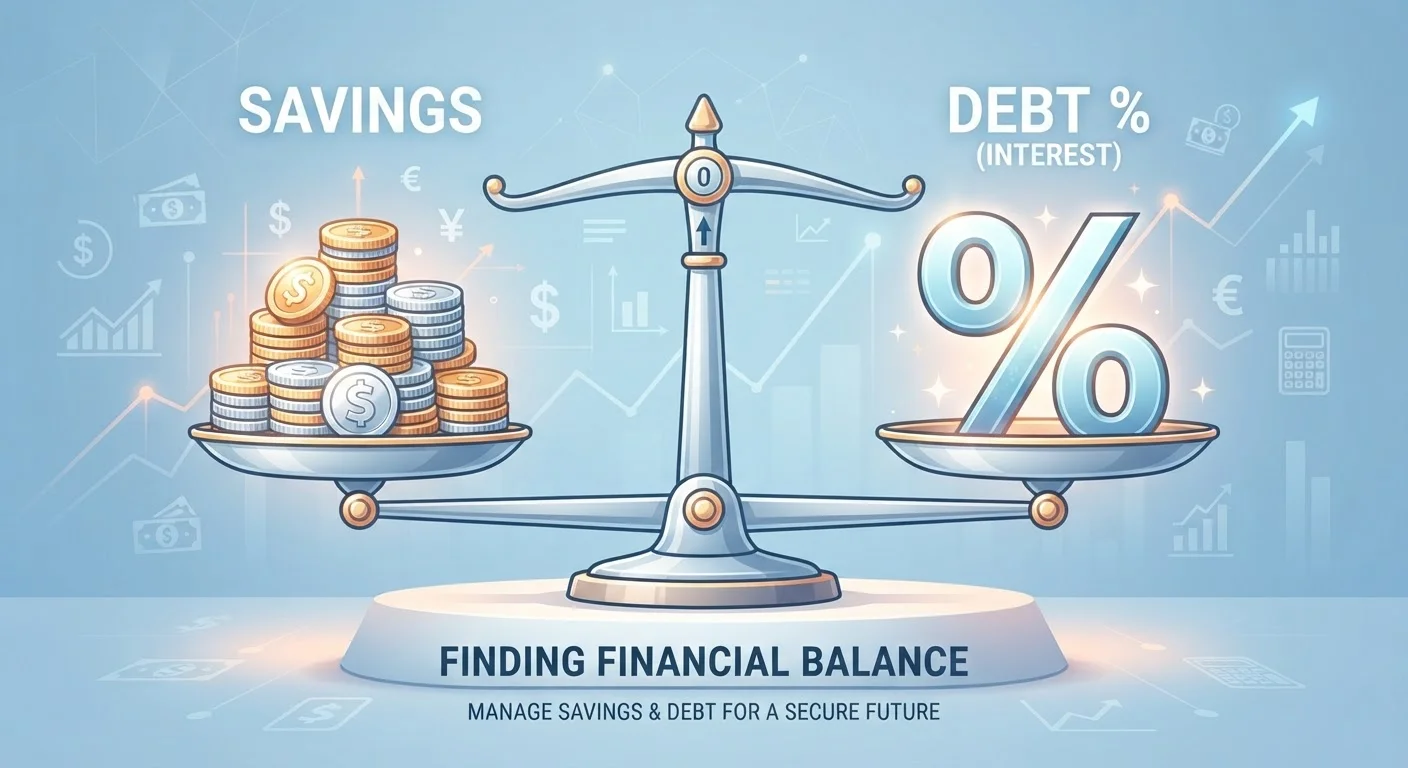
The Mechanics: How Rate Changes Flow to Your Accounts
Interest rate decisions by the Federal Reserve don't directly reach your bank account overnight. Instead, they set the cost of money that banks use to operate - lending to each other and to customers. When that underlying cost rises, banks typically pay more to attract deposits and charge more to issue credit. When it falls, the reverse tends to happen.
For savers, this means a rising-rate environment is generally favorable: the annual percentage yield (APY) on savings accounts, money market accounts, and certificates of deposit (CDs) tends to climb. For borrowers carrying variable-rate debt - such as credit cards or adjustable-rate mortgages - rising rates increase the amount of interest accruing on the balance each month.
Understanding this two-sided relationship is the starting point for making smarter decisions about where to keep cash and how urgently to pay down certain debts. For a broader grounding in terms like APY, APR, and amortization, see our personal finance terms guide.
~20%
Average credit card APR in recent years
The Federal Reserve tracks average credit card interest rates, which have reached historically high levels as benchmark rates rose.
0.01%-5%+
Range of savings account APYs across account types
Traditional bank savings accounts have historically offered much lower yields than high-yield alternatives, a gap that widens in rising-rate environments.
11 times
Fed rate increases in 2022-2023 tightening cycle
The Federal Reserve raised the federal funds rate multiple times between March 2022 and mid-2023, one of the most rapid tightening cycles in modern U.S. history.
What Rising Rates Mean for Your Savings
When rates are rising, savings accounts become more competitive. High-yield savings accounts - typically offered by online banks and credit unions - often respond faster to Fed increases than traditional accounts, sometimes raising their APY within weeks of a policy change. Traditional savings accounts at large banks may move more slowly or by a smaller margin.
Certificates of deposit can lock in a favorable rate for a defined term, making them useful in a rising-rate environment if you can commit funds for several months to a few years. However, early withdrawal penalties apply if you need the money sooner.
Check Your APY Regularly
Savings account rates are variable and can change without prominent notice. Log in to your account or check your monthly statement for the current APY. If your bank hasn't raised rates in a rising-rate cycle, it may be worth comparing alternatives - though always consider any fees, minimums, or access limitations before switching accounts.
To understand how the timing of interest compounding affects your actual balance growth, see how compounding frequency works in savings accounts. For a side-by-side look at account types, compare high-yield and traditional savings accounts.
What Rising Rates Mean for Your Debt
Not all debt responds the same way to rate changes. The key distinction is whether your rate is fixed or variable.
- Variable-rate debt - including most credit cards, home equity lines of credit (HELOCs), and adjustable-rate mortgages (ARMs) - reprices when benchmark rates change. Higher rates mean higher monthly interest charges on the same balance.
- Fixed-rate debt - such as a 30-year fixed mortgage or a fixed personal loan - is insulated. Your contracted rate stays the same regardless of what the Fed does.
For holders of adjustable-rate mortgages specifically, the impact can be substantial. Rate adjustment caps limit how much your rate can move in a single period or over the loan's lifetime, but sustained rate increases can meaningfully raise monthly payments. See how ARM adjustments work over time for a detailed explanation of caps and indexes.
On credit card balances, the math is immediate: most cards adjust their APR within one to two billing cycles of a prime rate change. This is why high-rate revolving debt is one of the first places to focus repayment effort in a rising-rate environment. See how compound interest accelerates debt balances over time when left unpaid.
Applying This Knowledge to Everyday Decisions
Understanding rate environments isn't about predicting the future - it's about making your current financial choices more intentional.
In a rising-rate environment, consider: moving idle cash into higher-yield accounts, locking in a fixed-rate loan before additional increases, and directing extra payments toward variable-rate balances. In a falling-rate environment, refinancing fixed-rate debt at a lower rate may become worth exploring, while savers should note that deposit rates will compress.
If you're weighing a fixed versus adjustable mortgage, rate trends are one factor - but your timeline, risk tolerance, and overall financial situation matter equally. Learn how fixed and adjustable mortgages compare before making that decision.
This article is for general informational and educational purposes only and does not constitute personalized financial, investment, tax, or legal advice. Consult a licensed financial adviser or other qualified professional before making decisions based on your individual circumstances.