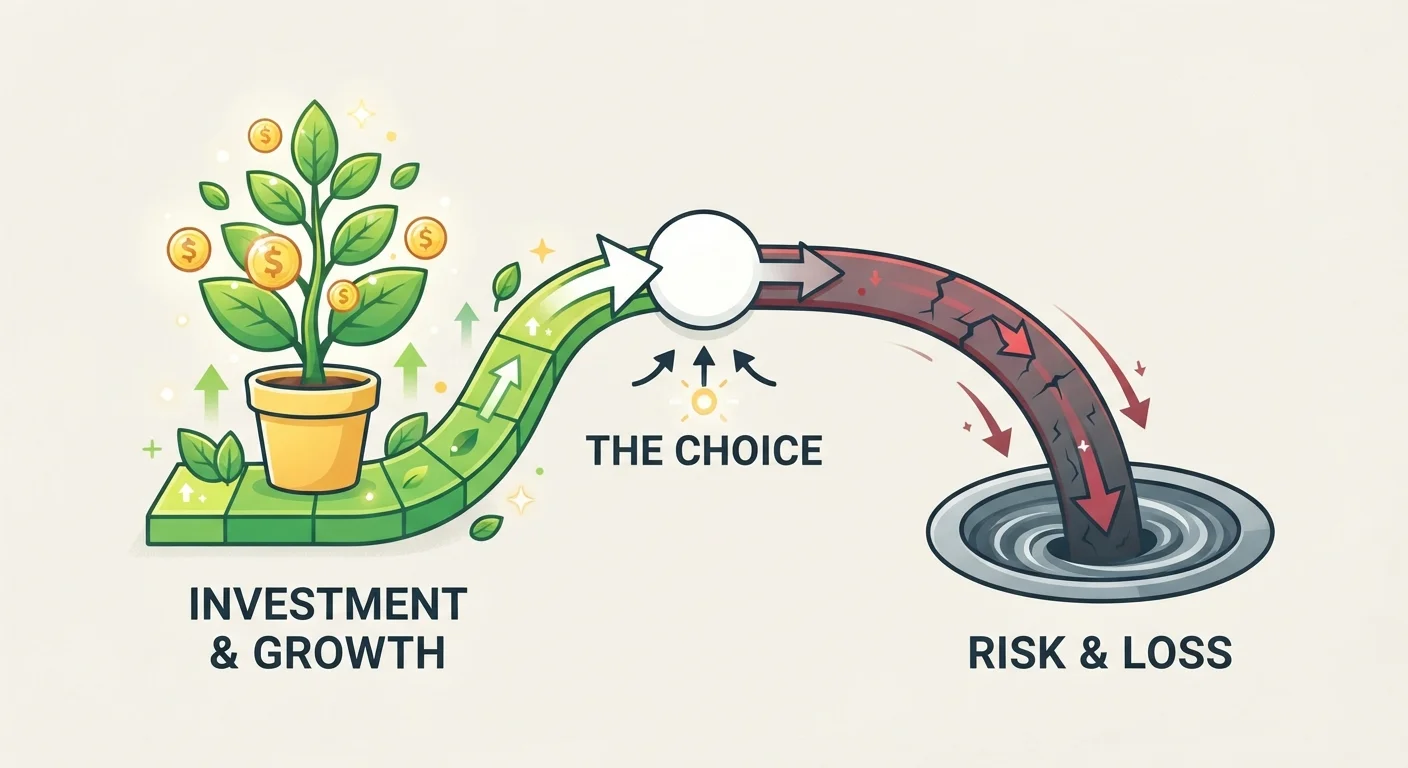
Why the Good Debt vs. Bad Debt Distinction Matters
Americans carry trillions of dollars in combined household debt, spanning mortgages, student loans, auto loans, and credit cards. Lumping all of it together as simply "debt" obscures something important: not all borrowing carries the same risk or serves the same purpose.
The good debt vs. bad debt framework gives you a practical lens for evaluating any borrowing decision before you make it - and for prioritizing which obligations to tackle first if you already carry several. It isn't a perfect binary, but it is a reliable starting point. See also our guide to common debt myths for context on how misunderstanding debt leads to costly missteps.
| Criterion | Good Debt | Bad Debt |
|---|---|---|
| Typical interest rate | Low to moderate (3-8% range) | High (15-30%+ for credit cards) |
| Purpose | Builds value or earning power | Funds consumption or depreciation |
| Common examples | Mortgage, student loan, business loan | Credit card balance, payday loan |
| Long-term financial impact | Potential net positive return | Net negative - costs exceed benefit |
| Payoff priority | Manage steadily; don't over-borrow | Eliminate aggressively |
| Risk level | Moderate if sized appropriately | High; escalates quickly if minimum-paid |
What Makes Debt 'Good': Two Key Criteria
Debt is generally considered productive when it meets two conditions: the interest rate is relatively low, and the borrowing finances something that builds value, generates income, or expands future earning capacity.
Mortgages
A home mortgage is the most commonly cited example. When structured within what your income can support, mortgage debt lets you build equity - a form of forced savings - while securing shelter. Mortgage interest rates have historically been lower than consumer credit rates, and real estate has a long-term record of appreciating in value, though this is never guaranteed and varies by market.
Student Loans
Education debt can increase lifetime earning potential, which is why it often falls in the "good" column. The important qualifier: the degree and field of study matter. Borrowing significantly more than your expected starting salary in your chosen field converts an investment in human capital into a financial strain. Understanding how credit and lending work before signing loan documents is essential.
Small Business Loans
Borrowing to launch or grow a business that generates revenue is another form of productive debt. The risk is higher than a mortgage, but the purpose - capital formation rather than consumption - puts it in the same category conceptually.
$17T+
Total U.S. household debt
As of recent Federal Reserve data, total household debt in the United States has exceeded $17 trillion, with mortgages representing the largest share.
~21%
Average credit card APR
Federal Reserve data has shown average credit card interest rates climbing significantly, underscoring the cost of carrying revolving balances.
43%
Borrowers with student loan debt
According to the Education Data Initiative, roughly 43 million Americans carry federal student loan debt, reflecting how widespread education borrowing has become.
What Makes Debt 'Bad': The Drain on Your Financial Health
Bad debt is characterized by high interest rates, short-term consumption financing, and no lasting financial return. The purchase is either already consumed or depreciating rapidly by the time you finish paying for it.
Credit Card Revolving Balances
Carrying a balance on a credit card from month to month is the clearest example. Annual percentage rates (APRs) on credit cards frequently reach 20% or higher. A $3,000 balance at 22% APR, paid off with minimum payments only, can take years to clear and cost well over the original purchase price in interest alone. Responsible credit card use means paying in full each month whenever possible.
Payday Loans
Short-term, high-fee loans tied to your next paycheck represent the far end of bad debt. Effective annual interest rates on payday loans can reach triple digits. The Consumer Financial Protection Bureau (CFPB) has documented how borrowers often roll these loans over repeatedly, turning a short-term shortfall into a sustained financial trap.
Financing Rapidly Depreciating Assets at High Rates
Auto loans occupy a gray zone. Financing a vehicle at a low rate to enable reliable transportation for work has a practical return. Financing an expensive vehicle you cannot afford at a high rate, for an asset that loses value the moment you drive it off the lot, tilts toward bad debt.
The Gray Zone: When 'Good' Debt Turns Costly
No category of debt is automatically safe. A mortgage you cannot comfortably afford, a student loan far exceeding your expected earnings, or a business loan without a credible revenue plan can all become financially destabilizing - regardless of their category label. The 'good' vs. 'bad' distinction is a starting framework, not a guarantee. Always evaluate the specific terms, your repayment capacity, and the realistic return on whatever the debt finances.
Applying the Framework in Practice
Understanding the theory is useful. Translating it into action is what moves the needle on your finances.
Step one: categorize what you owe. List every debt you carry - balance, interest rate, and monthly payment. Our debt self-audit checklist provides a structured way to do this. High-rate consumer debt belongs in the "bad" column and warrants aggressive payoff. Lower-rate debt tied to appreciating assets belongs in the "good" column and can be managed more patiently.
Step two: prioritize payoff by rate. The mathematically efficient approach - often called the debt avalanche method - directs extra payments toward the highest-interest balance first. This minimizes total interest paid over time.
Step three: protect your good debt by not over-borrowing. Even a mortgage becomes a burden if the monthly payment consumes too large a share of your income. Lenders look at your debt-to-income ratio for this reason, and you should too before taking on any significant obligation.
If you're managing multiple debts and feel overwhelmed, debt consolidation is one strategy worth understanding - though it carries its own trade-offs. Building a clear budget alongside any payoff plan is also foundational; budgeting basics gives you the framework to start.
This article is for general informational and educational purposes only and does not constitute personalized financial, legal, or tax advice. Readers should consult a qualified financial professional regarding their individual circumstances.