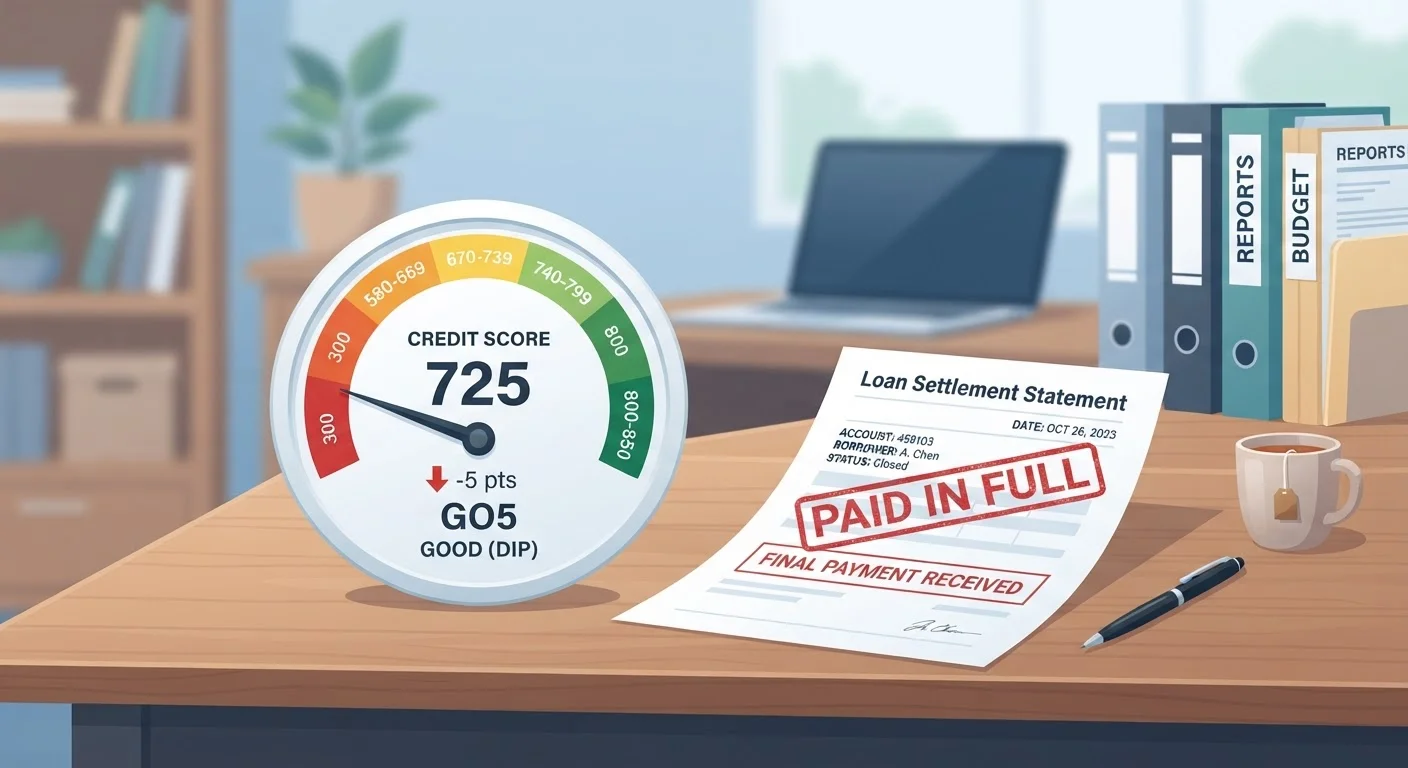
How Credit Scores Are Actually Calculated
To understand why a score dips after payoff, it helps to know what goes into the number in the first place. For a deeper breakdown, see our guide to what credit scores actually measure.
The major scoring models weigh five broad categories: payment history (the largest factor), amounts owed, length of credit history, credit mix, and new credit. Paying off a loan directly affects the last three of those categories - and not always in an immediately positive way.
35%
Weight of payment history in FICO scoring
According to FICO's published scoring model breakdown, payment history is the single largest factor - meaning a paid-in-full record ultimately helps your score.
15%
Weight of credit history length in FICO scoring
FICO attributes 15% of a score to the length of credit history, which is why closing an older account can cause a measurable dip.
10%
Weight of credit mix in FICO scoring
Credit mix accounts for 10% of a FICO score, making the loss of an installment account a contributing factor in post-payoff score changes.
The Three Mechanics Behind the Dip
1. Loss of Credit Mix
Lenders and scoring models like to see that you can responsibly manage different types of credit - revolving accounts like credit cards and installment accounts like auto loans or mortgages. When you pay off and close an installment loan, you may be left with only revolving accounts, narrowing your credit mix. A thinner mix can translate to a modest score reduction.
2. Shorter Average Account Age
Your credit history length factors in the average age of all open accounts. If the loan you paid off was your oldest or one of your older accounts, closing it removes that account from your active average, potentially pulling your average age downward. Older average age generally signals stability to scoring models.
3. Reduced Total Credit Accounts
Scoring algorithms partly evaluate how many active accounts you have. Fewer open, responsibly managed accounts can make your profile appear thinner, contributing to a small score reduction immediately after closure.
Consider Timing Around Major Purchases
If you plan to apply for a mortgage or auto loan soon, be aware that paying off another loan shortly beforehand may cause a brief score dip. It's not a reason to delay repayment, but knowing the timing can help you plan conversations with lenders. See our related article on what happens to a mortgage when you sell your home for context on how loan payoffs intersect with real estate transactions.
Why the Dip Is Usually Small and Temporary
The drop caused by paying off a loan is typically modest - often fewer than 20 points - and tends to recover within one to three months for most consumers who continue maintaining their other accounts in good standing. The closed account doesn't vanish from your credit report immediately; it remains visible as a positive, paid-in-full record for up to a decade, continuing to support your payment history.
Payment history carries the most weight of any scoring factor, and a fully repaid loan only strengthens that part of your record over time. This stands in sharp contrast to the long-lasting damage a missed or late payment can cause - something explored in detail in our article on what happens to your credit when you miss a payment.
“A credit score is a snapshot, not a verdict. Paying off debt responsibly is always the right long-term financial move, even if the short-term score reaction seems counterintuitive.”
— Consumer Financial Protection Bureau, U.S. federal agency providing consumer financial education and guidance
What You Can Do to Minimize the Impact
While a post-payoff dip is often unavoidable, a few practices can help cushion the effect:
- Keep other accounts open and active. Maintaining a mix of active credit accounts preserves both your credit mix and average account age.
- Pay all remaining balances on time. Consistent on-time payments are the single most effective way to build and maintain a strong score.
- Avoid applying for new credit immediately before major financial events like buying a home, since even a temporary score dip can affect your loan terms.
If you're navigating broader debt repayment goals, the Saving & Debt hub offers practical guidance on balancing payoff strategies with your overall financial health. And if common misconceptions about credit have left you second-guessing your decisions, our article on credit score myths separates fact from fiction.
This article is for general informational and educational purposes only and does not constitute personalized financial or credit advice. For guidance tailored to your individual situation, consider consulting a licensed financial adviser or credit counselor.