Why a Three-Digit Number Carries So Much Weight
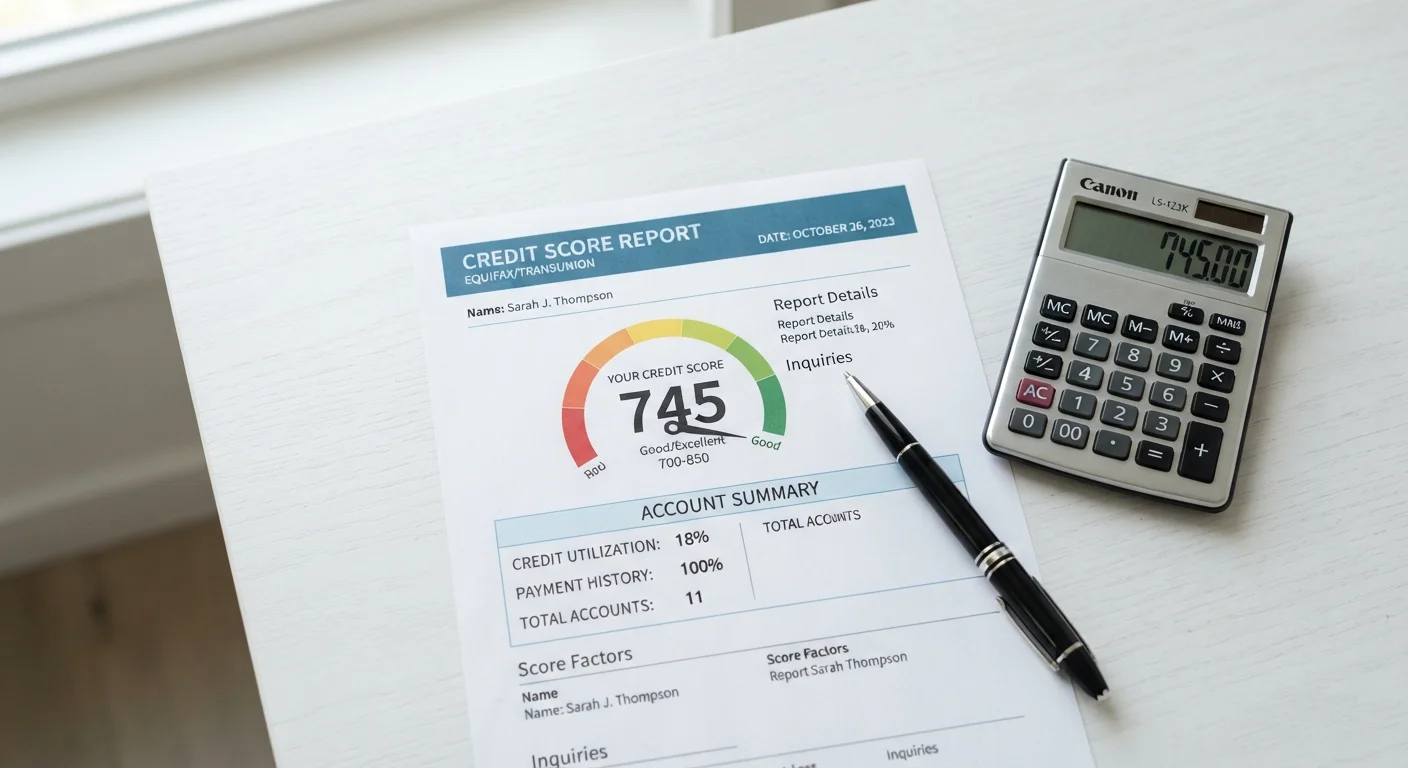
Before you can improve your credit score, you need to understand what it actually measures. Many people assume it reflects their wealth or income-it does not. Your credit score is a statistical prediction of how likely you are to repay a debt on time, based entirely on your past borrowing behavior. Lenders use it to make quick, standardized decisions across millions of applicants.
The most common scoring model, FICO, distills your full credit history into a number between 300 and 850. That number influences whether you qualify for a mortgage, what interest rate you'll pay on a car loan, and sometimes even whether a landlord will rent to you. Understanding what goes into it puts you in a position to manage it deliberately.
For a closer look at what lenders actually see when they pull your file, see what lenders see on a credit check.
35%
Weight of payment history in FICO Score
Payment history is the single most influential factor in the standard FICO scoring model, according to Fair Isaac Corporation's published formula breakdown.
30%
Weight of credit utilization in FICO Score
Amounts owed relative to available credit limits is the second-largest scoring factor, making it one of the most actionable levers for consumers to manage.
300-850
FICO Score range for US consumers
Both FICO and VantageScore use this same scale; a score of 670 or above is generally considered 'good' by most mainstream lenders.
The Five Factors and How Much Each One Matters
FICO breaks its scoring formula into five categories, each weighted differently:
- Payment History (35%): This is the single largest factor. It records whether you've paid your accounts on time-credit cards, loans, mortgages. Even one missed payment can cause a noticeable score drop, particularly if your history is otherwise clean.
- Amounts Owed / Credit Utilization (30%): This measures how much of your available revolving credit you're currently using. Using a large portion of your credit limits signals financial strain to lenders, even if you pay in full each month. Keeping utilization below 30% is a commonly cited guideline, though lower is generally better. Understanding credit utilization explores this factor in depth.
- Length of Credit History (15%): Older accounts-and a longer average account age-tend to boost your score. This is why closing old credit cards can sometimes backfire, even if you no longer use them.
- Credit Mix (10%): Having both revolving credit (credit cards) and installment loans (auto loans, student loans) shows lenders you can manage different types of debt responsibly.
- New Credit / Hard Inquiries (10%): Each time a lender formally checks your credit for a lending decision, a hard inquiry is recorded. Multiple inquiries in a short window can slightly lower your score, though the effect is usually small and temporary.
Focus on the Two Biggest Levers First
Since payment history and credit utilization together account for roughly 65% of your FICO Score, targeting those two factors delivers the most efficient results. Set up autopay to avoid missed payments, and work to keep revolving balances well below your credit limits. Addressing these before worrying about credit mix or inquiries is the most practical starting point for most people.
What Your Score Does Not Measure
Knowing what's excluded from your score is just as important as knowing what's included. Your credit score does not account for your income, savings, employment status, net worth, or assets. A high-earning professional with no credit history will have a thin or nonexistent score. A retiree living modestly but with decades of on-time payments may have an excellent one.
Your score also doesn't reflect your bank account balances, investment portfolios, or the cost of your monthly subscriptions. Utility payments and rent-common expenses for millions of Americans-are generally not included in standard scoring models unless you've enrolled in a specific reporting program.
Many widely held beliefs about what harms or helps a score turn out to be wrong. For a thorough look at those, see credit score myths that keep people from improving their finances.
Scores Vary by Scoring Model and Lender
The weights described in this article reflect the standard FICO Score model. VantageScore uses similar factors but assigns somewhat different weights, and some lenders use industry-specific score versions. When preparing for a major loan application, it can be worth asking which scoring model the lender uses and reviewing your report at the relevant bureau.
Why Your Score May Differ Depending on Where You Check
There is no single, universal credit score. The three major credit bureaus-Equifax, Experian, and TransUnion-each compile their own files independently. Because not every lender reports account activity to all three bureaus, the data in each file can differ, and so can the score generated from it. Additionally, lenders may use different scoring models or industry-specific versions of FICO (such as an auto-enhanced or mortgage-specific score).
This means the score you see through a free monitoring app may not be the exact number a mortgage lender will use. For more on what makes each credit bureau different, it's worth reviewing how each one operates.
To see how scores feed into major lending decisions, how lenders use your credit score in mortgage underwriting provides a practical walkthrough. And if you want to read the underlying data yourself, reading your credit report without getting lost is a useful starting point.
This article is for general informational and educational purposes only and does not constitute personalized financial advice. Consult a licensed financial professional for guidance specific to your situation.