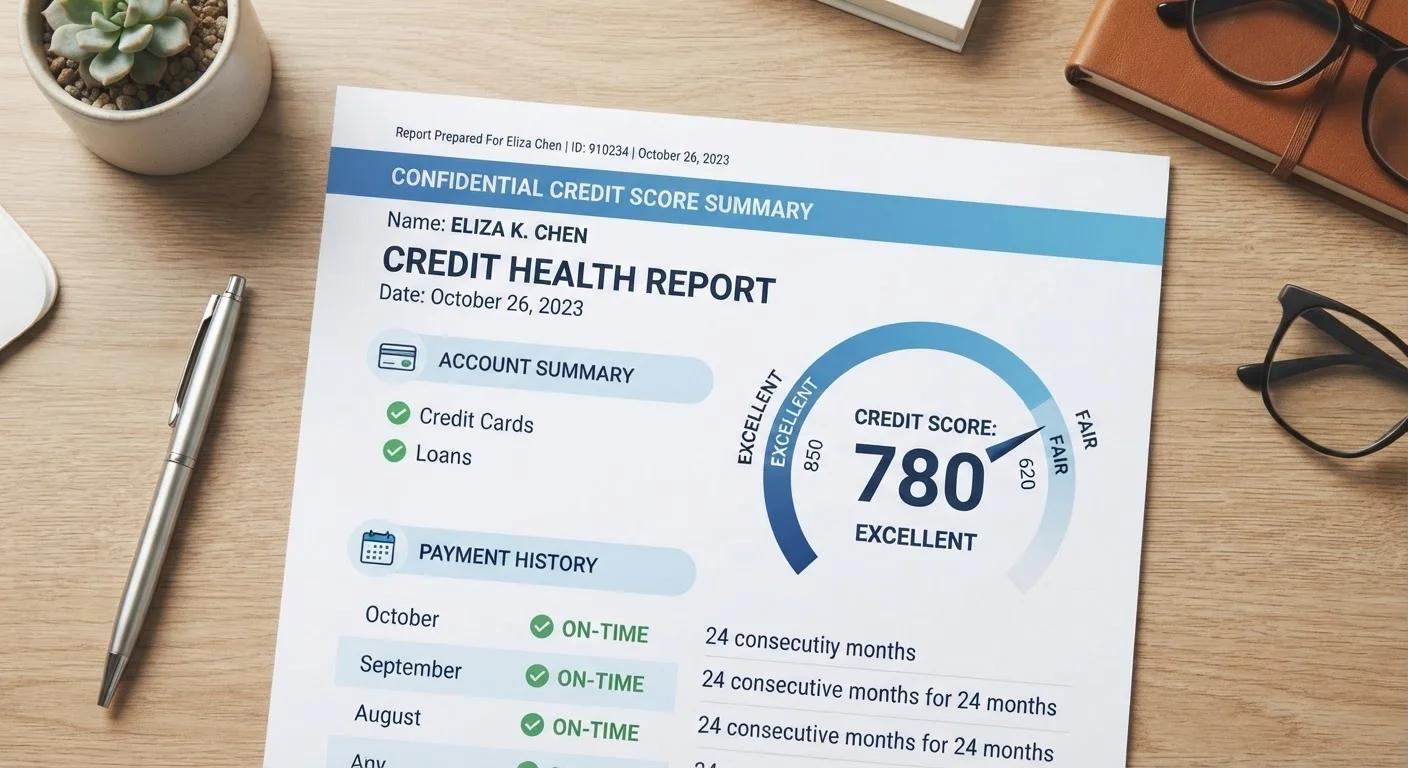
Why Payment History Carries the Most Weight
When a lender decides whether to extend credit and at what interest rate, the fundamental question they are asking is: will this person pay me back? Payment history answers that question more directly than anything else on a credit file. It is a factual ledger of past behavior - and past behavior is one of the strongest predictors of future behavior available to lenders.
Under the widely used FICO scoring model, payment history accounts for approximately 35% of your total score. The next largest factor, credit utilization, accounts for 30%. That gap matters. You can optimize every other part of your credit profile and still see your score held back significantly by a poor payment track record. To understand the full landscape of how scores are constructed, see our breakdown of all five credit score factors.
35%
Share of FICO score from payment history
According to FICO, payment history is the single largest category in the standard FICO scoring model, outweighing all other factors.
7 years
How long late payments stay on your report
Under the Fair Credit Reporting Act, most late payment records can be reported for up to seven years from the original delinquency date.
30 days
Minimum days late before bureau reporting
Creditors generally do not report a payment as delinquent to credit bureaus until it is at least 30 days past the due date.
How On-Time and Late Payments Are Actually Recorded
Creditors - banks, credit card issuers, auto lenders, and others - report your account activity to one or more of the three major credit bureaus: Equifax, Experian, and TransUnion. Most report monthly, typically after your billing cycle closes. Each report includes your payment status for that period.
A payment is recorded as on time if you meet at least the minimum amount due by the statement due date. There is no partial credit for paying a day late or paying less than the minimum - the account is either current or it is not. However, a single missed due date does not immediately appear as a negative mark on your credit report. Creditors generally wait until a payment is 30 days past due before notifying the bureaus. At that point, the delinquency is logged, and it can affect your score.
The severity of the impact scales with how late the payment becomes. Credit scoring models distinguish between 30-day, 60-day, 90-day, and 120-day (or more) late payments. A payment that reaches 90 days past due is treated as considerably more serious than one that was brought current at the 30-day mark. For a detailed look at what unfolds after you miss a payment, see what happens to your credit when you miss a payment.
Catch a Late Payment Before It Hits Your Report
If you realize you missed a due date, pay the balance as quickly as possible. As long as the account has not yet reached 30 days past due, the missed payment typically will not appear on your credit report at all. Contact your creditor immediately - many will work with you, and some may waive a late fee for a first-time occurrence.
How Late Payments Age and Eventually Fade
One of the most important - and frequently misunderstood - aspects of payment history is that negative marks do not carry the same weight forever. Credit scoring models are designed to be more sensitive to recent behavior than to events from years ago. A late payment from six years ago matters far less to a lender evaluating you today than one from six months ago.
Under the Fair Credit Reporting Act (FCRA), most negative items, including late payments, can remain on your credit report for up to seven years from the date of the original delinquency. However, their practical impact on your score typically diminishes well before they age off. Consistently making on-time payments after a delinquency is the most reliable way to accelerate that recovery. For a full reference on reporting timelines across different negative item types, see how long negative items stay on your credit report.
Practical Habits That Protect Your Payment History
Because payment history has such an outsized influence on your score, protecting it should be a foundational part of your financial routine. A few consistent habits make this straightforward:
- Set up automatic payments for at least the minimum due on every account. This eliminates the risk of forgetting a due date.
- Align due dates with your pay schedule by requesting that creditors move your billing cycle to shortly after you receive income.
- Monitor all open accounts, including older ones you rarely use, since a forgotten card with a small balance can trigger a missed payment.
- Act quickly if you fall behind. Bringing an account current before the 30-day mark prevents a delinquency from ever reaching your credit report.
If you have encountered setbacks and believe inaccurate information is dragging down your history, it is worth reviewing what is and is not a fixable problem. Our article on credit score myths addresses common misconceptions that can lead people to focus on the wrong fixes.
This article is for general informational purposes only and does not constitute personalized financial or credit advice. Consider consulting a certified financial counselor or credit advisor for guidance tailored to your specific situation.