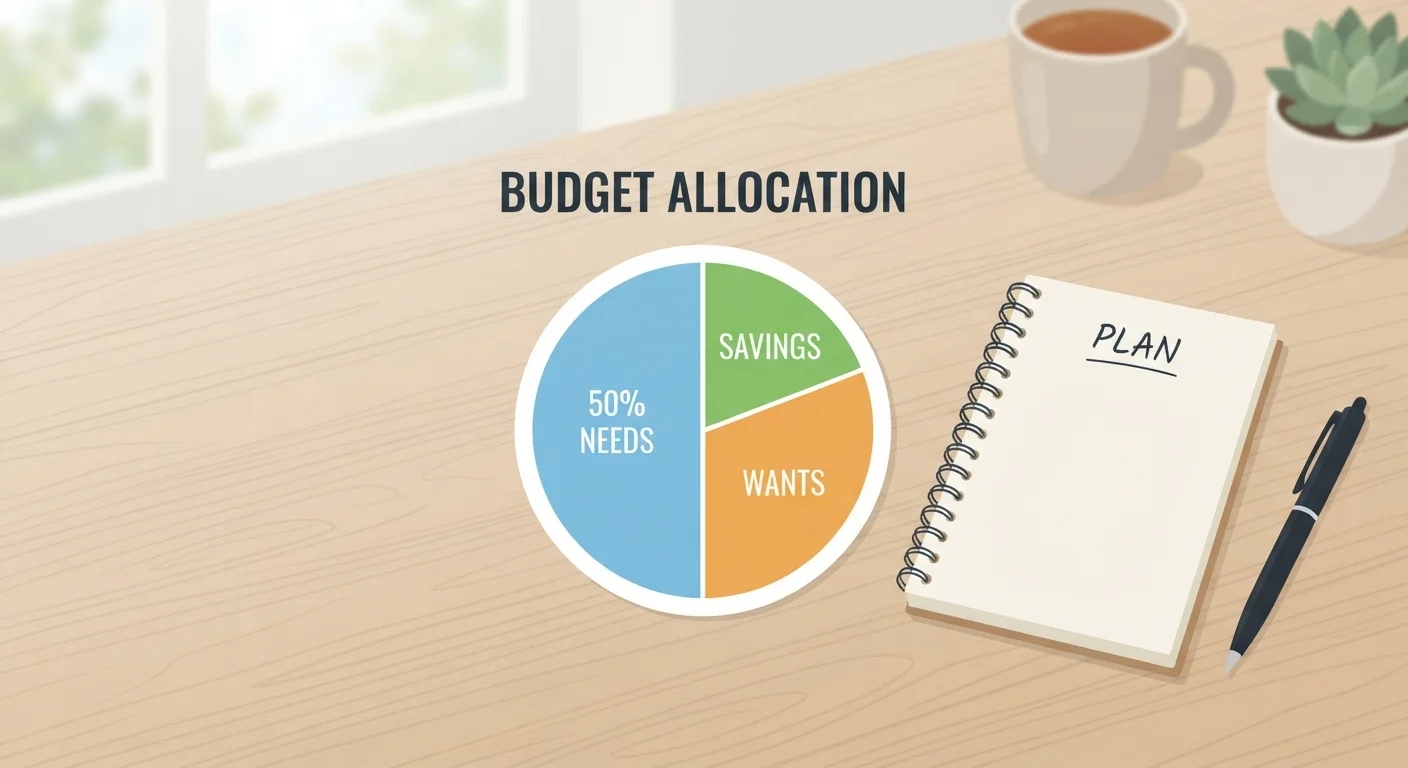
Breaking Down the Three Categories
Every dollar of your after-tax income belongs to one of three buckets under this framework. Understanding what belongs where is the most important first step.
Needs - 50%
Needs are essential expenses you cannot reasonably eliminate. They include rent or mortgage payments, utilities, groceries, transportation required for work, health insurance premiums, and minimum loan payments. The key test: would skipping this expense cause immediate hardship or a financial penalty? If yes, it is a need.
Wants - 30%
Wants are discretionary - things that improve your quality of life but are not strictly required. Dining out, streaming subscriptions, gym memberships, travel, and clothing beyond the basics all fall here. The wants category is not frivolous; it is intentional room for enjoying your income. Cutting it entirely often leads to budget fatigue and abandonment.
Savings and Debt Repayment - 20%
This category covers your financial future. It includes contributions to an emergency fund, retirement accounts such as a 401(k) or IRA, and extra debt payments beyond minimums. Prioritizing the 20% category - even when other expenses press in - is what separates short-term budgeting from long-term financial stability. For more on building savings habits alongside managing debt, see the Saving & Debt hub.
Start With a One-Month Spending Audit
Before adjusting your budget, spend one month categorizing every transaction as a need, want, or savings contribution. This baseline reveals where money is actually going versus where you think it goes. Most people find at least one category that surprises them - and that surprise is where the change starts.
Applying the Rule to Real Income
To put the framework into practice, start with your monthly take-home pay. If your net income is $4,000 per month, the targets become straightforward: $2,000 for needs, $1,200 for wants, and $800 for savings and debt.
The next step is auditing where your money currently goes. Pull three months of bank and credit card statements and categorize each transaction. Many people discover their actual spending differs significantly from what they assumed - especially in the wants category, where small recurring charges accumulate quietly.
57%
Americans without a formal written budget
According to a Gallup survey, a majority of U.S. households track income and expenses loosely rather than following a structured budgeting plan.
~30%
Of income spent on housing by average renter
The U.S. Census Bureau reports that median-income renters typically spend close to or above 30% of gross income on housing, leaving the needs category under pressure before other bills are counted.
Less than $1,000
Emergency savings for many U.S. households
Federal Reserve surveys have consistently found that a significant share of Americans would struggle to cover an unexpected $400 expense, underscoring why the 20% savings category is foundational.
Once you have a baseline, compare it to your target ratios. If needs consume 60% of your income, examine whether any of those expenses can be reduced - a lower-cost phone plan, refinancing a loan, or revisiting subscriptions that have drifted into necessity status. If savings sit at 8%, identify which want-category expenses can shift dollars toward the 20% target.
The deeper guide to the 50/30/20 rule covers how to adapt the framework when standard ratios don't fit your income level or location.
When the Rule Works Well - and When It Needs Adjustment
The 50/30/20 rule is most effective for people with stable, predictable income who want a low-maintenance budgeting structure. It avoids the granular tracking that deters many people from budgeting altogether, while still creating meaningful financial boundaries.
It works less well in a few common situations. High housing costs in cities like San Francisco or New York can push needs well above 50%, leaving no margin for wants or savings without significant trade-offs. Very low incomes may find that needs consume most or all of take-home pay, making a 20% savings target impractical in the short term. In those cases, the framework still provides directional value - even saving 5% is better than no savings target at all.
The rule also does not distinguish between different types of savings goals, such as an emergency fund versus retirement contributions versus a home down payment. You may need additional structure within that 20% to ensure progress across multiple goals simultaneously.
For a side-by-side look at how this approach compares to other popular methods, the overview of four budgeting frameworks can help you determine which structure fits your financial personality. Those who prefer to prioritize saving first may find the pay-yourself-first method a useful alternative or complement.
“A budget is telling your money where to go instead of wondering where it went.”
— John C. Maxwell, Author and leadership speaker, widely cited in personal finance contexts
This article is for general informational and educational purposes only and does not constitute personalized financial advice. Consult a qualified financial professional for guidance specific to your situation.