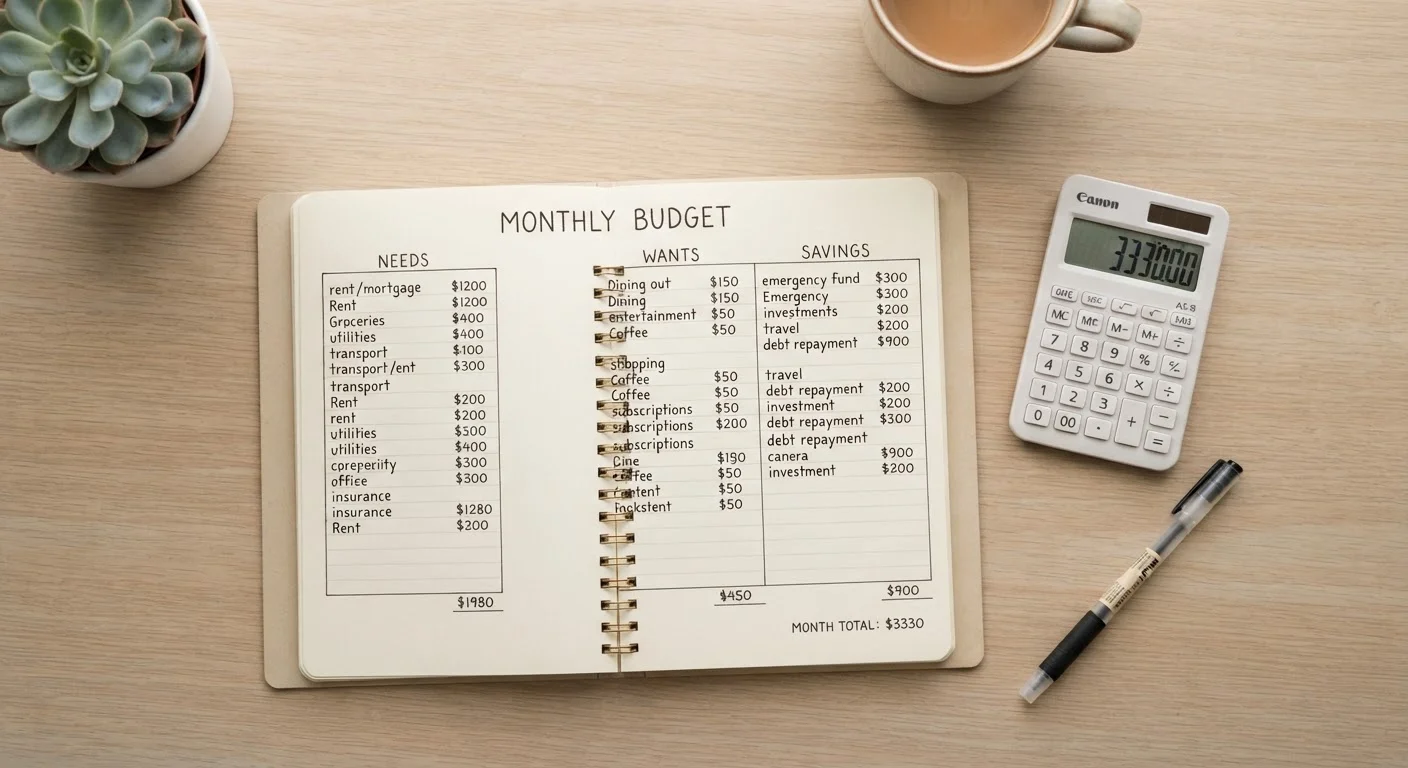
How the Three Categories Work
The 50/30/20 rule, popularized in part by Senator Elizabeth Warren and her daughter Amelia Warren Tyagi in their book All Your Worth, organizes your monthly take-home pay into three buckets. Understanding what belongs in each category is the first step to applying it correctly.
Needs - 50%
This half of your income covers the non-negotiables: housing (rent or mortgage), utilities, groceries, health insurance premiums, minimum loan payments, and basic transportation costs such as car payments, fuel, or transit passes. If you couldn't reasonably live or work without it, it's likely a need.
Wants - 30%
This bucket covers spending that improves your quality of life but isn't strictly essential. Think restaurant meals, streaming subscriptions, travel, entertainment, and upgraded clothing beyond the basics. The distinction between a need and a want can blur - cable internet may be a need for remote workers, for example - so use honest judgment.
Savings and Debt Repayment - 20%
This allocation funds your future financial security. It includes contributions to an emergency fund, retirement accounts (such as a 401(k) or IRA), and extra payments toward debt beyond the required minimums. Building this category consistently is what allows the rule to reduce debt and grow savings over time.
Start With One Month of Real Data
Before adopting the 50/30/20 rule, pull your last month's bank and credit card statements and categorize your actual spending. Seeing where your money currently goes makes it far easier to identify which bucket is oversized and where adjustments are feasible. Most people discover their wants category is the most flexible place to start.
For a deeper look at how this framework compares to alternatives, see our guide comparing envelope, zero-based, 50/30/20, and pay-yourself-first budgeting.
When the 50/30/20 Rule Works Well
This framework is particularly effective for people who find detailed expense tracking unsustainable or overwhelming. Because it operates on broad categories rather than line-item logs, it creates structure without demanding constant attention.
The rule also works well for households with stable, consistent income - salaried employees can calculate their monthly targets once and apply them every pay period. It is a strong starting point for anyone new to budgeting who wants an immediate, low-friction system.
Explore more strategies on our Budgeting Basics hub to find the approach that fits your life.
Limitations and How to Adapt the Rule
The 50/30/20 rule is not a perfect fit for every financial situation, and understanding its limitations helps you use it more effectively.
35%+
Share of income spent on housing by many renters
The U.S. Department of Housing and Urban Development considers households that spend more than 30% of income on housing to be 'cost-burdened,' a threshold a significant portion of American renters exceed.
~$1,000
Median American emergency savings balance
Bankrate surveys have consistently found that many Americans have less than one month of expenses saved, underscoring why the 20% savings allocation of this rule is a meaningful behavioral lever.
High housing costs: In many US metro areas, rent alone can consume 35-45% of take-home pay for median earners. When needs already exceed 50%, strictly following the rule may force unrealistic cuts to the wants category. In these cases, it is reasonable to adjust - perhaps a 60/20/20 split - while working toward lower-cost housing or higher income over time.
Variable income: Freelancers, gig workers, and commission-based earners face irregular paychecks that make fixed percentage targets harder to apply month to month. A percentage-based approach still works, but it requires recalculating targets for each pay period based on actual income received.
Heavy debt load: If you carry high-interest debt, directing only 20% toward debt and savings may slow your payoff significantly. Some financial educators suggest temporarily shifting more from the wants category into the 20% bucket to accelerate debt reduction. Once high-interest debt is cleared, the original ratios become more appropriate.
For an alternative that puts savings first before dividing the rest, consider reading about the pay-yourself-first budgeting method, which some find more motivating when savings feel like an afterthought.
Percentages Are a Guideline, Not a Law
The 50/30/20 rule is a framework to orient your spending decisions - not a mathematically precise prescription. Life circumstances like family size, geographic location, debt history, and career stage all affect what realistic percentages look like. Treating the ratios as targets to move toward, rather than strict requirements, makes the system sustainable over the long term.
This article is for general informational and educational purposes only and does not constitute personalized financial advice. Readers are encouraged to consult a licensed financial adviser for guidance specific to their circumstances.