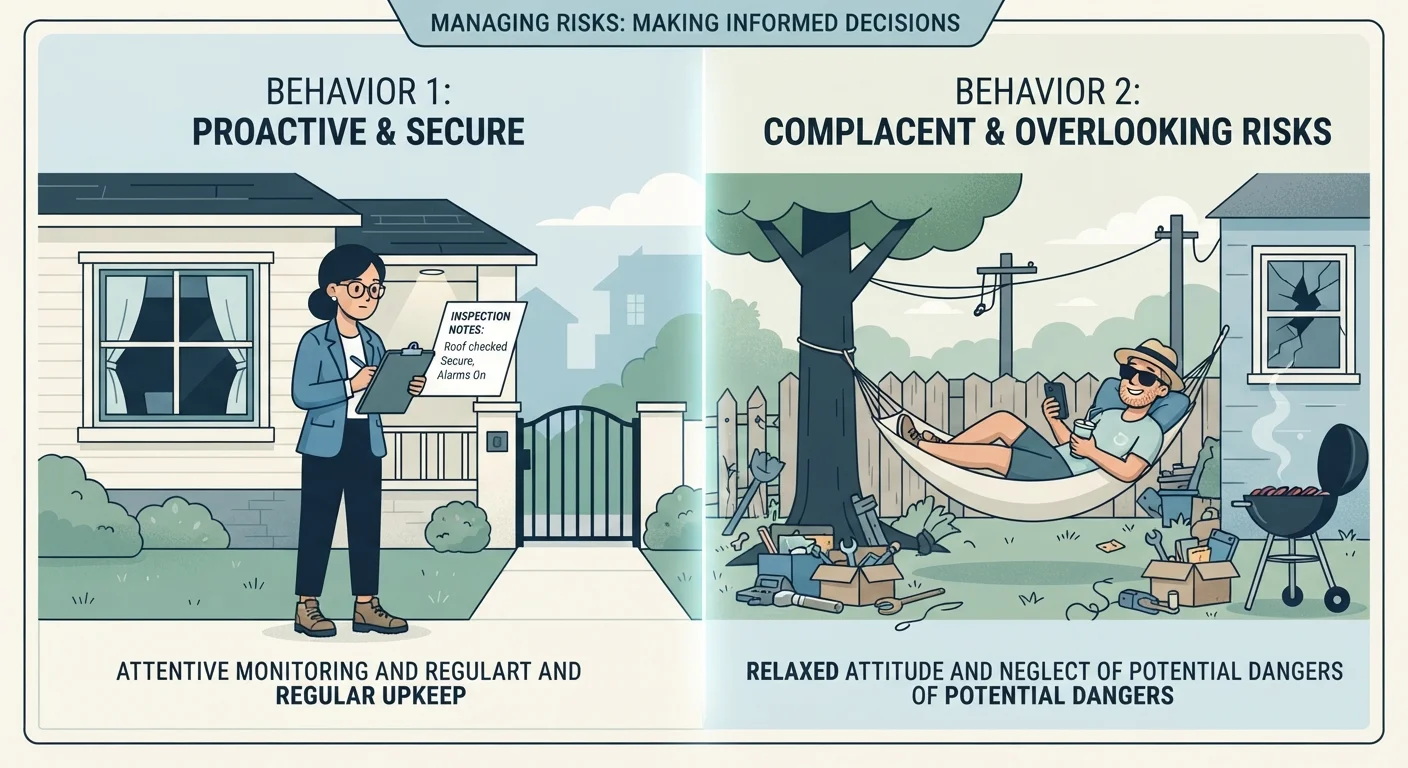
Why Insurers Think About Behavior, Not Just Risk
When an insurer prices a policy, they consider more than the probability of a fire, accident, or illness occurring on its own. They also consider how the existence of coverage might change what a policyholder does. That behavioral dimension is moral hazard - and it sits at the core of how policies are structured.
The term can sound judgmental, but economists use it as a neutral description of a predictable human response. When the cost of a bad outcome is shared with or absorbed by someone else, individuals naturally - and often without realizing it - become somewhat less vigilant about preventing it. This is not unique to insurance; it appears in lending, employment contracts, and government guarantees as well.
For policyholders, understanding this concept explains why your policy looks the way it does. Features that might seem like inconveniences are often deliberate design choices rooted in moral hazard management. See our insurance coverage glossary for plain-English definitions of related terms like deductibles, premiums, and exclusions.
How Moral Hazard Shows Up in Everyday Policies
Moral hazard takes two broad forms. Ex ante moral hazard occurs before a loss: once insured, someone might stop taking preventive steps they otherwise would have taken. Ex post moral hazard occurs after a loss or triggering event: someone might seek more services or make larger claims than they strictly need.
Neither form requires bad intent. A homeowner who stops patching roof shingles promptly because "insurance will cover it" is experiencing ex ante moral hazard. A patient who schedules more specialist visits once they hit their deductible for the year demonstrates ex post moral hazard. Both behaviors are rational responses to financial incentives - and both create real costs for the broader insurance pool.
This is why policy exclusions exist as a boundary-setting tool. Exclusions help insurers limit coverage to the losses the policy was designed to address, reducing the scope for behavior-driven over-claiming.
The Design Tools Insurers Use to Manage It
Knowing that moral hazard exists, insurers have developed several standard mechanisms to keep incentives aligned between insurer and insured.
~30%
Estimated cost increase from moral hazard in health insurance
Research cited in health economics literature suggests moral hazard may account for a meaningful share of healthcare cost growth, though estimates vary widely depending on methodology and market studied.
$1,500
Average U.S. auto insurance deductible chosen by policyholders
Higher deductible choices reflect policyholders balancing premium savings against their willingness to bear out-of-pocket costs - a direct response to the incentive structures designed to manage moral hazard.
2x
Claim frequency difference: low vs. high deductible policies
Studies in insurance economics consistently find that lower deductibles are associated with significantly higher claim frequency, illustrating the measurable behavioral effect of reduced cost-sharing.
- Deductibles: By requiring the policyholder to pay the first portion of any covered loss, the insurer ensures that the insured still has skin in the game. A meaningful deductible makes prevention financially worthwhile.
- Coinsurance and copayments: Especially common in health insurance, these require the policyholder to share a percentage of costs even after a deductible is met. This discourages overuse of services.
- Coverage limits and caps: Capping the maximum payout removes the incentive to inflate claims beyond a certain point.
- Exclusions: Specific scenarios are removed from coverage when they are especially susceptible to behavioral manipulation or represent risks the policyholder controls almost entirely.
- Underwriting: Before issuing a policy, insurers assess individual risk profiles. Understanding the difference between guaranteed issue and underwritten policies shows how much weight this behavioral assessment carries in policy pricing.
Choose Your Deductible Strategically
When selecting a deductible, consider how much you could realistically pay out of pocket after a covered loss. A higher deductible lowers your premium but increases your exposure. A lower deductible costs more monthly but reduces financial shock after a claim. Neither choice is inherently better - it depends on your financial cushion and risk tolerance.
This article provides general educational information about insurance concepts and is not personalized insurance, financial, or legal advice. Coverage terms, policy features, and regulations vary by provider and state. Always review your actual policy documents and consult a licensed insurance professional for guidance specific to your situation.
What This Means for You as a Policyholder
Recognizing moral hazard helps you become a more informed consumer. When you understand why a deductible exists, you can make a clearer decision about how high a deductible to choose - balancing lower premiums against the out-of-pocket exposure you are willing to accept.
“Insurance is fundamentally a contract that transfers risk - but the moment risk is transferred, the incentives of the two parties begin to diverge. Structuring a policy well means closing that gap as much as possible.”
— Insurance Economics Research Community, General principle widely cited in actuarial and insurance economics literature
It also shapes how you should think about claims. Filing a claim for every small loss, when you could absorb it directly, may feel like getting value from your policy - but over time it can lead to higher renewal premiums or non-renewal. Insurers track claim history, and frequent small claims can signal higher behavioral risk.
Finally, moral hazard helps explain why underinsurance carries its own dangers. Cutting coverage to save on premiums might reduce moral hazard pressure in theory, but it leaves you exposed to real losses your policy won't cover. The goal is calibration - enough coverage to protect you meaningfully, with cost-sharing features that keep you engaged in risk prevention.
Whether you are reviewing a health plan, an auto policy, or a homeowner's policy, the structure you see - deductibles, copays, exclusions, and limits - reflects decades of applied thinking about how insurance coverage influences human behavior. That context makes the fine print considerably easier to read. For a broader look at how coverage categories are constructed, visit the coverage types hub.