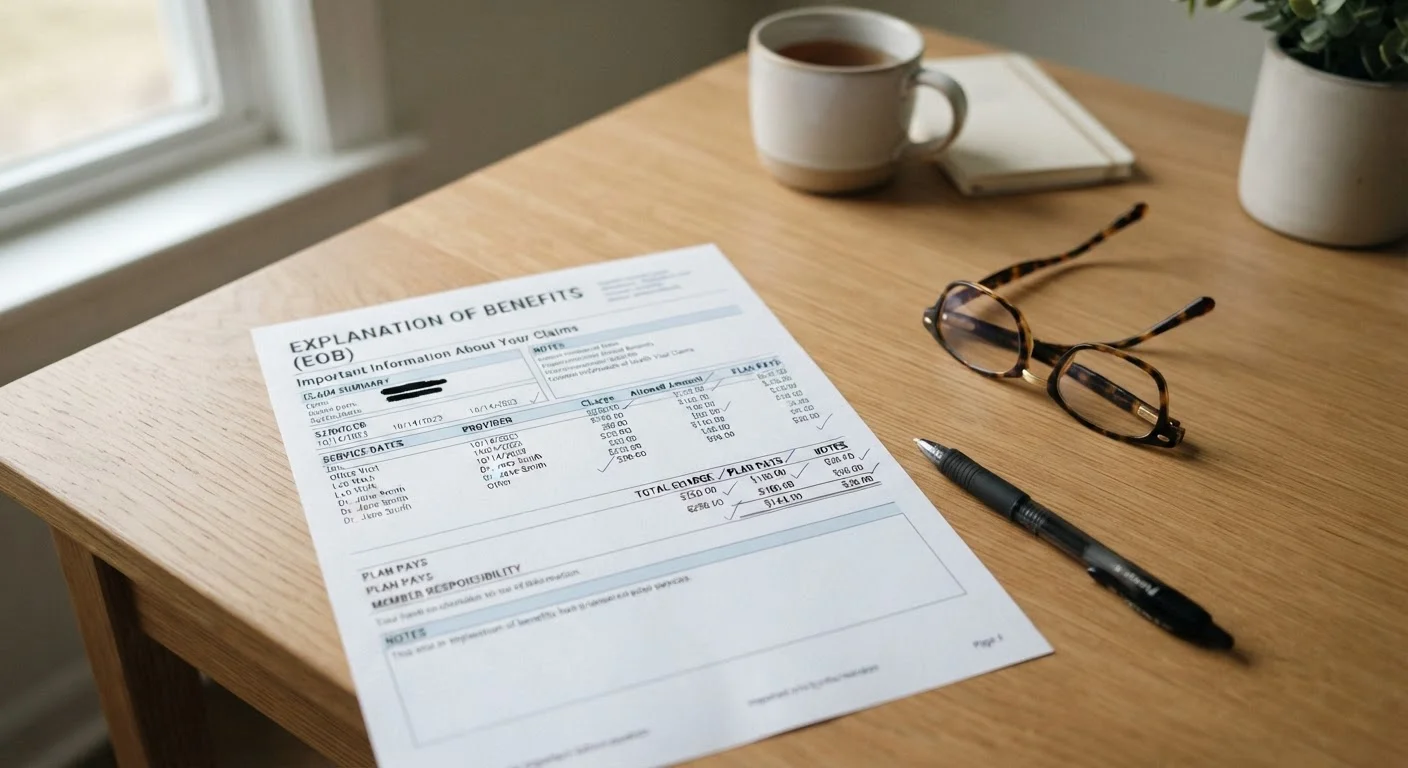
What an EOB Actually Is - and Isn't
After you receive medical care and your provider files a claim, your health insurer sends you an Explanation of Benefits (EOB) - a document summarizing how that claim was processed. It shows what was billed, what the insurer allowed, what they paid, and what portion (if any) falls to you.
What it is not: a bill. Yet this single misunderstanding causes more confusion than any other aspect of the EOB. Many people receive an EOB and immediately worry about payment or, worse, ignore it because they assume the insurer handled everything. Neither reaction is correct.
Think of the EOB as a reconciliation report. It gives you a window into how your insurer applied your benefits - your deductible status, any coinsurance percentage, and whether your provider was in-network or out-of-network. Understanding these figures helps you verify that the math is right before you pay a dollar. For a plain-language breakdown of what your plan typically covers, see what standard health insurance covers.
Common Misreadings - and How to Avoid Them
The mistakes below happen to careful, well-intentioned people. The EOB's layout and terminology are genuinely confusing. Knowing where readers most often go wrong is the first step toward reading yours accurately.
Treating the EOB as a bill and paying immediately upon receipt.
Why it happens: The document lists dollar amounts prominently, which looks like an invoice. Many people are conditioned to pay promptly and don't pause to identify what the document actually is.
Confusing the 'amount billed' with the amount you owe.
Why it happens: The billed amount is the provider's sticker price - almost always higher than what the insurer actually allows. Readers see this large number and assume the worst.
Ignoring denial or adjustment codes without investigating them.
Why it happens: The codes are short and technical (e.g., CO-97, PR-2), and the explanations are buried in fine print. Many readers assume denials are final or too complicated to challenge.
Assuming the insurer applied the correct network status to your provider.
Why it happens: Provider network databases can be outdated, and billing departments sometimes submit claims under the wrong group or tax ID, triggering an out-of-network determination even when the visit was in-network.
Discarding EOBs without filing them for future reference.
Why it happens: The documents can feel overwhelming and easy to dismiss once you determine no immediate payment is due. Most people don't anticipate needing them later.
~80%
Medical bills estimated to contain errors
Various healthcare billing audits have consistently found that the majority of medical bills contain at least one error, underscoring the importance of reviewing your EOB carefully.
30-180 days
Typical window to appeal a claim denial
Most health plans allow policyholders to file an internal appeal within this range; missing the deadline can forfeit your right to challenge a denial.
How to Check Your EOB for Errors
Billing errors in healthcare are more common than most people realize. When your EOB arrives, work through these verification steps before doing anything else:
- Match the date of service and provider name to care you actually received. If something looks unfamiliar, it could be a billing error or a duplicate claim.
- Check the procedure codes (listed as CPT codes) against your visit notes. A single transposed digit can change a routine office visit into a surgical procedure in the system.
- Confirm your deductible credit. The EOB should show how much of your deductible has been applied. Compare this to your running total from prior EOBs. If the figures don't align, call your insurer. For a refresher on how deductibles work, see how deductibles work before coverage kicks in.
- Review network status. Confirm your provider is listed as in-network if that's what you expected. An incorrect out-of-network classification can dramatically raise your share of the cost. Why the in-network distinction matters explains the financial stakes in detail.
- Look up any denial or adjustment codes. EOBs include short codes explaining why any charge was reduced or denied. Most insurers publish a key on the back of the document or online. If a service was denied, you generally have the right to appeal.
Never Pay a Bill That Doesn't Match Your EOB
If the amount on a provider's bill differs from the 'patient responsibility' shown on your EOB, do not pay the higher amount without first investigating. Contact your provider's billing department and ask them to explain the discrepancy in writing. Overpayments are difficult to recover, and providers are generally required to charge you only your confirmed cost-sharing amount.
If you identify an error, contact your insurer first, then your provider's billing department. Document every call - note the date, the representative's name, and what was said. If the error results in a bill you cannot pay while the dispute is pending, ask the provider about a payment hold. Unresolved billing problems can become medical debt, which carries its own set of consequences - see what patients should understand about medical debt for a broader look at your options.
This article is for general informational purposes only and does not constitute insurance, financial, or legal advice. Coverage terms, EOB formats, and appeal rights vary by insurer and state. Always read your actual policy documents and consult a licensed insurance professional for guidance specific to your situation.