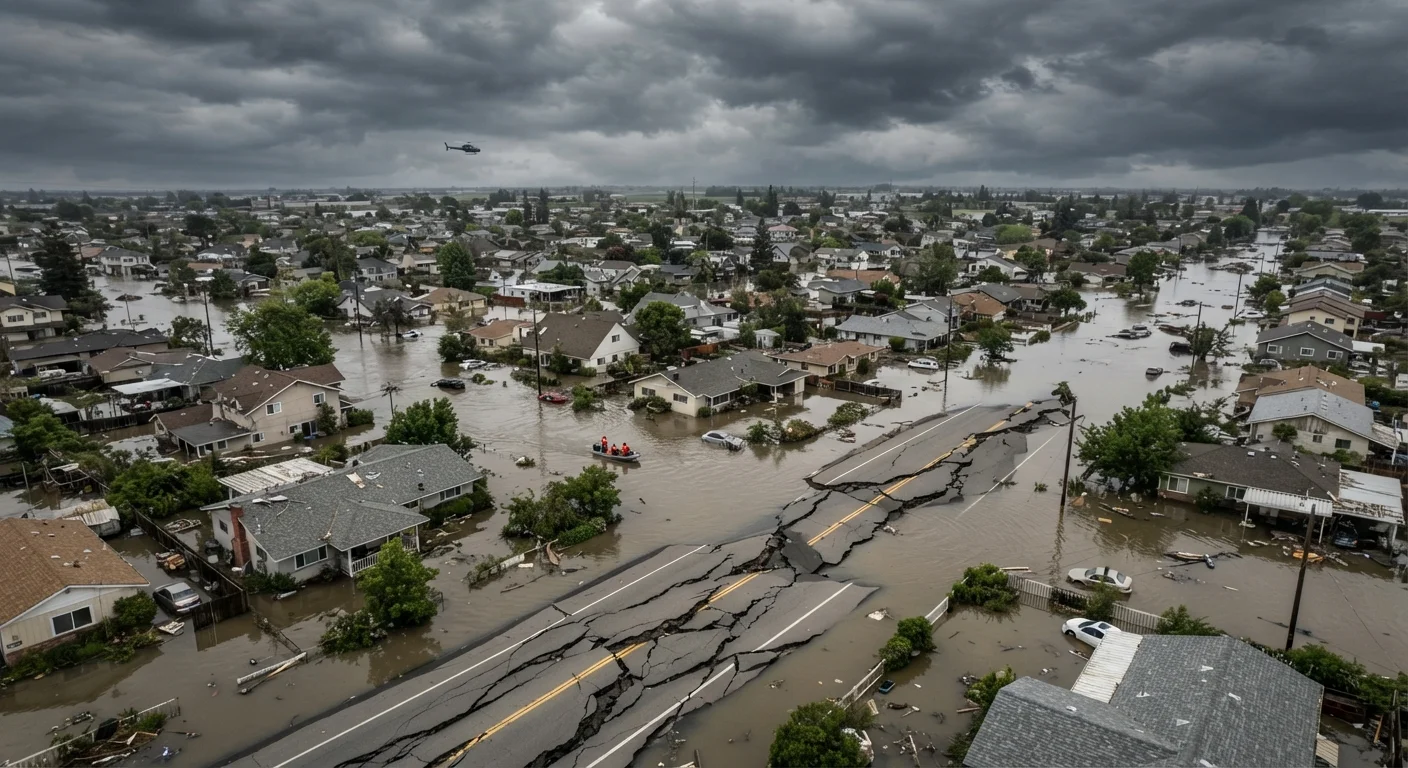
The Gap at the Heart of a Standard Policy
Most homeowners assume their insurance covers them against major natural disasters. That assumption is costly when it's wrong. A standard homeowners policy - the HO-3 form most Americans carry - covers a wide range of perils, from fire and windstorm to theft and vandalism. But it explicitly excludes two of the most financially devastating events a home can experience: flooding and earthquakes.
These aren't accidental omissions. They are deliberate underwriting decisions rooted in how insurers assess and price risk. Understanding why they're excluded - and what filling those gaps actually requires - is essential for any homeowner who wants to protect what they own.
A standard HO-3 policy covers a lot, but these two exclusions represent some of the largest uninsured losses American homeowners face after a disaster.
~$3.6B
Average annual NFIP flood claims paid
According to FEMA data, the NFIP has paid billions in claims annually, underscoring the scale of flood losses not covered by standard homeowners policies.
~13%
U.S. homeowners with flood insurance
Industry estimates suggest only a small fraction of U.S. homeowners carry flood insurance, leaving the vast majority exposed to uninsured flood losses.
10-25%
Typical earthquake deductible range
Earthquake insurance deductibles are usually a percentage of the home's insured value, meaning out-of-pocket costs before coverage applies can be substantial.
Why Insurers Exclude These Two Perils
Private insurers rely on spreading risk across a large, diverse pool of policyholders. Most covered perils - a kitchen fire, a burst pipe, a burglary - happen to individuals scattered across different times and places. Flood and earthquake events work very differently.
When a major flood or earthquake strikes, it damages thousands of homes simultaneously in the same geographic area. That concentration of simultaneous claims can overwhelm an insurer's reserves. It is the same reason flood coverage under standard policies essentially disappeared from the private market after repeated catastrophic losses in the mid-twentieth century, eventually prompting Congress to establish the National Flood Insurance Program (NFIP) in 1968.
Earthquake risk follows a similar logic. Seismic events are geographically clustered - California, the Pacific Northwest, and parts of the central U.S. carry the highest exposure - and a single major quake can generate claims that dwarf an insurer's capacity to pay them. The result: most carriers exclude the peril entirely and offer it only as a separate, specially priced product.
Understanding how named-perils and open-perils policies work helps clarify why even the broadest standard homeowners form still cannot be read as covering floods or earthquakes - the exclusions override the general coverage language.
Check Your Policy's Exclusions Section
Don't rely on a summary page or agent's verbal description to understand what your policy excludes. Pull out your actual policy document and locate the Exclusions section - typically several pages into the policy. Flood and earthquake will appear there by name in nearly every standard homeowners form. If you're unsure what you're reading, a licensed insurance agent can walk you through it.
Flood Coverage: How It Works
Flood insurance in the U.S. is available primarily through the NFIP, administered by the Federal Emergency Management Agency (FEMA), and through a growing number of private insurers. The two options differ in structure, pricing, and coverage limits.
NFIP policies separate building coverage (the structure itself) from contents coverage (personal belongings). Each must be purchased individually. Coverage limits under the NFIP are capped - currently at $250,000 for the building and $100,000 for contents - which may be insufficient for higher-value homes. Private flood insurance can offer higher limits and, in some cases, broader coverage terms.
One critical detail: NFIP policies carry a standard 30-day waiting period before coverage takes effect. Purchasing flood insurance the day before a named storm approaches provides no protection. Planning ahead is essential.
For a deeper comparison of what flood insurance does and doesn't protect, see Flood Insurance vs. Homeowners Insurance.
Earthquake Coverage: What a Separate Policy Includes
Earthquake insurance is sold either as a standalone policy or as an endorsement added to a homeowners policy, depending on the insurer and state. It generally covers direct physical damage to the structure, personal property losses, and in some cases additional living expenses if the home becomes uninhabitable after a quake.
The defining characteristic of earthquake policies is their deductible structure. Unlike a flat-dollar deductible common in homeowners insurance, earthquake deductibles are typically calculated as a percentage of the home's insured value - often ranging from 10% to 25%. On a $350,000 home, even a 10% deductible means absorbing the first $35,000 in losses before coverage applies.
Coverage also commonly excludes damage to land, fences, swimming pools, and separate structures in some forms, so reading the policy documents carefully matters. Learn more about what earthquake insurance specifically covers and how the policies are structured.
This article provides general insurance education and is not personalized insurance, financial, or legal advice. Coverage terms, limits, exclusions, and availability vary by insurer and state. Always read actual policy documents and consult a licensed insurance professional for guidance specific to your situation.
Disaster Declarations Don't Create Coverage
A common misconception is that a federal disaster declaration following a flood or earthquake will cover home repair costs. Federal disaster assistance - typically FEMA grants or low-interest SBA loans - is limited in scope and is not a substitute for insurance. Assistance amounts are often far below actual repair costs, and eligibility is not guaranteed. Separate insurance policies remain the primary financial protection for these events.