What Separates an Allergy from an Intolerance?
The words "food allergy" and "food intolerance" are frequently used interchangeably in everyday conversation, but they describe fundamentally different biological processes. Getting the distinction right matters - for safety, for diet management, and for knowing when to seek emergency care.
A food allergy is an immune system response. When a person with a food allergy ingests even a small amount of a trigger food, their immune system mistakenly identifies a protein in that food as a threat and mounts a defense. This response releases chemicals such as histamine into the bloodstream and can affect the skin, respiratory tract, gastrointestinal system, and cardiovascular system simultaneously. In severe cases, this cascading reaction - known as anaphylaxis - can be life-threatening without prompt treatment.
A food intolerance does not involve the immune system. Instead, it typically reflects the digestive system's inability to properly break down a particular food component. The most widely recognized example is lactose intolerance, where the body produces insufficient amounts of the enzyme lactase needed to digest the sugar in dairy products. The result is uncomfortable but not dangerous: bloating, gas, cramping, or diarrhea that resolves as the food clears the system.
| Criterion | Food Allergy | Food Intolerance |
|---|---|---|
| Mechanism | Immune system response (IgE-mediated) | Digestive system response, no immune involvement |
| Symptom onset | Minutes to 2 hours | 30 minutes to several hours |
| Systems affected | Skin, respiratory, GI, cardiovascular | Primarily gastrointestinal |
| Severity | Can be life-threatening (anaphylaxis) | Uncomfortable but not dangerous |
| Dose sensitivity | Trace amounts can trigger reaction | Often dose-dependent; small amounts tolerated |
| Diagnosis method | Skin prick test, IgE blood test, oral challenge | Breath test, elimination diet, symptom diary |
| Management | Strict avoidance, epinephrine auto-injector | Threshold management, enzyme supplements |
For a broader look at how food composition affects the body, see our article on whole foods vs. processed foods.
Symptoms, Onset, and Risk Level
The symptom profiles of allergies and intolerances overlap enough to cause real confusion, but key differences in timing, severity, and body systems involved can help distinguish them.
~6%
U.S. adults with a confirmed food allergy
According to research published in JAMA Network Open, approximately 6% of American adults have a current food allergy, though a much larger share believe they have one.
~36%
Adults estimated to be lactose intolerant globally
Prevalence of lactose intolerance varies widely by ancestry and region; the National Institutes of Health estimates that roughly 36% of Americans have some degree of lactose malabsorption.
9
Major allergens recognized by the U.S. FDA
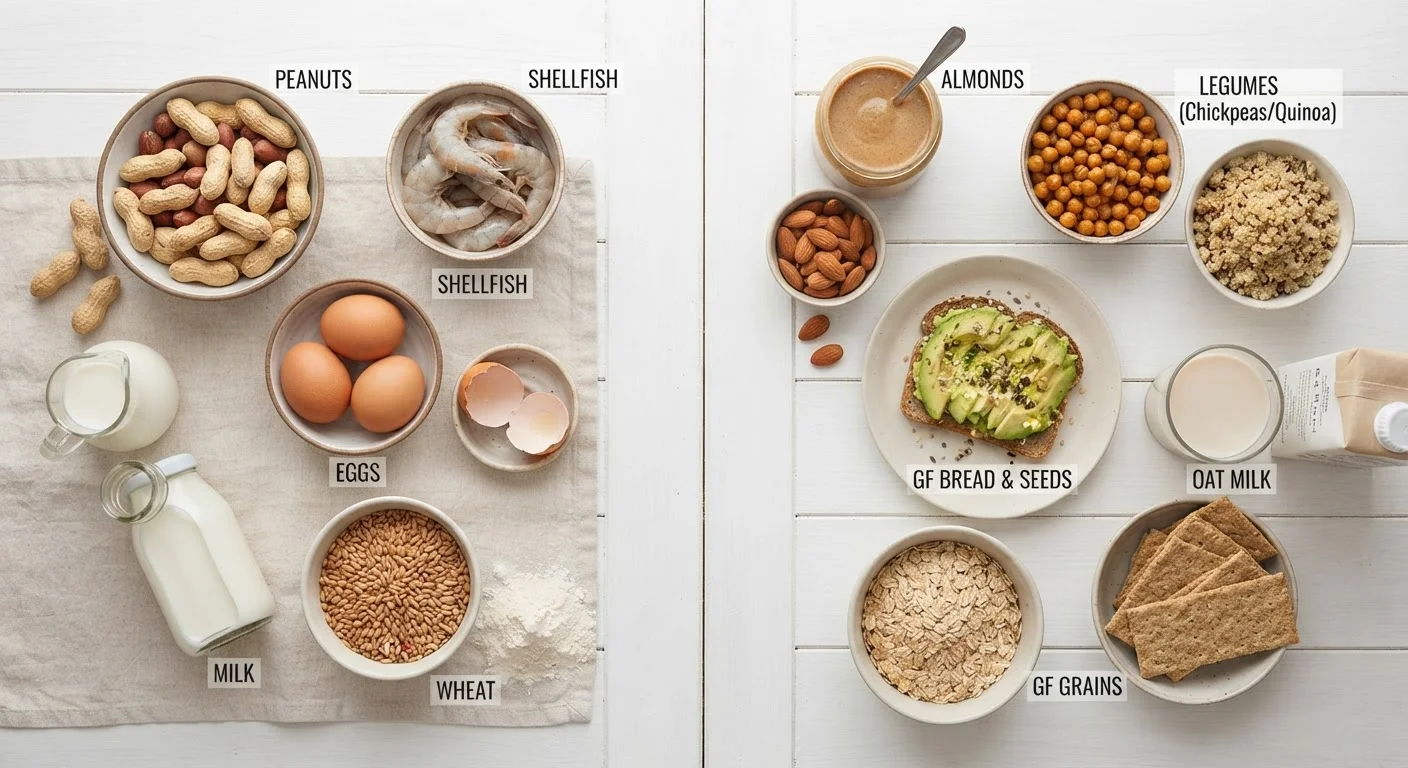
The FDA requires mandatory labeling for milk, eggs, fish, shellfish, tree nuts, peanuts, wheat, soybeans, and sesame on packaged food products sold in the United States.
Allergic reactions typically appear within minutes to two hours of eating the offending food. Symptoms can include hives, itching, swelling of the lips or throat, wheezing, a sudden drop in blood pressure, and - at the most severe end - anaphylactic shock. Even trace amounts of an allergen can trigger a full reaction in sensitized individuals, which is why allergen labeling laws and cross-contamination protocols exist. The U.S. Food and Drug Administration recognizes nine major food allergens: milk, eggs, fish, shellfish, tree nuts, peanuts, wheat, soybeans, and sesame.
Intolerances tend to be dose-dependent. A person who is lactose intolerant may tolerate a splash of cream in coffee without symptoms but struggle after a large bowl of ice cream. Symptoms typically appear within a few hours and are confined to the gastrointestinal tract. Discomfort is real and can significantly affect quality of life, but intolerances do not trigger anaphylaxis and are not inherently dangerous.
This article is for general informational purposes only and does not constitute medical advice. Always consult a qualified healthcare professional for personal symptoms or dietary concerns.
Diagnosis: Why Self-Diagnosing Falls Short
One of the more consequential errors people make is self-diagnosing a food allergy or intolerance and eliminating foods accordingly. Unnecessary restriction can lead to nutritional gaps, social difficulty around eating, and a false sense of security - or false alarm - about actual health risks.
A board-certified allergist can diagnose food allergies through a combination of skin prick tests, blood tests measuring IgE antibodies specific to food proteins, and supervised oral food challenges. These tests distinguish true immune-mediated allergies from other causes of food reactions. Because food allergy tests carry their own risk of false positives, clinical interpretation alongside a full patient history is essential.
Food intolerances are diagnosed differently depending on the suspected cause. Lactose intolerance, for example, can be confirmed with a hydrogen breath test. Others, such as sensitivity to certain carbohydrates (sometimes called FODMAPs), may be identified through an elimination diet conducted under a dietitian's guidance. A food and symptom diary is often a useful first step a clinician will recommend.
If gluten is a suspected trigger, it's worth understanding the distinction between wheat allergy, celiac disease (an autoimmune condition, not an intolerance), and non-celiac gluten sensitivity. Our companion article on gluten-free eating explores these distinctions in detail.
Celiac Disease: Neither Allergy Nor Simple Intolerance
Celiac disease is sometimes mistaken for a gluten intolerance, but it is a distinct autoimmune condition. When someone with celiac disease ingests gluten, the immune system attacks the lining of the small intestine, causing lasting damage. Unlike a food intolerance, even small amounts of gluten are harmful for people with celiac disease. Unlike a typical food allergy, the reaction is autoimmune rather than IgE-mediated. Proper diagnosis through blood tests and intestinal biopsy is essential before committing to a gluten-free diet.
Managing Each Condition Day to Day
Management strategies differ significantly depending on whether a food allergy or intolerance has been confirmed.
For food allergies, strict avoidance of the allergen is the standard approach. People with severe allergies are typically advised to carry an epinephrine auto-injector at all times and to inform schools, workplaces, and restaurants of their condition. Reading ingredient labels carefully and asking about preparation methods when dining out are non-negotiable habits. The FDA's mandatory labeling requirements for the nine major allergens make packaged food navigation more manageable, though cross-contact during manufacturing remains a concern.
For food intolerances, management is usually more flexible. Enzyme supplements (such as lactase tablets for lactose intolerance) can allow moderate consumption of trigger foods. Identifying personal thresholds through careful reintroduction - ideally with professional guidance - allows many people to retain variety in their diet. Keeping a food diary and working with a registered dietitian can make this process more systematic and effective.
Regardless of which condition applies, unmanaged food reactions affect quality of life and, in the case of allergies, can be dangerous. Learning to evaluate nutrition information critically is also valuable - our guide on navigating conflicting nutrition headlines offers a useful framework for filtering reliable guidance from noise.
Always work with a licensed healthcare provider or registered dietitian before making significant changes to your diet, especially if you suspect an allergy or intolerance.