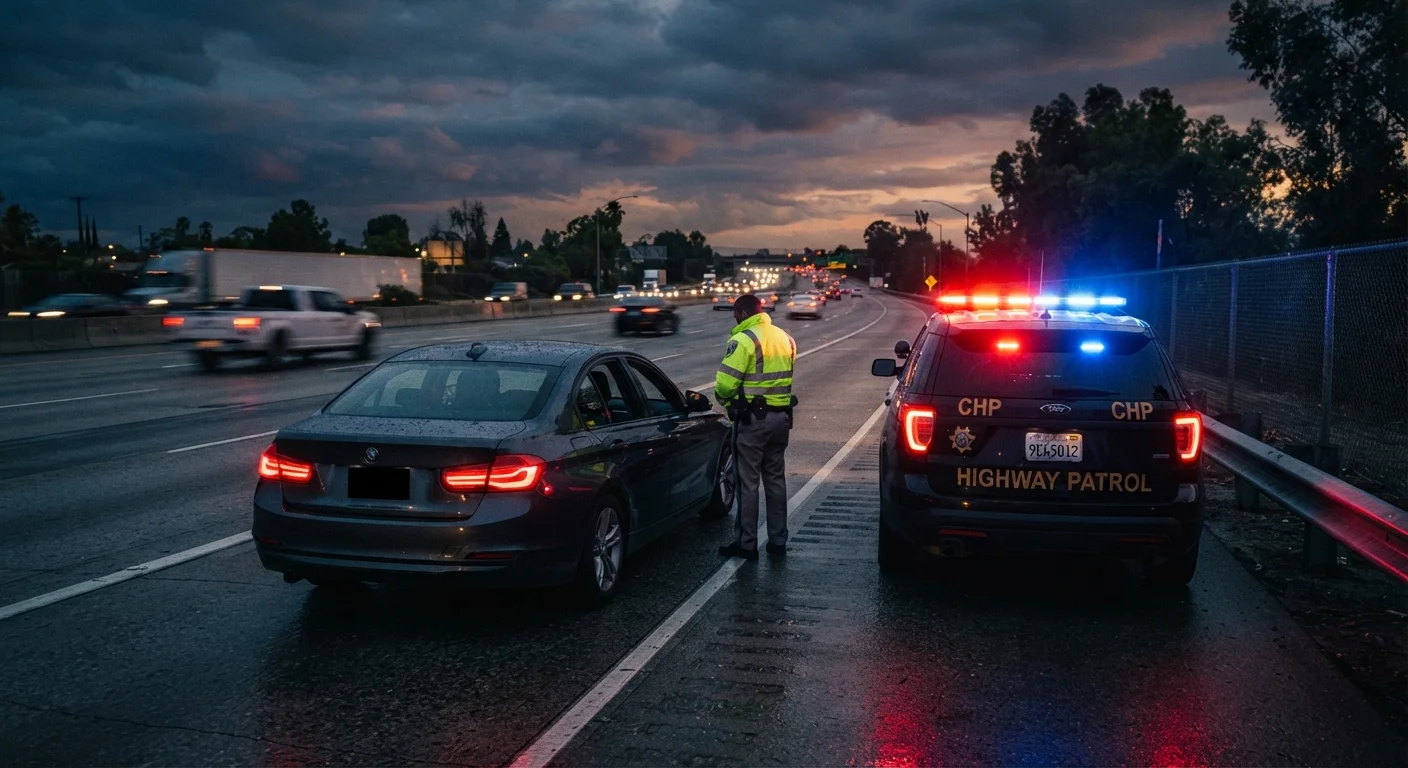
The Legal Consequences State by State
The moment you drive without insurance on a public road, you are breaking the law in almost every state. While specific penalties differ, the general framework is consistent: fines, license and registration suspension, and mandatory proof of future financial responsibility.
A first offense typically results in a fine, though amounts vary dramatically. Some states assess a flat fee; others scale the penalty based on how long you have been uninsured. Many states also suspend your driver's license and vehicle registration until you provide proof of coverage and pay a reinstatement fee.
Repeat offenses carry steeper consequences. In several states, a second or third violation can be charged as a misdemeanor, and some jurisdictions permit short jail sentences for habitual uninsured drivers. Beyond the courtroom, law enforcement can impound your vehicle on the spot, leaving you responsible for towing and daily storage fees on top of every other penalty.
State Law Variations Matter
Insurance requirements, penalty structures, and enforcement mechanisms differ significantly from state to state. What results in a small fine in one state may trigger immediate impoundment in another. Always check your state DMV's current requirements rather than relying on general summaries, and consult a licensed insurance professional if you are unsure about your compliance status.
New Hampshire and Virginia operate under alternative frameworks. New Hampshire does not mandate insurance but requires uninsured drivers to demonstrate equivalent financial responsibility. Virginia historically allowed drivers to pay an uninsured motorist fee, though the state moved to require insurance in 2024. Always verify your state's current requirements with your state DMV.
Financial Exposure After an Accident
Legal fines are manageable compared to what can happen if you cause an accident while uninsured. Without liability coverage, you are personally responsible for every dollar of damage and injury you cause - there is no insurer to step in.
In a serious collision, those costs can be catastrophic. Medical bills for an injured party can run into the hundreds of thousands of dollars. Vehicle repair or replacement for the other driver adds more. Injured parties can and do sue uninsured at-fault drivers, and courts can order wage garnishment and asset liens to satisfy judgments.
1 in 8
U.S. drivers currently uninsured
According to the Insurance Research Council's estimates on uninsured motorist rates across the country.
$500-$1,500+
Typical fine range for first offense
State fines for a first-time uninsured driving violation vary widely; additional court and reinstatement fees often increase the total cost substantially.
2-3 years
Typical SR-22 filing requirement
Most states require drivers convicted of an uninsured violation to maintain an SR-22 certificate for two to three years following the offense.
Even if you are not at fault, being uninsured creates complications. Many states have provisions that reduce or eliminate your right to collect damages if you were driving illegally at the time of the crash. Understanding what full coverage actually provides - versus the bare legal minimum - is worth exploring in our breakdown of minimum vs. full coverage.
The Long-Term Cost: SR-22, Higher Premiums, and Your Record
Getting caught without insurance leaves a mark on your driving record that affects your insurability for years. Most states require drivers convicted of an uninsured violation to file an SR-22 - a certificate your insurer submits to the state confirming you now carry the legally required coverage. SR-22 requirements typically last two to three years, and not all insurers offer SR-22 filings, which limits your options.
Carrying an SR-22 almost always means higher premiums. Insurers classify drivers with uninsured violations as high-risk, and that designation can push annual premium costs significantly upward for the duration of the filing period. Even drivers who lapse briefly without getting caught may face higher rates if their coverage gap shows up when they reapply.
Avoid Gaps: Set Up Automatic Renewal
One of the most common reasons drivers end up uninsured is an unintentional lapse - a missed payment or an expired card on file. Setting up automatic renewal with your insurer and keeping your payment method current is the simplest way to ensure continuous coverage. If you are switching insurers, confirm the new policy's start date overlaps with or exactly matches your old policy's end date.
To understand what coverage levels you actually need - and why meeting just the state minimum may leave dangerous gaps - see our comparison of auto insurance coverage types.
How Uninsured Drivers Affect Everyone Else on the Road
Driving without insurance is not a victimless decision. According to the Insurance Research Council, roughly one in eight U.S. drivers is uninsured at any given time. When those drivers cause accidents, the financial burden falls on insured motorists through their own uninsured motorist (UM) and underinsured motorist (UIM) coverage - or directly out of pocket if they lack it.
UM/UIM coverage exists precisely because uninsured drivers are a real and persistent risk on American roads. If you have never reviewed whether your policy includes this protection, our guide on uninsured and underinsured motorist coverage explains what it covers and why even fully insured drivers benefit from carrying it. Additionally, if your current insurer is financially troubled, understanding what happens if your insurer becomes insolvent can help you stay protected from multiple angles.
The bottom line: the consequences of driving uninsured extend well beyond a traffic ticket. From personal financial ruin to years of elevated premiums and restricted driving privileges, the risks are substantial - and entirely avoidable by maintaining at minimum the coverage your state requires.
This article is for general informational and educational purposes only and does not constitute legal, financial, or insurance advice. Coverage requirements, penalties, and regulations vary by state. Consult a licensed insurance agent or legal professional for guidance specific to your situation.