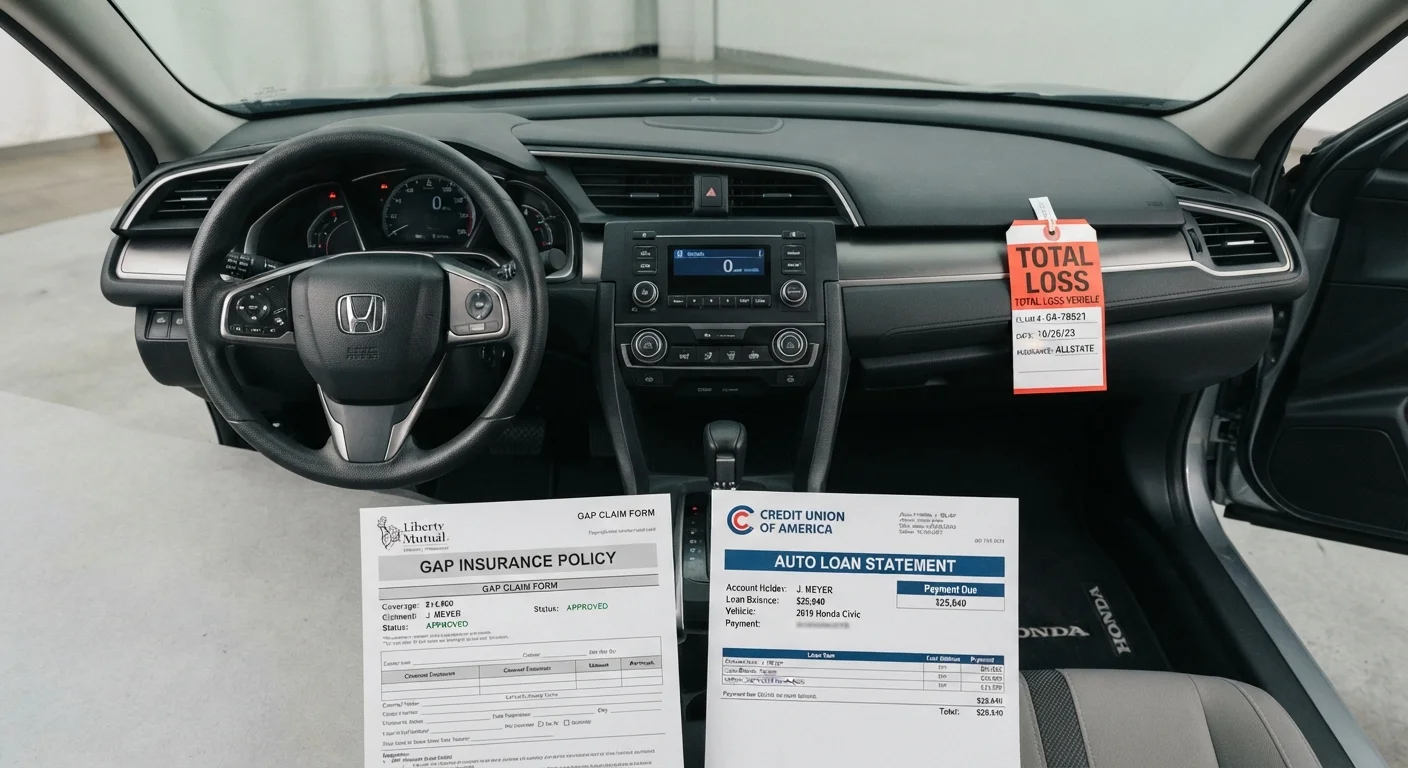
The Problem Gap Insurance Solves
The moment you drive a new vehicle off the lot, its market value drops - often by several thousand dollars. Meanwhile, your loan balance stays the same. This mismatch between what you owe and what your car is worth is commonly called being upside down on a loan, and it can persist for months or even years depending on your financing terms.
If your car is totaled or stolen during this period, your standard comprehensive or collision insurance pays out the vehicle's actual cash value (ACV) - the depreciated market value at the time of the loss, not the original purchase price. That payout often falls short of your loan payoff. The remaining balance is still your responsibility, and you'd owe it even though the car is gone.
Gap insurance is specifically designed to cover that shortfall. It steps in after your primary insurer settles, paying the difference between the ACV payout and your outstanding loan or lease balance. For more detail on how this scenario unfolds, see our article on the upside-down loan problem and how GAP insurance addresses it.
15-25%
Average first-year vehicle depreciation
Industry estimates consistently show new cars lose a significant portion of their value within the first 12 months of ownership, creating a common period of negative equity.
~40%
U.S. auto loans with terms of 72+ months
According to Experian's State of the Automotive Finance Market reports, a substantial share of new vehicle loans now extend six years or longer, prolonging the period when owners may be upside down.
$5,000+
Typical gap between ACV and loan balance
Consumer financial analysts note that in total-loss scenarios, the shortfall between an insurer's ACV settlement and the outstanding loan can reach several thousand dollars, particularly early in a loan term.
What Gap Insurance Covers - and What It Doesn't
Gap insurance typically activates in two situations: when a vehicle is declared a total loss due to a covered accident, or when it is stolen and not recovered. In both cases, it bridges the gap between the ACV settlement from your primary insurer and the remaining payoff on your loan or lease.
What It Generally Does NOT Cover
- Mechanical breakdowns or engine failure
- Extended loan payments resulting from missed or deferred payments that increased your balance
- The cost of a rental car while you're without a vehicle
- Negative equity from a previous loan that was rolled into the new one (in most cases)
- Overdue fees, late charges, or other amounts added to the loan outside the original balance
It's also worth understanding that gap insurance exists within a broader insurance picture. If you're unsure whether your current policy has gaps of its own, our coverage audit checklist can help you review your full protection.
Check Your Loan Balance vs. Car Value Regularly
You can estimate your car's current market value using publicly available vehicle valuation tools and compare it to your remaining loan payoff from your lender's online account portal. When your loan balance dips below your car's estimated value, you've crossed out of gap territory. Canceling unnecessary coverage at that point can save you money - just confirm with your insurer how cancellation and any refund would work.
Who Typically Needs Gap Insurance
Not every driver benefits equally from gap coverage. It tends to matter most in specific financing situations where depreciation outpaces loan repayment.
Situations Where Gap Insurance Is Worth Considering
- Low or no down payment: Putting less than 20% down means your initial loan balance is close to - or above - the car's retail value from day one.
- Long loan terms: Loans stretched over 60, 72, or 84 months build equity slowly. Depreciation can outrun your payments for several years.
- Leased vehicles: Many lease agreements require gap coverage because lessees carry the financial exposure during the lease term.
- High-depreciation vehicles: Some makes and models lose value faster than average, widening the gap more quickly.
- Rolled-over negative equity: If a previous unpaid loan balance was added to a new loan, you're starting even further upside down.
Once your loan balance drops below the car's current market value, gap coverage is no longer providing protection you'd actually need. Canceling it at that point - and getting a prorated refund if applicable - is a reasonable step. Understanding the difference between minimum coverage and fuller protection is foundational here; see our explainer on minimum auto insurance versus full coverage.
Where to Get It and What to Watch For
Gap insurance is available from three main sources: your auto insurer, the dealership, or the lender. Each option comes with different pricing structures, terms, and levels of flexibility.
Purchasing through your auto insurer is often the most straightforward approach - it appears as a policy add-on and canceling it is usually simple if your loan situation changes. Dealerships and lenders may bundle gap into financing packages, which can make comparison harder. In some cases, gap purchased through a dealership may cost considerably more over the loan term than coverage added directly to an auto policy.
Before agreeing to any gap coverage, review what the policy actually pays - specifically whether it covers your deductible, whether it accounts for rolled-over balances, and what happens if you pay off your loan early. Many drivers don't discover coverage gaps until they file a claim - reading the terms before you need them is the most effective protection.
For a broader look at how gap coverage fits within your overall auto insurance approach, the coverage types hub and choosing coverage guides offer additional context for evaluating your options.
This article is for general informational purposes only and does not constitute insurance, financial, or legal advice. Coverage terms, eligibility, and pricing vary by insurer, lender, and state. Consult a licensed insurance professional for guidance specific to your situation.