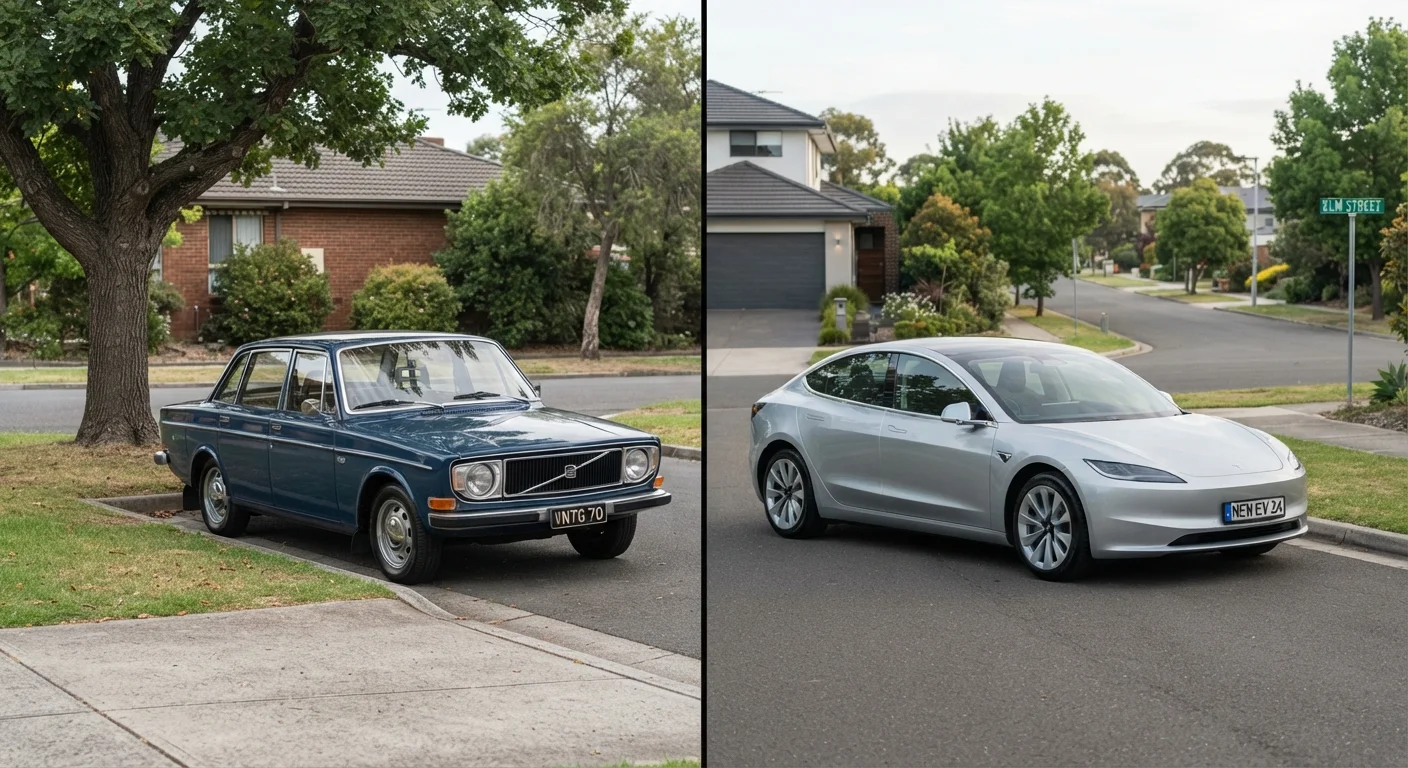
The Core Financial Equation
At its most basic level, the long-term ownership vs. frequent upgrade debate is a question of where your money goes over time. Every vehicle purchase involves a cluster of costs: the purchase price, financing interest, insurance, fuel, registration, and maintenance. How those costs distribute across years depends heavily on how long you keep the car.
When you finance a vehicle and hold it for 10-12 years, you typically spend several years making loan payments - then several more driving with no payment at all. That payment-free period is where long-term ownership generates its most significant financial advantage. Your fixed costs drop sharply while depreciation has already done its worst damage.
Frequent upgraders, by contrast, tend to stay in a perpetual loan cycle. Each trade-in resets the depreciation clock and extends the period of highest ownership cost. Understanding how vehicle depreciation works is essential context here - a new car can shed 15-25% of its value in the first year alone, meaning early trade-ins often result in rolling negative equity into the next loan.
~20%
Typical first-year vehicle depreciation
Industry estimates consistently show new vehicles lose roughly 15-25% of their value in the first twelve months, making early trade-ins particularly costly.
12.6 years
Average age of vehicles on U.S. roads
According to S&P Global Mobility data, the average age of light vehicles in operation in the United States has trended above 12 years, reflecting widespread long-term ownership.
Advantages of Keeping a Car Long-Term
Long-term ownership rewards patience and consistent maintenance. Once the loan is paid off - typically after five to six years - your monthly transportation cost drops substantially. That freed-up cash flow can be redirected toward savings, retirement contributions, or other financial goals.
There's also a depreciation advantage: by the time a vehicle is eight or ten years old, its annual value loss has slowed to a trickle. You're no longer hemorrhaging thousands of dollars per year in paper losses. For budget-conscious households, this stabilization matters. Sound budgeting principles often favor predictable, declining costs - which long-term ownership can deliver.
No monthly payment after loan payoff
Once financing is retired, your fixed vehicle costs drop dramatically. That cash flow advantage can persist for years if the car remains reliable.
Depreciation curve works in your favor
After the first three to five years, annual value loss slows considerably, meaning you're no longer absorbing steep paper losses each year.
Lower total cost of ownership over time
Across a 10-15 year window, most analyses suggest long-term owners spend less in aggregate than those who upgrade every two to four years, even accounting for higher repair costs in later years.
Reduced insurance premiums over time
As a vehicle ages and its market value declines, you may be able to reduce or drop comprehensive and collision coverage, lowering annual insurance costs.
Disadvantages of Long-Term Ownership
Holding a vehicle for a decade or more isn't without trade-offs. As mileage climbs, so does the likelihood of unplanned repair bills - timing belts, water pumps, suspension components, and transmission service all become more probable. While these costs are often still less than a new car payment, they arrive unpredictably, which can strain a household budget.
Older vehicles also lack the safety and efficiency advances built into newer models. Advanced driver-assistance systems, improved crash-test ratings, and better fuel economy are meaningful considerations - particularly for high-mileage commuters or families with young children. Fuel cost comparisons between newer and older powertrains show that an aging gas vehicle can cost meaningfully more to operate per mile than a modern efficient alternative.
Unpredictable repair costs increase with age
High-mileage vehicles require more frequent attention to wear items - brakes, belts, cooling systems, and seals - making budgeting harder. A single major repair can run $1,000-$3,000 or more.
Older safety technology falls behind
Vehicles more than seven to ten years old typically lack automatic emergency braking, lane-keeping assist, and updated crash structures that are now standard on new models.
Fuel efficiency lags modern alternatives
Engine and transmission technology has advanced meaningfully; an older vehicle may cost noticeably more per mile to operate than a comparable newer model.
Reliability uncertainty grows with mileage
Even well-maintained vehicles carry greater mechanical risk beyond 150,000 miles, which can affect confidence for long road trips or time-sensitive commutes.
What Frequent Upgrades Actually Cost You
Trading in every two to four years keeps you in warranty coverage and modern technology, but the financial cost is substantial. The depreciation sweet spot for used vehicles typically falls in the three-to-five-year range - meaning frequent upgraders are continuously selling during the steepest part of the depreciation curve and buying at the top of the next one.
Rolling negative equity - when you owe more on a trade-in than it's worth - is a common pitfall for serial upgraders. This balance gets folded into the new loan, extending the debt cycle and increasing total interest paid. Over a 15-year period, the cumulative difference in total transportation spending between a long-term owner and a frequent upgrader can run into tens of thousands of dollars, though exact figures vary widely based on vehicle choice, financing terms, and local market conditions.
For a broader look at the lease-vs-buy dimension of this question, see what the leasing and buying numbers actually mean.
Negative Equity: A Hidden Upgrade Cost
When you trade in a vehicle before your loan balance falls below the car's market value, the shortfall - called negative equity - is typically rolled into your next loan. This inflates the new loan amount, increases interest paid, and can leave you underwater again on the next trade-in. It's a compounding problem that frequent upgraders should account for carefully before committing to a new purchase.
Making the Decision for Your Situation
Neither strategy is universally correct. The right answer depends on your financial position, driving patterns, risk tolerance, and how much value you place on newer technology. Drivers with variable income or thin emergency funds may find unpredictable repair bills harder to absorb, making newer vehicles under warranty more practical despite the higher baseline cost.
Consider also that vehicle age interacts with your life stage. Transportation needs and costs shift considerably from early adulthood through retirement - a strategy that works well at 35 may not suit the same driver at 60.
If you're evaluating a used vehicle as a middle path, a framework for weighing vehicle age can help you assess reliability data and repair cost exposure before committing. Similarly, certified pre-owned vehicles offer a middle ground worth understanding.
This article is for general informational purposes only and does not constitute financial or purchasing advice. Your individual costs will vary based on vehicle, location, financing terms, and driving habits. Consult a qualified financial professional for guidance tailored to your situation.