Why a Test Drive Isn't Enough
Buying a used vehicle is one of the larger financial decisions most people make outside of a home purchase. A test drive tells you how a car feels on the road; it tells you almost nothing about the condition of its brake lines, transmission fluid, or whether the frame was ever straightened after a collision.
A pre-purchase inspection - conducted by an independent, qualified mechanic - fills that gap. It's a structured evaluation designed to surface problems that aren't visible to the untrained eye and don't announce themselves during a 20-minute drive. For buyers who want to approach the transaction with full information, a PPI is one of the most practical tools available.
It's worth understanding what separates a PPI from other checks. A dealer's lot inspection, a CPO evaluation, and a safety inspection all serve different purposes. The comprehensive vehicle safety inspection covers roadworthiness for legal purposes; a PPI goes further, providing a buyer-focused assessment of the vehicle's overall condition and remaining service life.
What a Pre-Purchase Inspection Covers
While the scope can vary by mechanic and shop, a thorough PPI typically includes the following areas:
- Engine and drivetrain: The mechanic checks for leaks, unusual wear, signs of overheating, and listens for abnormal sounds at idle and under load. Fluid conditions - oil, coolant, transmission fluid - are assessed.
- Transmission: Shift quality, response time, and fluid condition are evaluated. Automatic and manual transmissions each have their own tell-tale warning signs.
- Brakes and suspension: Pad and rotor thickness, brake lines, shock absorbers, and steering components are all inspected. These directly affect safety and replacement costs.
- Body and frame: The mechanic looks for misaligned panels, overspray, inconsistent paint thickness, or signs of welding - all indicators of past collision damage that may not appear in a history report.
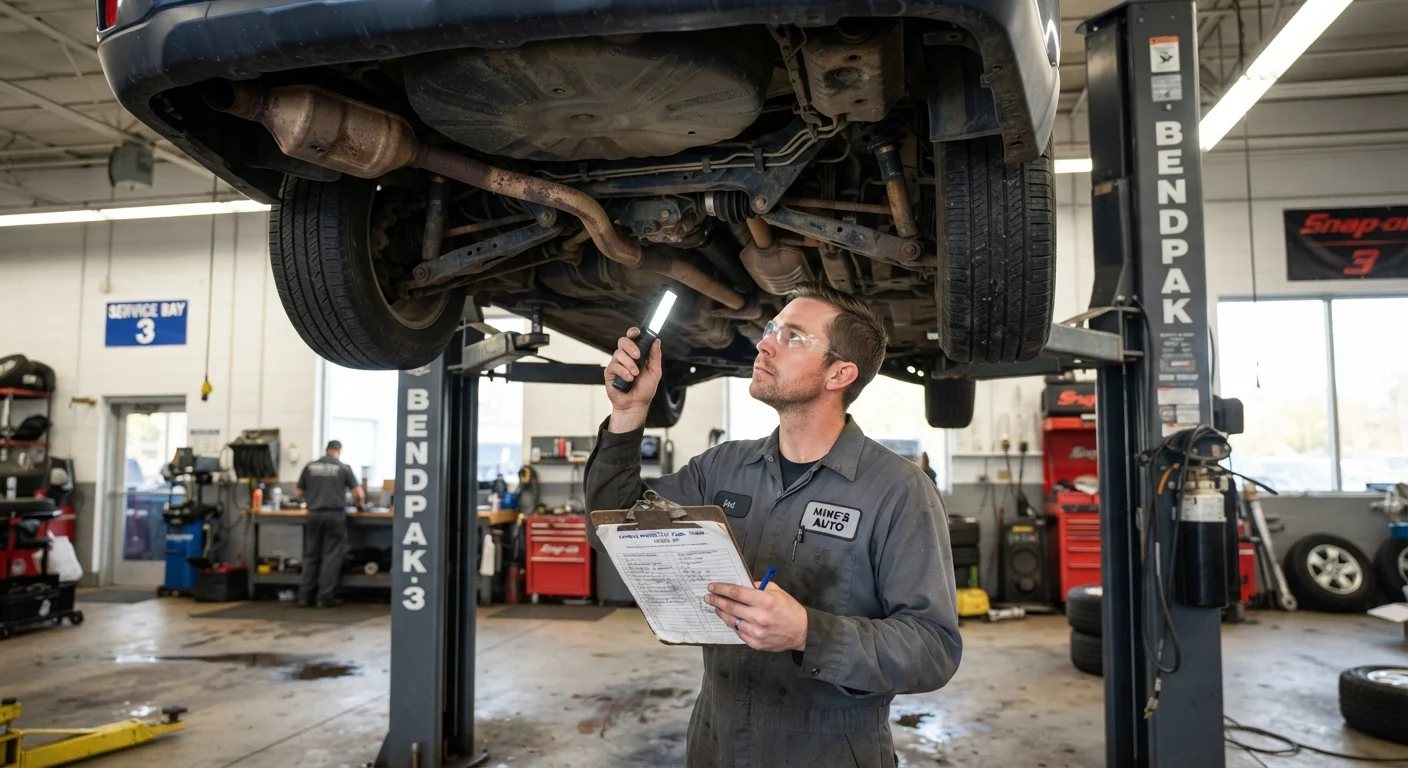
- Undercarriage: Rust, leaks, exhaust condition, and frame integrity are visible from below when the car is put on a lift - something a parking-lot visual check can never replicate.
- Electrical systems: Warning lights, HVAC function, windows, and other electronics are tested for proper operation.
- Tires: Wear patterns can indicate alignment problems or suspension issues beyond just needing new rubber.
$100-$200
Typical PPI cost range
Industry estimates from automotive consumer resources consistently place pre-purchase inspection fees in this range for standard passenger vehicles.
~1 in 3
Used cars with undisclosed issues
Consumer automotive research has suggested that a significant share of used vehicles have mechanical or structural issues not disclosed by sellers or apparent in history reports.
The mechanic typically provides a written report of their findings - a document that becomes useful both for understanding the vehicle's condition and as a basis for price negotiation.
How to Arrange a PPI - and What to Watch For
The process is straightforward. Once you've identified a vehicle you're seriously considering, ask the seller if you may take the car to a mechanic of your choosing for an inspection. Most honest sellers will agree; hesitation or refusal warrants caution.
Choose a mechanic who has no connection to the seller - your own regular shop, or one with strong local reviews. If you're buying in an unfamiliar city, some services allow a mechanic to inspect the vehicle on-site. Expect to pay the inspection fee yourself regardless of the outcome.
Ask the Mechanic to Walk You Through the Report
If possible, be present for part of the inspection or ask the mechanic to walk you through their findings in person or by phone. A written report is useful, but a direct conversation helps you understand which issues are minor and which are significant - and gives you the chance to ask follow-up questions.
When reviewing the report, pay particular attention to any items flagged as safety concerns or requiring near-term repair. Minor wear items like wiper blades or an aging battery are expected on used vehicles and shouldn't be alarming. Major findings - a cracked engine mount, evidence of frame damage, or a slipping transmission - are negotiating points at minimum, and deal-breakers at the extreme.
The findings may also inform what insurance coverage you'll need. Once you understand the vehicle's condition, reviewing your coverage options with that knowledge in hand is a logical next step.
The Cost of Skipping the Inspection
The inspection fee - typically $100 to $200 - can feel unnecessary when you're already stretching a budget on a vehicle purchase. But consider what that fee buys: an unbiased professional opinion on a purchase that may cost tens of thousands of dollars and that you'll depend on daily.
Deferred maintenance, hidden rust, and undisclosed accident repairs are among the most common issues found during PPIs on private-party vehicles. Any one of them can cost far more to address than the inspection itself. A $150 inspection that prevents you from buying a car with a failing transmission or a compromised frame pays for itself many times over.
Used-car buyers who skip the PPI are making a significant decision with incomplete information. The same principle applies to any major purchase - doing the homework beforehand is a discipline worth building. Our pre-purchase checklist covers that mindset across a broader range of buying decisions.
Owning a vehicle comes with ongoing responsibilities, and understanding what you're buying is the foundation of that. For a wider look at what car ownership involves, the Car Ownership hub covers maintenance, costs, and more.