The Physics Behind Wireless Charging
Wireless charging relies on a principle called electromagnetic induction, first demonstrated by Michael Faraday in the 19th century. When an alternating electrical current passes through a coil of wire, it creates a fluctuating magnetic field around it. If a second coil is brought close enough, that magnetic field induces a new electrical current in the second coil - no physical connection needed.
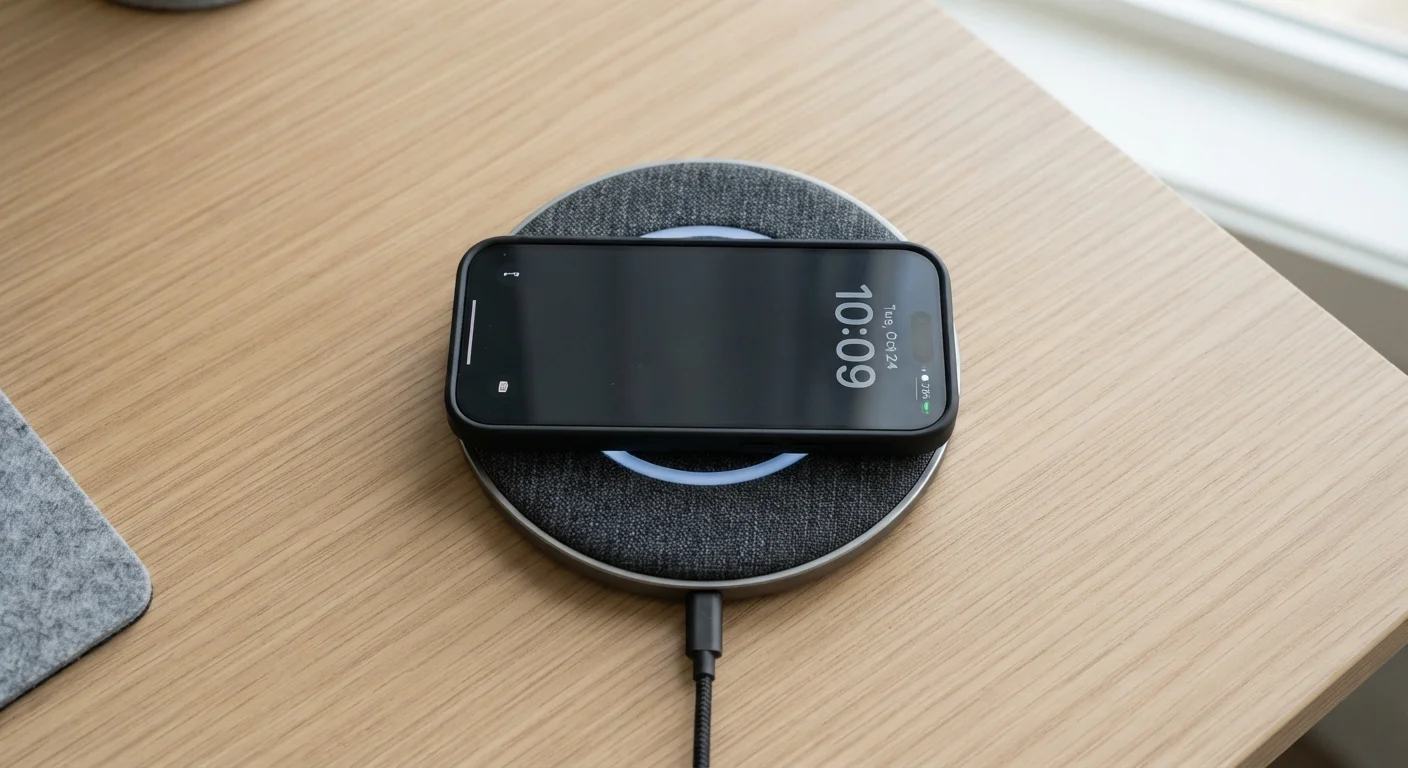
In a wireless charger, the pad contains a transmitter coil that generates this magnetic field. Your phone houses a receiver coil embedded behind the back panel. When you set the phone on the pad, the two coils couple magnetically and energy transfers from the pad to the phone's battery management circuitry, which then charges the battery.
The effective range of inductive charging is very short - typically a few millimeters - which is why your phone must be placed directly on the pad. This is also why alignment matters: misaligned coils transfer energy less efficiently, sometimes producing noticeable heat.
Inductive vs. Resonant Wireless Charging
Most consumer wireless chargers use tightly coupled inductive charging, which works only at very close range. A related technology called resonant wireless charging can transfer power over slightly greater distances and to multiple devices simultaneously, but it is less common in mainstream consumer products today. The Qi standard is inductive.
Wireless Charging Standards: Qi, Qi2, and Proprietary Systems
The Qi standard, maintained by the Wireless Power Consortium, is the universal baseline for wireless charging. Most Android flagships and all recent iPhones support Qi, meaning a single Qi-certified pad can charge a wide variety of devices.
However, manufacturers have layered proprietary protocols on top of Qi to enable faster speeds. These typically require a matching charger from the same ecosystem to unlock the highest wattage - using a third-party Qi pad usually reverts the device to standard speeds.
Qi2, released in 2023, introduced a magnetic alignment ring that physically guides the phone into the optimal position over the coil, improving both efficiency and consistency. This mirrors Apple's MagSafe design, and Qi2 was co-developed with Apple's magnetic specification as a foundation.
15W
Typical maximum standard Qi output
Most Qi-certified pads deliver between 5W and 15W; proprietary fast wireless protocols can exceed this on matched hardware.
~40-50%
Extra energy used vs. wired charging
Published efficiency studies indicate wireless charging typically requires significantly more electricity to deliver the same charge to the battery due to inductive transfer losses.
2023
Year Qi2 standard was released
The Wireless Power Consortium released the Qi2 specification in 2023, introducing magnetic alignment and improved efficiency over the original Qi standard.
Wireless vs. Wired: Speed and Efficiency Compared
The most important trade-off is speed. A typical Qi pad delivers between 5W and 15W, depending on the device and charger. By contrast, wired fast-charging technologies commonly reach 25W to 65W or more on compatible hardware. In practical terms, a phone that charges from empty to full in about an hour via cable may take two hours or longer wirelessly.
Energy efficiency is another consideration. Wired charging converts power with relatively low losses. Wireless charging introduces energy waste as heat during the coil-to-coil transfer process - estimates from published research suggest wireless charging can use roughly 40-50% more electricity than wired charging to deliver the same amount of energy to the battery. For most households, this difference in electricity cost is small, but it is a real factor in device heat and environmental efficiency.
That said, convenience has its own value. Dropping a phone on a pad without fumbling for a cable, especially overnight or at a desk, is a genuine quality-of-life benefit that wired charging doesn't replicate as easily. See our guide on modern charging myths for more context on how usage habits affect overall charging strategy.
What Wireless Charging Means for Battery Health
Heat is the primary enemy of lithium-ion battery longevity, and wireless charging tends to generate more of it than wired charging - both because of inductive transfer losses and because the phone is often enclosed in a case while resting flat on a pad. Sustained heat exposure during charging cycles can accelerate capacity loss over time.
This doesn't mean wireless charging will dramatically shorten your phone's life in typical everyday use. But if battery longevity is a priority, relying on wired charging for full charges and using wireless as a convenient top-up is a reasonable approach. Our article on keeping your phone battery healthy over the long haul goes deeper into the habits and strategies that matter most for long-term battery care.
Reduce Heat to Protect Battery Life
If you charge wirelessly overnight, remove your phone from its case when possible and place it on a hard, flat surface rather than a cushion or bedding. Reducing heat buildup during long charging sessions is one of the most effective ways to slow battery capacity loss over time.
Is Wireless Charging Worth It for You?
Whether wireless charging is worth adopting depends largely on how you use your phone day-to-day. For users who charge primarily overnight or top up during desk work, a wireless pad offers real convenience without meaningful downside. For users who need to go from low battery to full as fast as possible, wired fast charging remains the more practical tool.
A few practical considerations before you start using wireless charging regularly:
- Case compatibility: Thin non-metal cases typically work fine; thick or metal-containing cases may block the signal.
- Pad placement: Use a pad that matches your device's standard where possible for the most efficient power transfer.
- Heat management: Avoid charging on soft surfaces that trap heat; a hard desk surface allows better airflow.
- Alignment: Qi2 and MagSafe pads solve the alignment problem automatically; standard Qi pads require more careful placement.
Wireless charging is a mature and convenient technology - just one that comes with real trade-offs in speed and efficiency that are worth understanding before you make it your default.