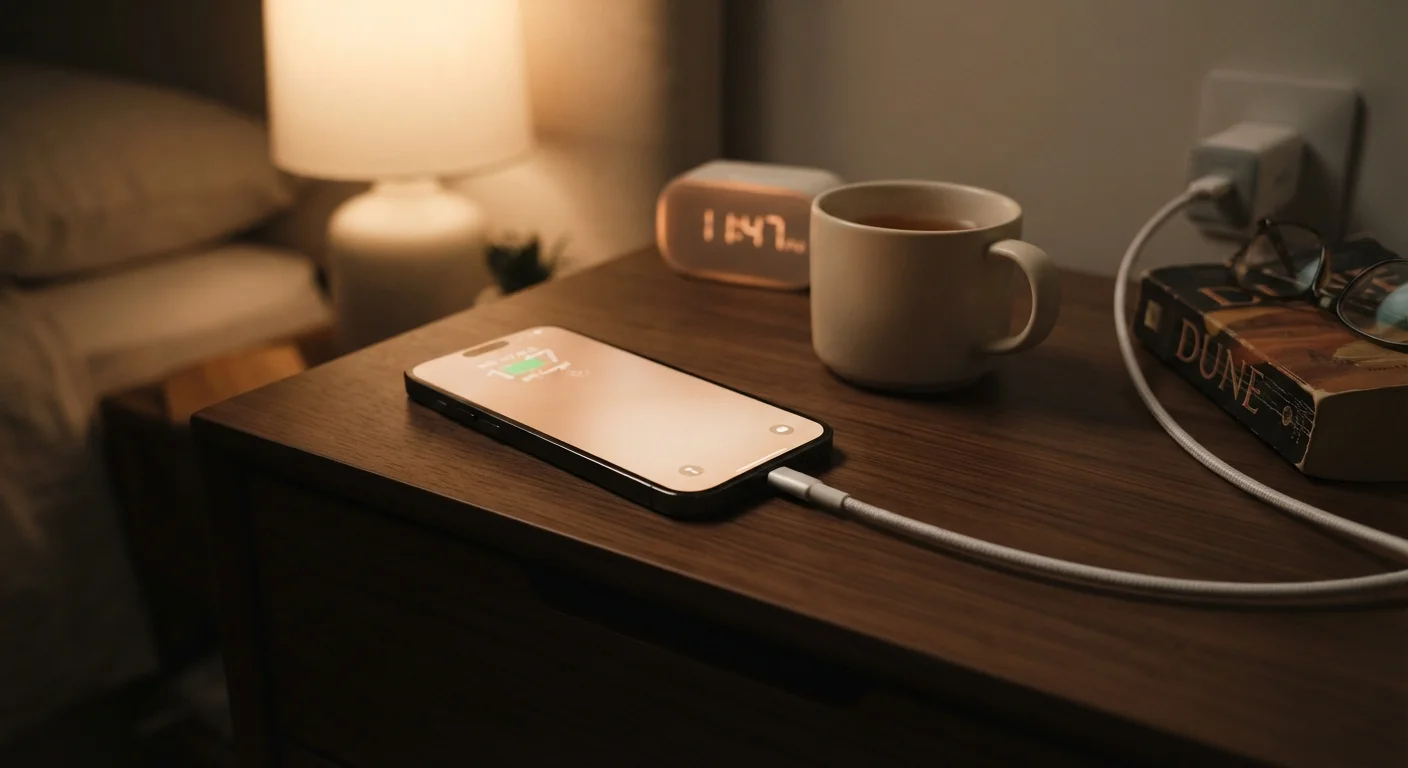
Why Old Charging Advice No Longer Applies
A generation ago, people were told to fully drain their phone batteries before recharging and to never leave a device plugged in overnight. That advice made sense - for nickel-cadmium and nickel-metal hydride batteries, which suffered from a well-documented "memory effect" that reduced usable capacity when regularly partially charged.
Today's smartphones use lithium-ion (or lithium-polymer) cells, which behave very differently. These chemistries have no memory effect, and the charging rules built around older technology simply don't apply. Yet the old guidance persists, passed down like folk wisdom long after the underlying technology changed.
Understanding what the evidence actually shows about lithium batteries helps you make smarter decisions - and stop worrying unnecessarily. For a deeper look at building good long-term habits, see our guide to keeping your phone battery healthy over the long haul.
Myth
You should always drain your phone to 0% before charging it again.
Fact
Lithium-ion batteries have no memory effect. Frequent full discharges actually stress the battery more than partial top-ups.
The "drain to zero" rule came from older nickel-cadmium batteries, which developed a memory effect if regularly charged from a partial state. Lithium-ion cells work differently - their chemistry is stressed by deep discharge cycles, not helped by them. Battery researchers generally recommend avoiding regularly dropping below 20% charge to preserve long-term capacity.
Myth
Leaving your phone plugged in overnight will overcharge and damage the battery.
Fact
Modern smartphones stop actively charging once they reach 100% and are designed to handle being plugged in while idle.
Phones built in the last several years include charge management circuits that cut off the primary charge current when the battery is full. Some manufacturers have gone further, introducing software features that intentionally hold the battery at around 80% overnight and complete the final charge just before the user's typical wake time - reducing the time spent at maximum charge, which is where lithium cells experience the most chemical stress.
Myth
Using your phone while it charges is harmful to the battery.
Fact
Normal use during charging does not damage a lithium-ion battery, though heavy tasks combined with charging can generate extra heat.
Casually browsing, messaging, or streaming while plugged in poses no meaningful risk to battery chemistry. The concern worth noting is heat: running a graphically intensive game or recording video while charging causes both the processor and battery to generate warmth simultaneously. If the device becomes noticeably hot during this kind of combined load, giving it a rest is sensible - not because of the charging itself, but because sustained high temperatures are the real long-term stressor.
Myth
Fast charging is always bad for your battery and should be avoided.
Fact
Fast charging adds modest extra wear over time, but manufacturers design charging circuits to manage this, and occasional use is unlikely to cause meaningful harm.
Higher charging currents do generate more heat, and heat does affect battery longevity. However, modern fast-charging implementations typically taper the charge rate significantly once the battery exceeds 80%, limiting heat exposure during the most chemically sensitive part of the charge cycle. Using fast charging situationally - when you genuinely need a quick top-up - is a reasonable trade-off. Relying on it exclusively every day over years may contribute marginally faster degradation, but it is not the catastrophic battery killer it is sometimes portrayed as.
Myth
Third-party chargers always damage your battery or phone.
Fact
Chargers that meet established safety and power-delivery standards are generally safe; the real risk comes from uncertified, low-quality products.
The meaningful distinction is certification, not brand. Chargers that carry recognized safety certifications and properly implement USB Power Delivery standards communicate with the phone's charge controller to deliver appropriate voltage and current. Cheaply made, uncertified chargers - often sold at very low prices with no verifiable compliance markings - pose the genuine risk of improper power delivery, overheating, or in rare cases, safety hazards. Checking for recognizable safety certification marks is more useful guidance than simply insisting on manufacturer-branded accessories.
What Actually Affects Battery Health
Once the myths are cleared away, a clearer picture of genuine battery stressors emerges. Battery researchers consistently identify heat as the primary enemy of lithium-ion longevity. Charging a phone while it sits in direct sunlight, leaving it in a hot car, or running processor-intensive tasks while it charges all generate heat that accelerates chemical degradation inside the cell.
~20%
Capacity loss after 500 full charge cycles
Battery researchers commonly cite approximately 20% capacity loss after 500 full discharge cycles for typical lithium-ion cells under normal operating conditions.
~4x
Faster degradation at high temperatures
Studies on lithium-ion aging indicate that sustained exposure to elevated temperatures (above 40°C / 104°F) can accelerate capacity loss several times faster than use at room temperature.
Charge cycles also matter, but not in the way most people imagine. A cycle is defined as using 100% of your battery's capacity - which could mean going from 100% to 0% once, or from 100% to 50% twice. Frequent shallow cycles (topping up from 60% to 80%, for example) are actually gentler on the battery than repeated deep discharges.
Fast charging is a genuine, if modest, stressor. The higher current involved generates more heat during the charging process. Most modern phones handle this by slowing charge speeds as the battery reaches higher percentages - a built-in safeguard. For context on how wireless alternatives compare, our article on how wireless charging works and whether it's worth using covers the trade-offs in detail.
Heat Is the Biggest Risk Factor to Watch
Avoid charging your phone in enclosed, hot environments - such as under a pillow, in a car on a warm day, or in direct sunlight. These conditions trap heat around the device and battery, which is far more damaging to long-term capacity than any charging pattern. If your phone feels uncomfortably hot during charging, removing the case temporarily can help dissipate heat more effectively.
If you notice your phone's battery health declining faster than expected, it may be worth reviewing related factors like software and performance. Our article on why your phone slows down over time explains the connection between battery degradation and overall device performance. And when battery health drops significantly, it may be worth checking signs it's time to replace your smartphone to understand whether repair or replacement makes more sense.