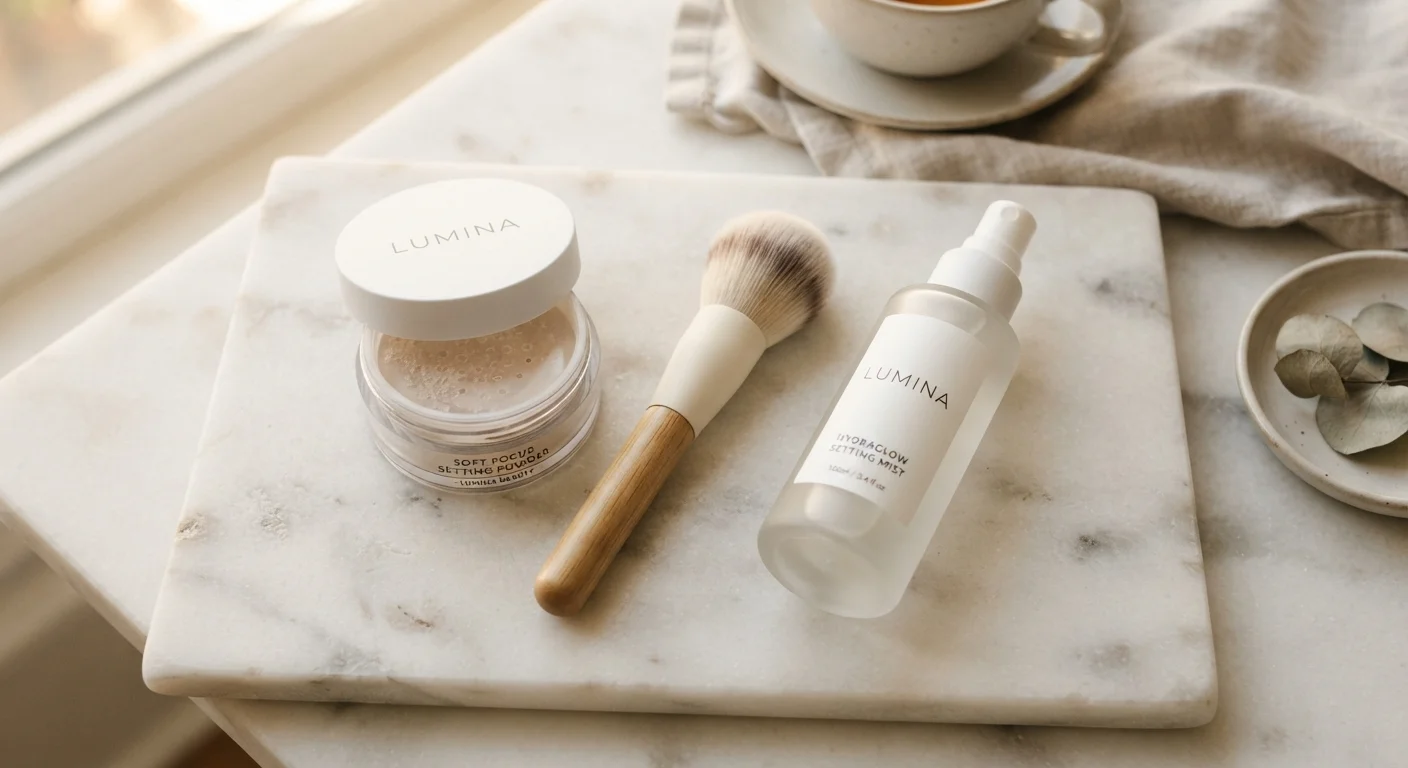
What Each Product Is Actually Doing
Setting powder and setting spray share a common goal - making makeup last - but they achieve it in fundamentally different ways, and confusing the two is one of the most common finishing mistakes in any routine.
Setting powder is a finely milled, dry product that works by physically absorbing excess oil and moisture on the skin's surface. It creates a barrier between your skin and the environment, reducing transfer and keeping cream or liquid products from moving. The result is typically a matte or satin finish, depending on the formulation. Translucent versions work across most skin tones; tinted powders can also add light coverage.
Setting spray is a liquid mist - usually water-based - that locks makeup through a film-forming process as it dries. Rather than adding texture, it actually reduces the powdery appearance on skin, "melting" layers together for a more seamless, second-skin look. Many formulas also contain humectants or glycerin that add a hint of hydration.
Good skin prep before makeup still does the heavy lifting - no finishing product fully compensates for skipped moisturizer or primer.
| Criterion | Setting Powder | Setting Spray |
|---|---|---|
| Primary function | Absorbs oil, sets cream products | Melds makeup layers, adds longevity |
| Finish | Matte to satin | Natural, dewy, or matte (varies) |
| Best skin type | Oily or combination | Dry, mature, or any type |
| Application method | Brush or sponge pressed onto skin | Misted from 8-12 inches away |
| Mid-day use | Can add product buildup over time | Refreshes without adding layers |
| Works with | Cream, liquid, and concealer | All finished makeup looks |
| Risk of over-application | Cakiness, ashiness on deep tones | Streaking if too close or too much |
When to Use One, the Other, or Both
The most useful framing isn't "which is better" - it's "which problem am I solving?"
Reach for setting powder when:
- Your skin produces oil that breaks down foundation within a few hours
- You're using cream blush, contour, or concealer that needs to be locked in place
- You want to bake under-eye concealer for a brighter, crease-resistant finish
Reach for setting spray when:
- You want makeup to look like skin rather than a product sitting on top of it
- You've used too much powder and want to soften the finish
- You need a midday refresh without touching up foundation
- Your skin is dry or textured and powder settles into fine lines
You can absolutely use both - and many makeup artists do. The sequence matters: apply powder first to absorb oil and set products, then mist spray over the top to meld everything and adjust the finish. This combination often gives the best longevity without sacrificing a natural look.
~60%
Of makeup wearers report midday shine as a top concern
Consumer surveys on makeup longevity consistently identify oil breakthrough as among the most common frustrations for foundation wearers.
2-in-1
Powder then spray: the most common pro finishing sequence
Many professional makeup artists apply translucent powder first to set, then finish with a setting spray to meld and adjust the final texture.
Understanding Finish, Skin Type, and Formulation
Not all powders and sprays are identical. Within each category, formulation and finish vary considerably.
Powders range from ultra-matte (best for oily skin) to luminous or "blurring" formulas that diffuse light and minimize texture. Loose powders tend to feel lighter; pressed versions are more portable. Some are designed specifically for deeper skin tones to avoid an ashy cast - if powder leaves a white or grey residue, a tinted or skin-tone-matched formula is worth exploring.
Setting sprays also come in different finish types: dewy, matte, and natural. Dewy sprays lean into a glowy, fresh look; matte-finish sprays add a light oil-control element without the heaviness of powder. Some sprays include ingredients like hyaluronic acid or aloe for added skin comfort - similar in spirit to the watery layers in skincare routines that prep and hydrate before makeup even begins.
Distance and technique matter with spray: holding the bottle 8-12 inches from the face and misting in an X-then-T motion (across cheeks, then forehead to chin) helps distribute product evenly. Let it dry naturally rather than rubbing or pressing it in.
This article is for general informational and educational purposes only. Individual results may vary based on skin type, formulation, and application technique.