Why Pricing Cycles Exist - and Why They're Reliable
Retailers and manufacturers operate on predictable business rhythms: fiscal quarters, model-year calendars, inventory carrying costs, and planned promotional windows. These rhythms create genuine price drops that recur at roughly the same times each year - not because stores are being generous, but because clearing old inventory is a financial necessity.
Understanding this dynamic shifts you from a reactive shopper into a strategic one. Instead of responding to urgency cues manufactured by marketers, you can consult the calendar and wait for moments when the seller's incentive to move product aligns with your desire to pay less. That alignment is real and exploitable - but only if you plan far enough ahead.
For context on how to pair this timing knowledge with active price monitoring, see setting up price-drop alerts that notify you the moment a tracked item hits your target threshold.
High-Value Categories and Their Pricing Windows
Different categories follow distinct cycles. Here are the most reliable patterns across common big-ticket items:
- Major appliances (refrigerators, washers, dryers): New models ship to stores in September and October. Retailers discount prior-year models heavily in that same window and again during holiday weekend sales in November. January white sales offer a secondary opportunity after holiday inventory clearance.
- Consumer electronics (TVs, laptops, tablets): New models typically arrive in late winter and spring. The months just before - and especially the Black Friday-to-January window - see the deepest cuts on outgoing models. Be cautious: verify with price history tools that a listed 'original price' is real, not inflated.
- New vehicles: Model-year changeover happens between August and October. Dealers have a strong incentive to clear current-year inventory before new models arrive. End-of-month and end-of-quarter dates add additional pressure, making those timing windows doubly productive.
- Mattresses and furniture: Presidents' Day, Memorial Day, and Labor Day weekends have become genuine category-wide sale events. Competition among retailers during these windows is high enough to produce authentic discounts rather than manufactured ones.
- Outdoor and seasonal goods: End-of-season clearance follows a simple rule - buy summer gear in August, winter gear in February. Retailers need the floor space and carry-cost math is blunt.
To build a fuller picture of how flash promotions differ from these structural cycles, compare flash sales to seasonal sales before you commit.
Building Your Personal Purchase Calendar
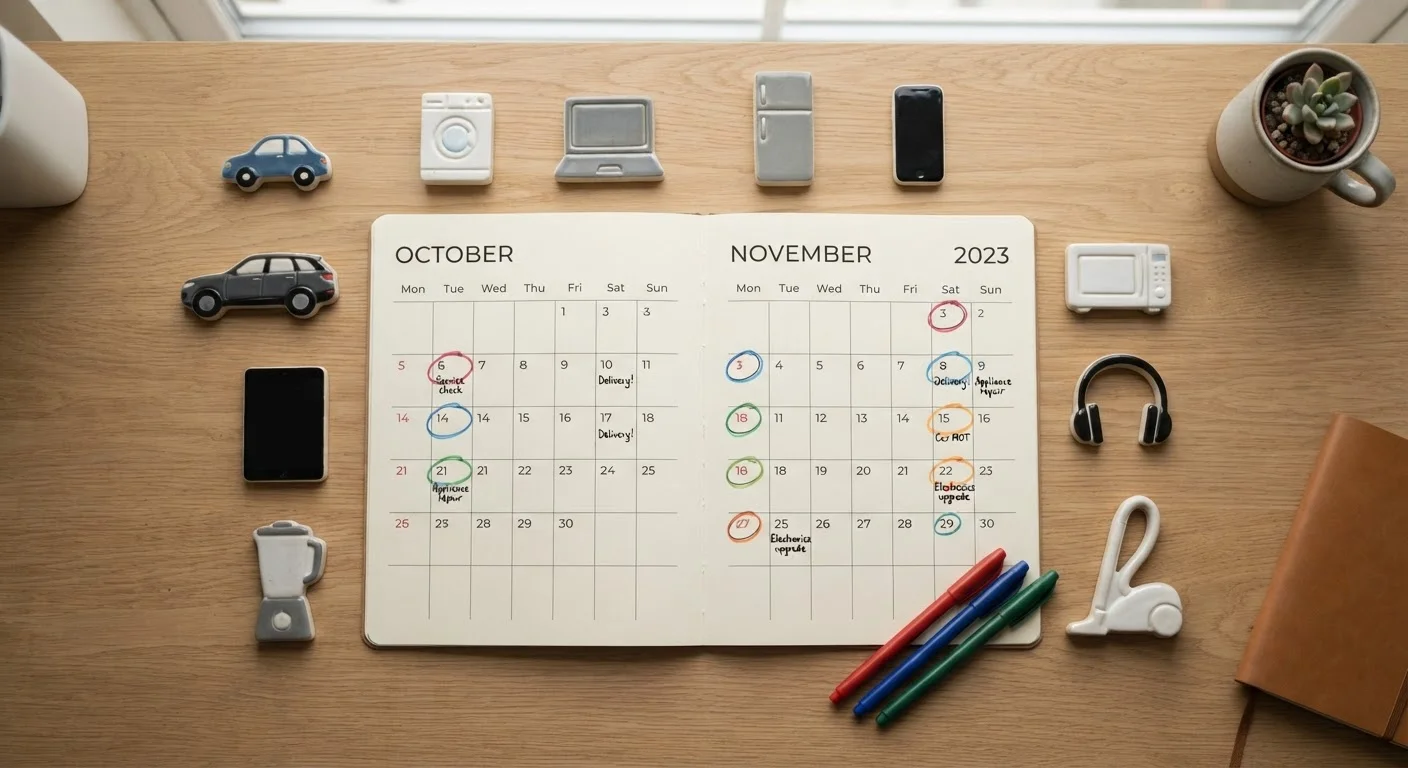
Timing-based savings require one thing above all else: a purchase window that isn't dictated by urgency. If your refrigerator fails in July, you don't have four months to wait for October pricing. That's why the smartest approach is to plan replacements and upgrades before necessity removes your flexibility.
A purchase calendar is simple to maintain. At the start of each year, list any major items you expect to replace or upgrade in the next 12-24 months, note the optimal buying window for each category, and flag those months in your budget planning. This integrates naturally with broader budgeting basics - reserving funds ahead of a known purchase window beats scrambling at the moment of need.
Once you're inside a target window, spend a few minutes building a price-history baseline for the item you want. This takes less time than most people assume and is the clearest way to distinguish a genuine discount from a retagged standard price. If the timing is right and the price history confirms the drop is real, you have the evidence to act with confidence - or to open a negotiation from a position of genuine knowledge.
This article is for general informational and educational purposes. Individual prices, availability, and promotional cycles vary by retailer, region, and year. Verify current pricing independently before making any purchase decision.