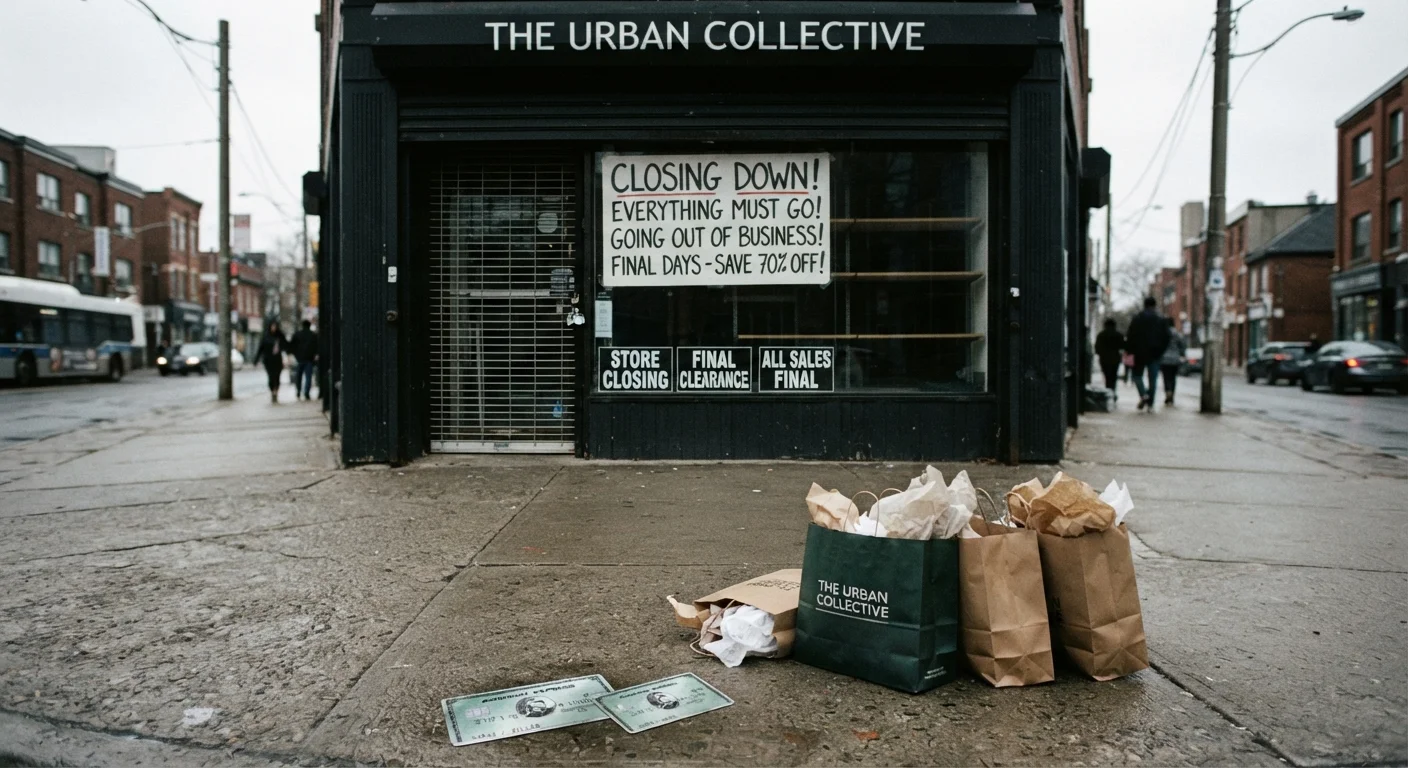
Why This Situation Is More Common Than You Might Expect
Retail closures happen during economic slowdowns, after supply chain disruptions, and when online competition squeezes thin-margin businesses. Consumers are frequently caught mid-transaction - a deposit paid for custom furniture, a prepaid subscription box, an online order placed days before a site goes dark. These are not niche scenarios.
The core problem is timing: you transferred money in good faith, and now the entity you paid no longer exists in a functional way. Your practical options depend heavily on how you paid, how much time has passed, and whether the business filed for bankruptcy or simply stopped operating. Understanding these variables before you act can make the difference between a full refund and an unrecoverable loss.
For a broader grounding in the rights you carry into every purchase, see our complete overview of consumer rights from purchase to return.
60-120 days
Typical credit card chargeback dispute window
Most major card networks allow disputes for non-delivered goods within 60 to 120 days of the transaction date, depending on the network's specific rules.
$0.01-$0.30
Typical cents-on-dollar recovery for unsecured creditors
Consumer bankruptcy cases frequently result in unsecured creditors - including shoppers with outstanding orders - recovering only a small fraction of what they are owed, if anything.
Billions annually
Unredeemed gift card value in the U.S.
Industry research estimates that American consumers leave significant gift card value unredeemed each year, much of which is permanently lost when retailers close.
The Credit Card Chargeback: Your Strongest Tool
If you paid by credit card, the Fair Credit Billing Act (FCBA) gives you the right to dispute charges for goods or services not received. This is commonly called a chargeback. You contact your card issuer, explain that the merchant failed to deliver, and the issuer investigates and typically issues a provisional credit while the dispute is pending.
Key practical points:
- Act quickly. Most card networks set a dispute window of 60 to 120 days from the transaction or statement date. Do not wait to see if the business reopens.
- Gather documentation. Your order confirmation, payment receipt, screenshots of the business closure notice, and any email correspondence all strengthen your case.
- Use the right dispute reason. Specify "merchandise not received" or "services not rendered" - this maps directly to the relevant regulatory category.
Debit card users should act even faster. The Electronic Fund Transfer Act provides some protection, but the timelines are tighter and the process less predictable. If the charge appeared on your statement and you report within 60 days, most banks will investigate.
Always Use a Credit Card for Large Prepayments
For any purchase where full or partial payment is required before delivery - custom orders, pre-sales, subscription boxes - using a credit card rather than a debit card, gift card, or bank transfer gives you the strongest dispute rights. The chargeback mechanism is one of the few consumer protections that operates outside the court system entirely and is typically resolved in weeks, not months.
Navigating a Formal Bankruptcy Filing
When a retailer files for bankruptcy protection, a federal court takes over the wind-down process. A trustee is appointed to distribute assets to creditors in a legally defined order. As a consumer with an undelivered prepaid order, you are generally classified as an unsecured creditor - behind secured lenders and, in some cases, employees owed wages.
That said, doing nothing means you receive nothing. To preserve any chance of recovery:
- Look up the bankruptcy case on the federal PACER system (pacer.gov) using the business name.
- File a proof of claim before the court's deadline. The form is straightforward and does not require an attorney.
- Retain all purchase documentation - it serves as your evidence of the debt owed.
Recovery for unsecured consumers is often cents on the dollar, but filing costs nothing and keeps you in the process. You may also have a parallel chargeback claim running simultaneously - the two are not mutually exclusive, though you cannot ultimately collect more than your actual loss.
Chargeback and Bankruptcy Claims Can Run in Parallel
Filing a chargeback with your card issuer does not prevent you from also filing a proof of claim in a bankruptcy proceeding. However, you cannot ultimately collect more than your actual loss - if the chargeback succeeds, you would need to withdraw or adjust your bankruptcy claim accordingly. Keeping both channels open simultaneously is generally the right approach while the outcome of each remains uncertain.
Gift Cards, Layaway, and Other High-Risk Payment Forms
Not all prepayments carry the same protections. Two situations that leave consumers especially exposed:
Gift Cards
A gift card balance is essentially an unsecured loan to the retailer. When the business closes, that balance may be unrecoverable. Some states require retailers to honor gift cards for 60 to 90 days after announcing closure, and a handful mandate that card proceeds be held in escrow - but most do not. Our article on gift card consumer rights and the CARD Act explains the federal rules that do apply to gift card fees and expiration, even if closure protections remain limited.
Layaway Plans
Layaway agreements vary widely in how they handle merchant default. Some retailers' terms specify that payments are refunded if the business cannot fulfill; others are silent on the issue. The consumer protections for layaway plans depend significantly on what the contract says and your state's rules. Always keep a copy of the layaway agreement itself.
For either situation, if the purchase was made by credit card - even partially - the card payment portion may still be disputable, which is one practical reason to use a credit card even for layaway installments.
Steps to Take Right Now if You Are Affected
Practical sequence for consumers with money or orders outstanding at a closed business:
- Confirm the closure. Check the business's website, social media, and news sources. Look for any notice about bankruptcy filings or liquidation.
- Locate your payment records. Pull order confirmations, credit card statements, bank records, and receipts. Organize them in a single folder.
- Contact your card issuer immediately. Even if the deadline seems distant, file the dispute now. Card issuers are familiar with retailer closures and have streamlined processes.
- File a complaint with your state AG. State attorneys general track patterns of consumer harm. A complaint does not guarantee a refund, but it creates a record and may trigger regulatory action.
- Check for bankruptcy proceedings. If applicable, file a proof of claim before the court deadline.
- Consider small claims court for amounts that fall within your state's limit, particularly if the business still has traceable assets or owners.
Taking proactive steps also matters before a crisis. Our shopper's habit checklist outlines documentation and payment habits that make disputes far easier to resolve.
This article provides general consumer information and educational content only. It is not legal or financial advice. If you are dealing with a significant financial loss or a complex bankruptcy situation, consult a licensed attorney or financial professional in your state.