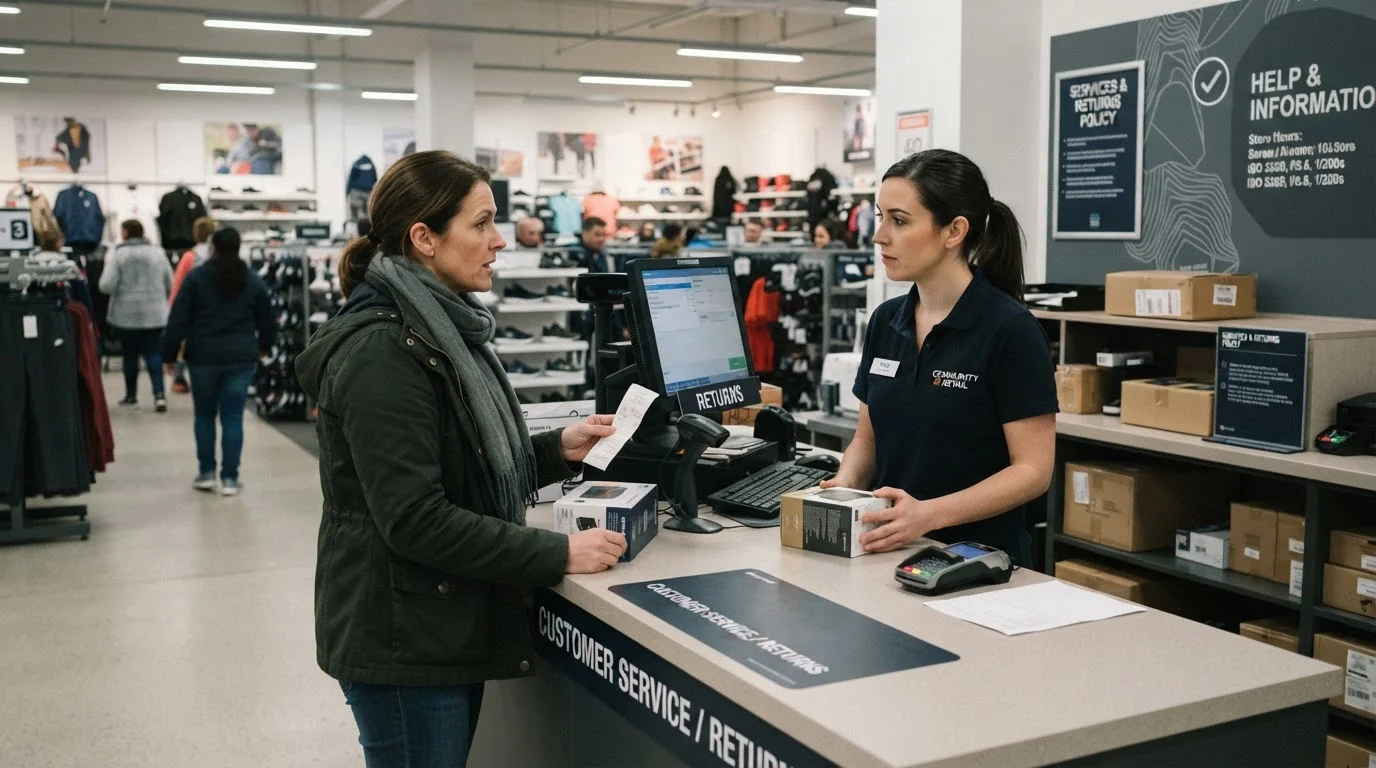
Why the Customer Service Desk Is Designed to Discourage You
Consumer disputes at the return counter are not just logistical-they are social interactions that retailers have spent decades optimizing in their own favor. Staff are trained on store policy, not consumer law. The physical setup, the pace, and the language used are all calibrated to produce quick resolutions that favor the retailer's bottom line.
That doesn't mean retailers are acting illegally. It means the system is structured so that a consumer who knows only what the counter staff says is working with incomplete information. The practical remedy is preparation: understanding both the store's written policy and the legal framework that sits above it before any dispute begins.
~$743B
Annual U.S. retail returns value
The National Retail Federation estimated total U.S. retail returns exceeded $743 billion in 2023, underscoring how central return policy management is to retail operations.
16.5%
Average return rate across retail sectors
NRF's 2023 data placed the average return rate at roughly 16.5% of total sales, giving retailers strong financial incentive to limit accepted returns wherever possible.
The Mistakes That Cost Consumers the Most
The following are the most consistent errors consumers make during post-purchase disputes-and what to do differently. These aren't obscure edge cases; they represent the everyday gaps between what retailers prefer consumers to believe and what consumer protection frameworks actually say.
Accepting 'store credit only' without questioning whether a cash refund is owed.
Why it happens: Customers assume the retailer's stated policy is the legal ceiling, when in practice defective or misdescribed goods may trigger stronger refund rights under state law.
Agreeing to a restocking fee without verifying it was properly disclosed before purchase.
Why it happens: Restocking fees are common enough that consumers treat them as routine, even when the retailer never clearly disclosed the fee at the time of sale.
Resolving disputes verbally at the counter with no written record.
Why it happens: Most people want a fast resolution and default to conversation, not realizing that verbal agreements made at a service desk are nearly impossible to document or enforce later.
Not reading the return policy until something goes wrong with the purchase.
Why it happens: Return policies are rarely front-of-mind when shopping; most consumers review them only when they need to use them-at which point they have less leverage.
Backing down when staff invoke urgency or managerial authority to close the dispute quickly.
Why it happens: Social pressure at a busy service counter makes consumers feel that pushing back is unreasonable or confrontational, even when their position is legitimate.
Awareness of in-store pressure tactics also helps-the same dynamics that drive impulsive purchases at checkout reappear at the returns desk in a different form.
Escalation Paths Retailers Hope You Don't Use
When a service desk conversation stalls, most consumers walk away. That's the outcome retailers count on. There are, however, well-established escalation channels that consumers routinely underuse:
- Chargeback through your card issuer: If a merchant fails to honor a refund you're legitimately owed, your credit or debit card issuer may have a dispute process. Chargebacks are not a workaround-they are a consumer protection mechanism built into the payment system. Note that time limits apply and documentation matters.
- State attorney general consumer protection offices: Most states maintain free complaint portals. A filed complaint creates a formal record and, in some cases, prompts the retailer to resolve the issue directly to avoid regulatory attention.
- The Consumer Financial Protection Bureau (CFPB): For disputes involving payment accounts or financing, the CFPB accepts consumer complaints and forwards them to the relevant company for a required response.
Don't Accept 'Policy' as a Legal Answer
Staff may say 'it's our policy' as though it settles the matter, but internal policies are not laws. If a product is defective, implied warranty protections under the Magnuson-Moss Warranty Act and state law may apply regardless of what the return counter says. Always distinguish between what a store prefers to do and what it is legally permitted to do.
None of these channels guarantee a specific outcome, and results depend on the facts of each case. What they share is that they shift the dispute from a verbal exchange-where retailers have all the structural advantages-to a documented process where your record of events matters.
Policy Displays Don't Always Equal Enforcement
A retailer posting a return policy on a sign or receipt does not automatically make every clause enforceable. Consumer protection laws-which vary by state-can override certain terms, particularly around defective goods or undisclosed fees. If you believe a policy clause is being misapplied, note the exact wording and consult your state attorney general's consumer protection office before accepting a retailer's final word.
For a complete picture of how to approach this in writing, the steps for drafting an effective demand letter walk through what to include and how to send it. And for broader context on making confident purchase decisions from the start, the Buying Smart resource hub covers the frameworks that reduce disputes before they start.