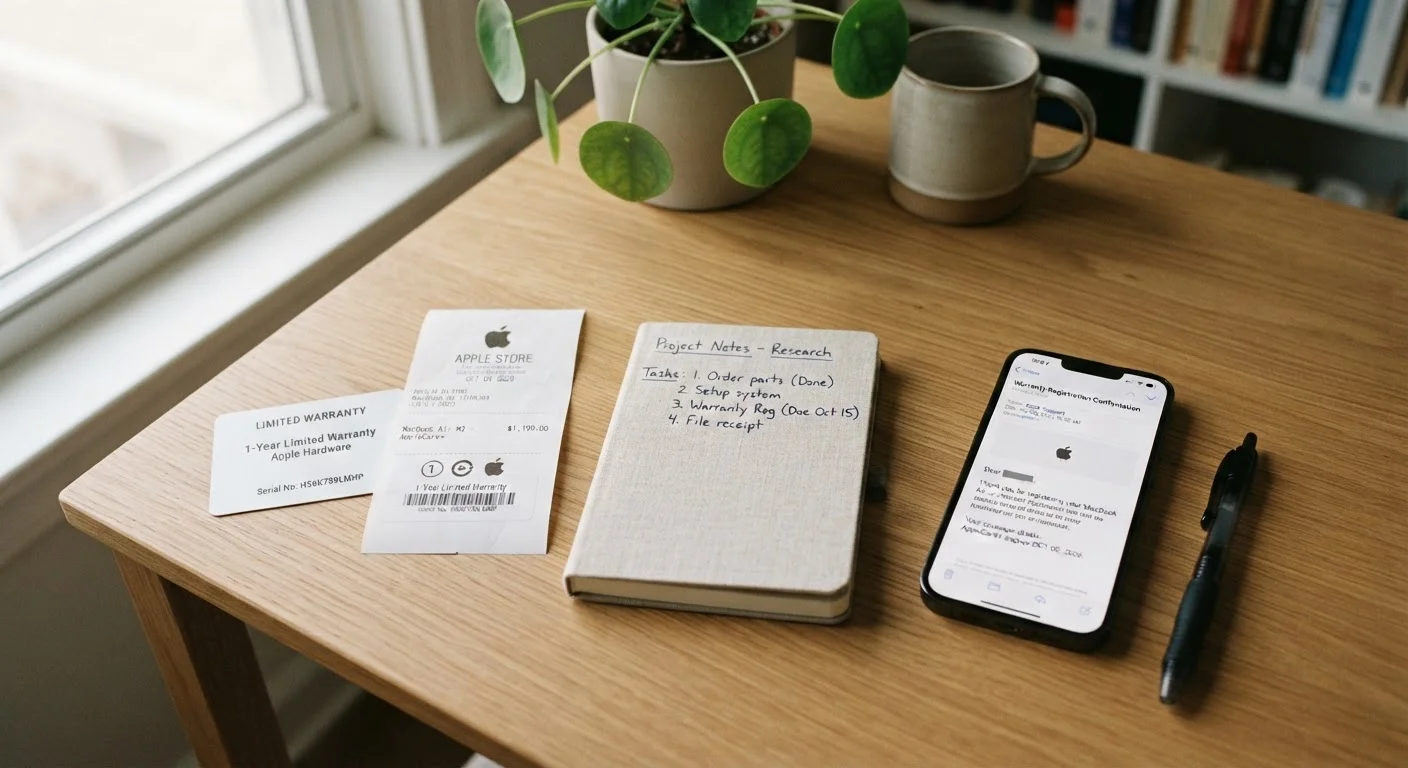
Retaining your original proof of purchase is the single most critical step in any warranty claim.
Written communication creates a paper trail that protects you if a dispute escalates.
Manufacturers and retailers have distinct warranty obligations - knowing which applies matters.
Many warranty claims fail not on merit but on missing or incomplete documentation.
Federal law (the Magnuson-Moss Warranty Act) establishes baseline consumer protections for written warranties on consumer products.
A successful warranty claim depends on more than just timing. Here's a practical walkthrough of what documentation and communication the process typically requires.
Why Most Warranty Claims Stall
A product fails inside its warranty window - and yet the claim gets denied or dragged out for weeks. In most cases, the obstacle isn't the warranty's terms; it's the consumer's preparation. Manufacturers and retailers typically require specific documentation, and without it, even a legitimate defect claim can be dismissed or delayed indefinitely.
Understanding what to gather, how to communicate, and what to submit puts you in a much stronger position. Before diving into the checklist, it's worth knowing that the federal Magnuson-Moss Warranty Act requires written warranties on consumer products to meet certain disclosure standards - which means you have legally enforceable rights, not just goodwill from the seller. For a closer look at common misconceptions about those rights, see common warranty myths that cost consumers money.
Before You Contact Anyone
Locate your original proof of purchase - a dated receipt, order confirmation email, or credit card statement - showing the seller name and purchase price.Must
Find the warranty document itself, either a physical card, a PDF from the manufacturer's website, or the terms embedded in your product registration.Must
Confirm the warranty is still active by checking the purchase date against the stated coverage period.Must
Note the product's model number, serial number, and manufacture date - typically found on a label on the product or in its original packaging.Must
Review what the warranty explicitly covers and excludes, paying close attention to language around accidental damage, misuse, or unauthorized modifications.Must
Photograph or video the defect clearly before contacting anyone, capturing the issue from multiple angles in good lighting.Should
Communicating the Claim
Submit your initial claim in writing - email or a manufacturer's online portal - so you have a timestamped record of first contact.Must
Describe the defect factually and specifically: what the product is supposed to do, what it is actually doing, and when the problem first appeared.Must
Reference the warranty terms in your message, citing the specific coverage clause you believe applies.Should
Keep every reply, reference number, case ID, and representative name in a dedicated folder or document for the duration of the claim.Must
Follow up in writing if you haven't received a response within the timeframe the warranty document specifies (or within 10 business days if none is stated).Should
What to Submit
Attach clear photos or a short video of the defect to your initial claim submission.Should
Include a copy of your proof of purchase - never send originals; always send scans or digital copies.Must
Complete any required claim forms fully and accurately; incomplete forms are a leading cause of processing delays.Must
If the product must be shipped back, use a traceable shipping method and photograph the packaged item before sealing the box.Should
Keep the original packaging if at all possible, as some manufacturers require it for returns or exchanges.Nice to have
If the Claim Is Denied or Stalls
Request the denial reason in writing, specifying which warranty clause the company is relying on to reject your claim.Must
Escalate to a supervisor or the manufacturer's dedicated warranty resolution team, citing your documented timeline and communications.Should
File a complaint with your state attorney general's consumer protection office or the FTC if the company fails to honor a valid warranty obligation.Nice to have
What to Do If Your Claim Is Disputed
If an initial claim is rejected, you have options beyond accepting the decision. First, request the denial in writing, including the specific clause the manufacturer or retailer is citing. That document becomes your basis for escalation.
Verbal Agreements Don't Protect You
If a customer service representative makes a promise - a free repair, a replacement, a refund - get it confirmed in writing before you proceed. Verbal commitments are extremely difficult to enforce, and representatives' assurances are not binding on the company unless documented. Always follow up a phone call with a written summary email asking the rep to confirm what was discussed.
If direct escalation with the company fails, you can file a complaint with the Consumer Financial Protection Bureau (for financial products with warranty components), the Federal Trade Commission, or your state attorney general's consumer protection office. For product disputes under a certain dollar threshold, small claims court is a realistic and often underused avenue - most filings do not require an attorney.
Strong documentation also matters when products break in ways that are hard to articulate. Our guide on how to document a product defect before filing a complaint covers exactly what to photograph, record, and preserve before you make contact with the manufacturer.
Required
Dedicated claims folder (email or cloud)
Store all correspondence, reference numbers, photos, and documents in one accessible location throughout the claim.
Required
Smartphone camera
Photograph or video the defect, packaged returns, and any physical documentation before submitting.
Required
Scanner or scanning app
Create digital copies of physical receipts and warranty cards without submitting irreplaceable originals.
Optional
Traceable shipping service
Provides proof of delivery when returning a defective product to a manufacturer or retailer.
The content on this site is for informational purposes only and is not a substitute for professional advice. Always consult a qualified professional for guidance specific to your situation.