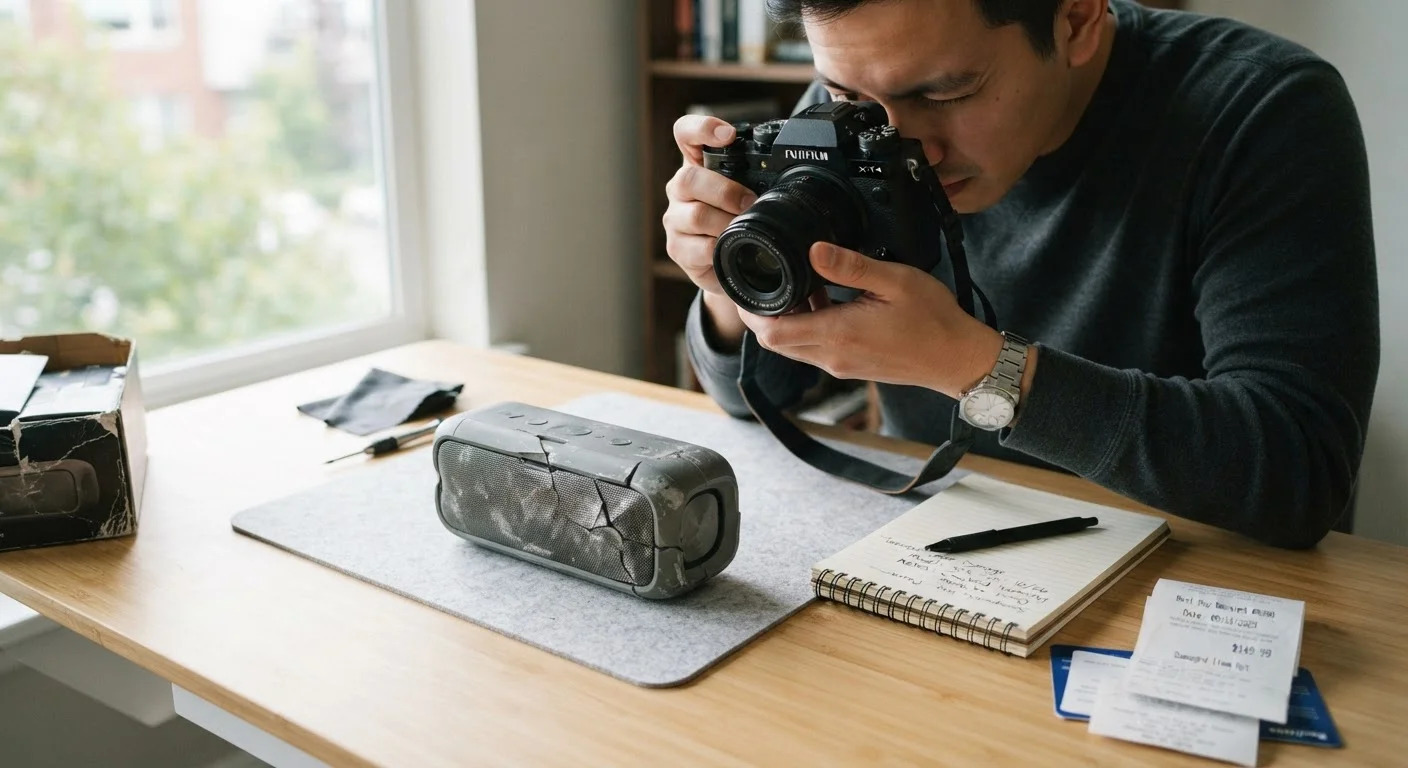
Why Documentation Is the Foundation of Any Successful Complaint
Filing a complaint about a defective product without solid documentation is like going to court without evidence. Retailers, manufacturers, and consumer agencies all require a clear factual record before they can act on your behalf. The quality of your documentation directly affects how quickly - and whether - your dispute is resolved.
This is true whether you're seeking a refund, a warranty replacement, or escalating to a regulatory body. As our guide on escalating a consumer complaint explains, the right agency still needs your facts in order. Gathering evidence before making contact - rather than after - keeps you in control of the narrative and prevents common pitfalls like a seller claiming the damage was pre-existing or caused by misuse.
The checklist below walks you through every documentation step, grouped by phase. Work through it before you make any calls, send any emails, or return any items.
Proof of Purchase
Physical Evidence
Written Timeline
Communications Log
Safety and Regulatory Considerations
Tools You'll Need to Document Effectively
You don't need specialized equipment, but having the right basics organized ahead of time prevents gaps in your record. Review this list before you start.
Smartphone camera
Capture dated, high-resolution photos and video of the defect and overall product condition.
Cloud storage or email account
Back up all photos, videos, receipts, and correspondence so files are accessible and timestamped.
Dedicated folder (physical or digital)
Keep all documentation for the complaint organized in one place so nothing is misplaced before or during the dispute.
Notepad or document app
Write your written timeline and communications log in a format that can be shared or printed if needed.
Scanner or scanning app
Digitize paper receipts, warranty cards, or printed correspondence for inclusion in your digital evidence file.
Common Mistakes That Weaken Your Claim
Even consumers with legitimate grievances sometimes undermine their own cases. The most damaging error is discarding packaging or accessories before a claim is resolved - sellers frequently use the absence of original packaging to deny returns or replacements. Similarly, attempting to fix the defect yourself, even partially, can be cited as evidence that the damage was user-caused.
Do Not Alter the Product Before Your Claim Is Resolved
Attempting to repair, clean, or modify a defective product - even with good intentions - can give sellers grounds to deny your claim by arguing that the damage was user-caused. Keep the product in the exact condition it was in when you discovered the problem. If the product is genuinely dangerous to keep, secure it safely but document its condition fully before taking any action.
Verbal Promises Are Difficult to Prove
Customer service representatives may offer resolutions over the phone that never materialize. Always follow up any verbal commitment with a written email summarizing what was agreed, who agreed to it, and by what date. This creates a paper trail that holds both parties accountable.
A second frequent mistake is delaying documentation. Product conditions change, digital timestamps fade in memory, and sellers may assert that the defect developed after purchase. The moment you notice a problem, treat it as a documentation event - photograph it, note the date and context, and preserve everything as-is.
If you've built the habit of retaining records before problems arise, you're already ahead. The shopper's habit checklist covers the pre-purchase steps that make post-purchase disputes far easier to win. Similarly, if you've ever dealt with a vehicle warranty issue, you'll know how much a consistent record helps - the same principle behind keeping accurate car maintenance records.
Safety Defects Require a Separate Report
If a product caused or could cause physical injury - through fire, electric shock, toxic exposure, or structural failure - your obligation goes beyond a retailer complaint. Report the hazard directly to the U.S. Consumer Product Safety Commission at SaferProducts.gov. These reports feed into formal recall investigations that protect other consumers. Filing with the CPSC does not replace your consumer complaint to the seller; pursue both channels simultaneously.
After Documentation: What Comes Next
Once your documentation package is complete, organize it into a single folder - physical or digital - before reaching out to anyone. Label files clearly with dates and descriptions. Keep copies in at least two locations (for example, cloud storage and a local drive).
When you contact the retailer or manufacturer, present your documented case concisely: describe the defect, reference the purchase date, attach your photos and receipts, and state the remedy you're seeking. Written communication (email or certified letter) is preferable to phone calls because it creates a time-stamped record of every exchange.
If the seller does not resolve your complaint satisfactorily, your documentation package is exactly what consumer agencies and dispute forums will ask for. The process of matching your complaint type with the right authority is covered in our guide to when and where to escalate a consumer complaint.
This article provides general consumer information and education only. It is not legal advice. For questions about specific legal rights, remedies, or regulatory requirements, consult a qualified legal professional.