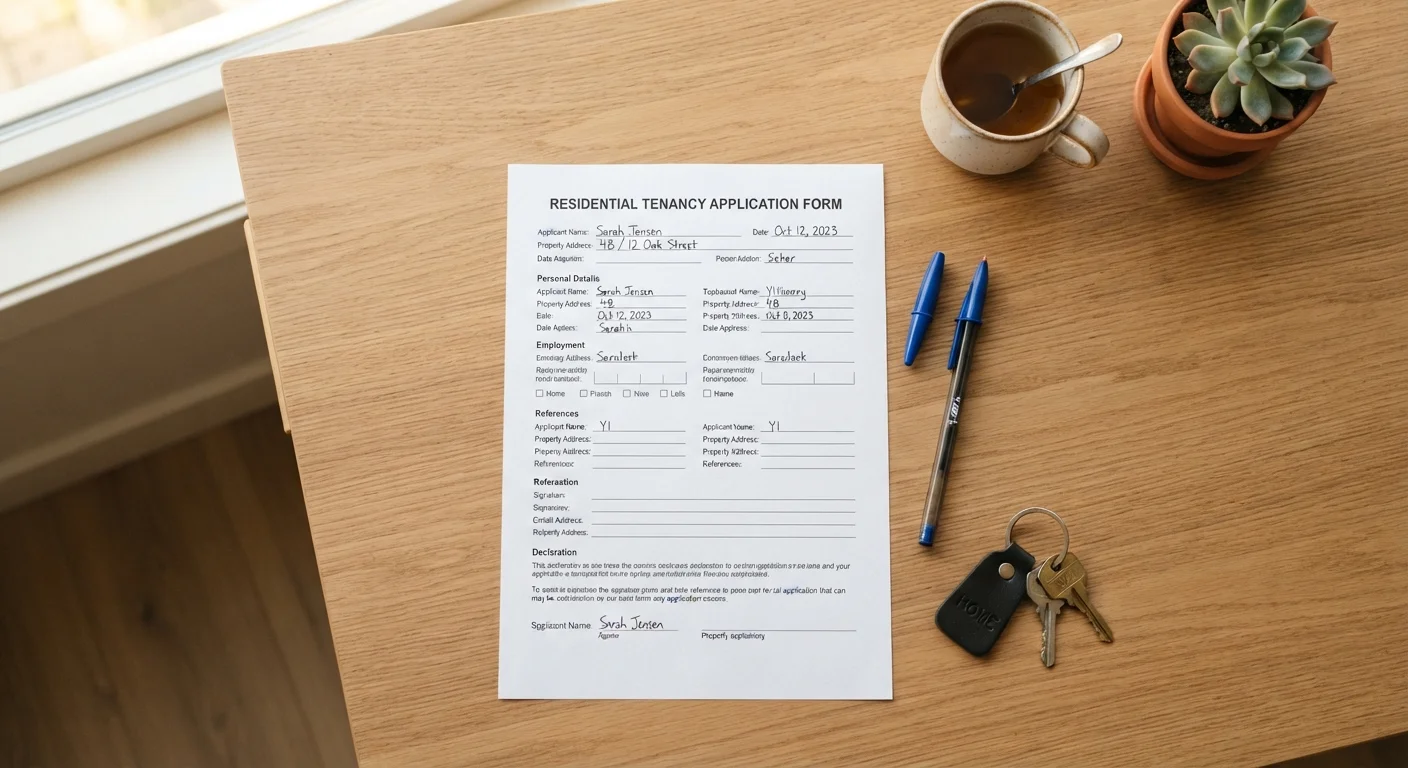
What Landlords Are Actually Looking For
The rental application exists to answer one central question for a landlord: is this person likely to pay rent reliably and take care of the property? To answer it, most landlords and property managers evaluate four core areas.
- Credit history: A credit report reveals how an applicant manages debt - whether they pay on time, carry high balances, or have collections and evictions on record. Landlords don't just look at the score; patterns of late payment are often more telling than a single number.
- Income and employment: Most landlords apply a rent-to-income ratio, commonly requiring gross monthly income of two to three times the monthly rent. Acceptable documentation includes recent pay stubs, offer letters, tax returns for self-employed applicants, or benefit award letters.
- Rental history: Previous landlord references help a prospective landlord assess how you behaved as a tenant - did you pay on time, maintain the unit, and leave on good terms? Eviction records, which appear on background reports, carry significant weight.
- Background check: This typically includes a search for criminal records, though fair-chance housing laws in some cities and states restrict how or when criminal history can be considered.
Understanding the full rental lifecycle - from application through move-out - can help you anticipate each step in this process.
Fair Housing Protections Apply to Every Applicant
Landlords must apply their screening criteria consistently to all applicants. Requiring different documentation, applying different income thresholds, or discouraging applications from members of a protected class all constitute potential Fair Housing violations. If you believe you were denied for a discriminatory reason, you can file a complaint with the U.S. Department of Housing and Urban Development (HUD) or your state's fair housing agency.
The Step-by-Step Screening Process
Once you submit an application and pay any required fee, here is what typically happens behind the scenes.
- Application review: The landlord or property manager confirms the form is complete and all required documents are attached. Incomplete applications are often set aside.
- Third-party screening reports: The landlord pulls your credit report through a tenant screening service and may run a separate background check. These reports are governed by the Fair Credit Reporting Act (FCRA), which gives you certain rights including the ability to dispute inaccurate information.
- Income verification: Pay stubs, bank statements, or employer contacts are cross-checked against the stated income. Some landlords call employers directly.
- Landlord references: Prior landlords may be called or emailed. Questions typically cover payment history, notice given before departure, and any property damage.
- Decision: The landlord weighs the full picture. If approved, you will typically receive a conditional offer and be asked to sign a lease and pay a security deposit within a set window.
Application fees vary by market and property. See our overview of hidden renting costs to understand all the upfront expenses you may face.
Apply With a Complete Package
Landlords process multiple applications simultaneously. Submitting a complete package - ID, income documentation, and reference contacts - on day one puts you ahead of applicants who trickle in missing documents. Ask upfront exactly what is required so nothing stalls your application.
Your Rights and How to Strengthen Your Application
Federal law - specifically the Fair Housing Act and the FCRA - sets a floor of protections for rental applicants. You cannot be rejected based on race, religion, national origin, sex, familial status, or disability. If a credit or background report contributed to a denial, the landlord must provide an adverse action notice so you can review and, if necessary, dispute the underlying data.
Beyond knowing your rights, there are practical steps that can make your application more competitive.
- Check your credit before applying. You are entitled to free credit reports from the three major bureaus. Reviewing them in advance lets you spot and dispute errors before a landlord sees them. Your credit and banking profile shapes how landlords assess financial risk.
- Gather documents in advance. Have recent pay stubs, your most recent tax return, a photo ID, and landlord contact information ready to submit the moment you apply.
- Write a cover letter if your file is thin. A brief, professional note explaining a gap in rental history or a past credit issue - paired with supporting context - can work in your favor with smaller landlords.
- Know the market. In tenant-friendly markets, landlords may be more flexible. Reading local rental market signals before you apply helps you calibrate expectations.
2-3×
Income-to-rent ratio most landlords require
This widely used benchmark - gross monthly income equaling two to three times monthly rent - is a standard screening threshold across the rental industry.
620+
Credit score often cited as a rental minimum
Many property management companies use 620 as a baseline credit score threshold, though requirements vary significantly by landlord and market.
1-5 days
Typical rental application processing time
Most completed applications receive a decision within one to five business days, depending on reference response times and screening service speed.