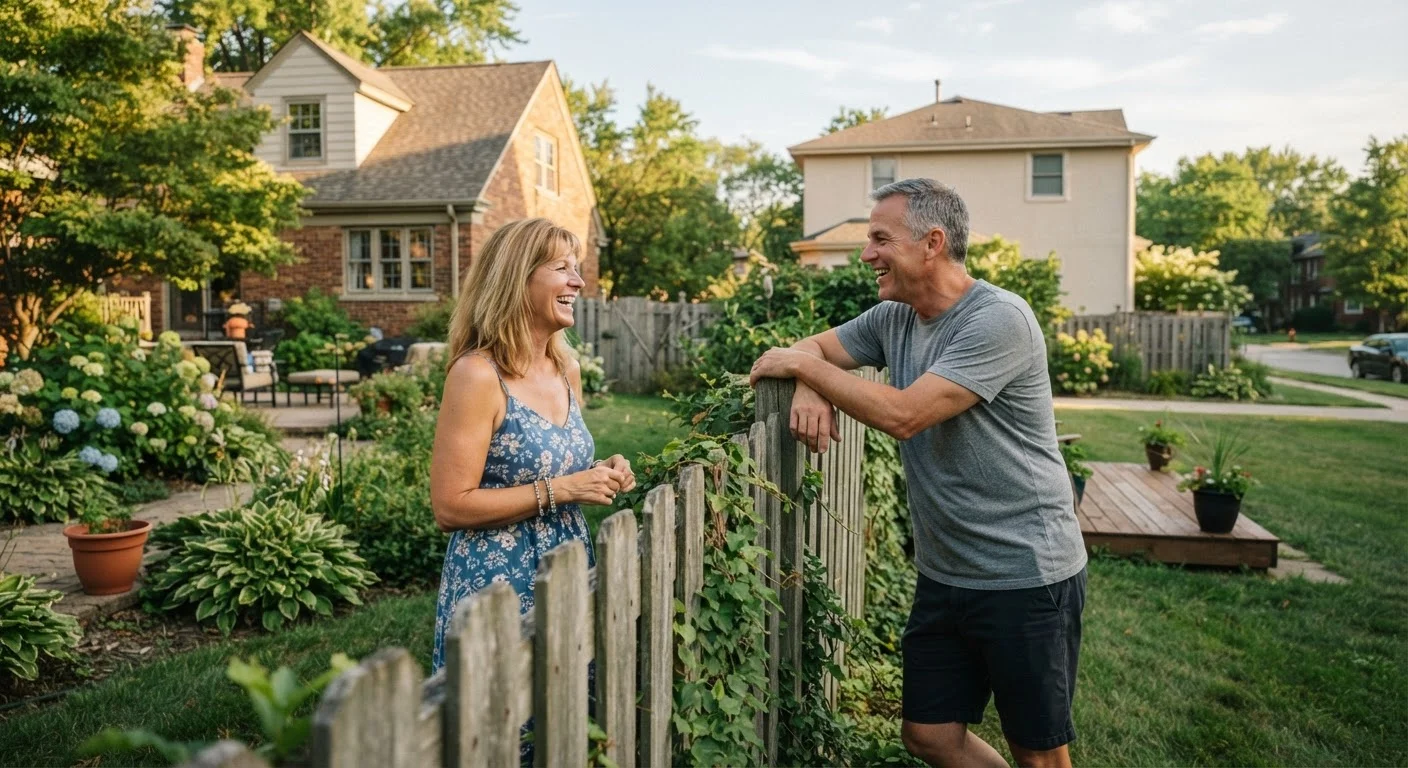
Why Neighbors Are Your Best Research Tool
A listing describes a property. A neighbor describes a life. Current residents have absorbed the street's rhythms in ways no data portal can replicate - they know which side of the building faces the loading dock, whether the landlord fixes things promptly, and what happens on the block on a Saturday night.
Online research can tell you a neighborhood's median income or school rating, but it cannot tell you whether the upstairs unit sounds like a bowling alley or whether the HOA enforces its rules selectively. For that, you need a conversation. Our neighborhood evaluation checklist covers the structural factors to assess; this article fills in the human intelligence layer that only residents can provide.
Approach these conversations respectfully and briefly. Introduce yourself honestly - you're considering moving in and want to get a feel for the area. Most people respond warmly to that transparency. Below are the questions most likely to yield genuinely useful answers.
How long have you lived here - and what made you stay?
Length of residency is a proxy for satisfaction. A neighbor who has lived on the block for eight years and can articulate why is telling you something meaningful. Conversely, if nearly everyone you speak with has been there less than a year, ask yourself why turnover is high. This question also opens the door to unprompted observations - long-term residents often volunteer the most candid neighborhood history without being asked.
Long-term residents often volunteer the most candid neighborhood history without being asked.
What's the noise situation like - day and night?
Noise is one of the leading sources of post-move regret, and it is almost impossible to detect during a daytime showing. Ask specifically about early mornings, weekends, and late nights. Prompt for traffic noise, nearby businesses, event venues, or neighbors with irregular schedules. A simple follow-up - "Does it ever keep you up?" - tends to produce more honest answers than a direct noise complaint question.
Noise is one of the leading sources of post-move regret and nearly impossible to detect during a daytime showing.
How responsive is the landlord or property management?
If you're renting, this question is critical. Ask how quickly maintenance requests are typically handled, whether common areas are kept clean, and whether they've had to escalate issues. For a homeowners association community, ask whether the HOA communicates clearly and enforces rules consistently. Patterns of neglect or selective enforcement rarely improve after you move in. Established neighborhoods and new developments can differ significantly in how governance structures function day-to-day.
Patterns of neglect or selective enforcement in a building rarely improve after you sign the lease.
Is parking ever a problem?
Parking stress is a daily quality-of-life issue that listings consistently understate. Ask whether street parking is consistently available, whether permit rules are enforced, and whether guests can park without circling for 20 minutes. In denser urban neighborhoods, ask whether the garage or assigned spots are genuinely adequate. A truthful answer here can prevent a significant recurring frustration.
Parking stress is a daily quality-of-life issue that listings consistently understate.
Do you feel safe here, and has that changed over time?
Rather than asking for crime statistics - which residents may not know precisely - ask about their felt sense of safety and whether it has shifted. Open-ended phrasing invites nuanced answers: some blocks feel safe but have had a recent uptick in car break-ins; others have improved significantly over five years. Follow up with: "Is there anything you do differently here than you would elsewhere?" The behavioral answer is often more informative than a direct safety rating.
Asking how safety has changed over time reveals trends that a single-point-in-time statistic cannot capture.
What's something you wish you'd known before moving in?
This open-ended question consistently surfaces the most useful information. It gives residents permission to share something they may have hesitated to volunteer - a seasonal flooding issue, a recurring event that shuts down street parking, a shared-wall neighbor with a difficult schedule. You're not asking them to complain; you're asking them to be helpful to someone in your position. Most people respond generously.
This single question consistently surfaces the most useful information a neighbor will share.
Making the Most of What You Hear
One neighbor's experience is anecdote; three neighbors' consistent accounts are evidence. If multiple people independently mention the same parking problem or the same noise issue, treat it as a confirmed data point rather than a complaint. Conversely, isolated grievances may reflect personal conflicts rather than neighborhood-wide conditions.
Time Your Conversations Strategically
Weekday evenings between 6-8 p.m. and weekend mornings tend to catch residents at home and unhurried. Avoid approaching neighbors during obvious rush periods or when they're clearly occupied. A brief, respectful conversation of five to ten minutes is far more productive than a lengthy interrogation - you're building goodwill with a potential future neighbor, not conducting a formal interview.
If you have flexibility in your timeline, consider a rental trial period before committing to a purchase - living in a neighborhood, even briefly, validates or contradicts everything neighbors tell you. For those who cannot visit in person, our guide on researching a neighborhood remotely offers structured alternatives. And when evaluating whether an area suits your daily life, mapping local amenities before you move adds another layer of confidence to your decision.
This article is for general informational and educational purposes only. Real estate decisions involve significant financial consequences; consult a licensed real estate professional, attorney, or financial adviser for guidance specific to your situation.