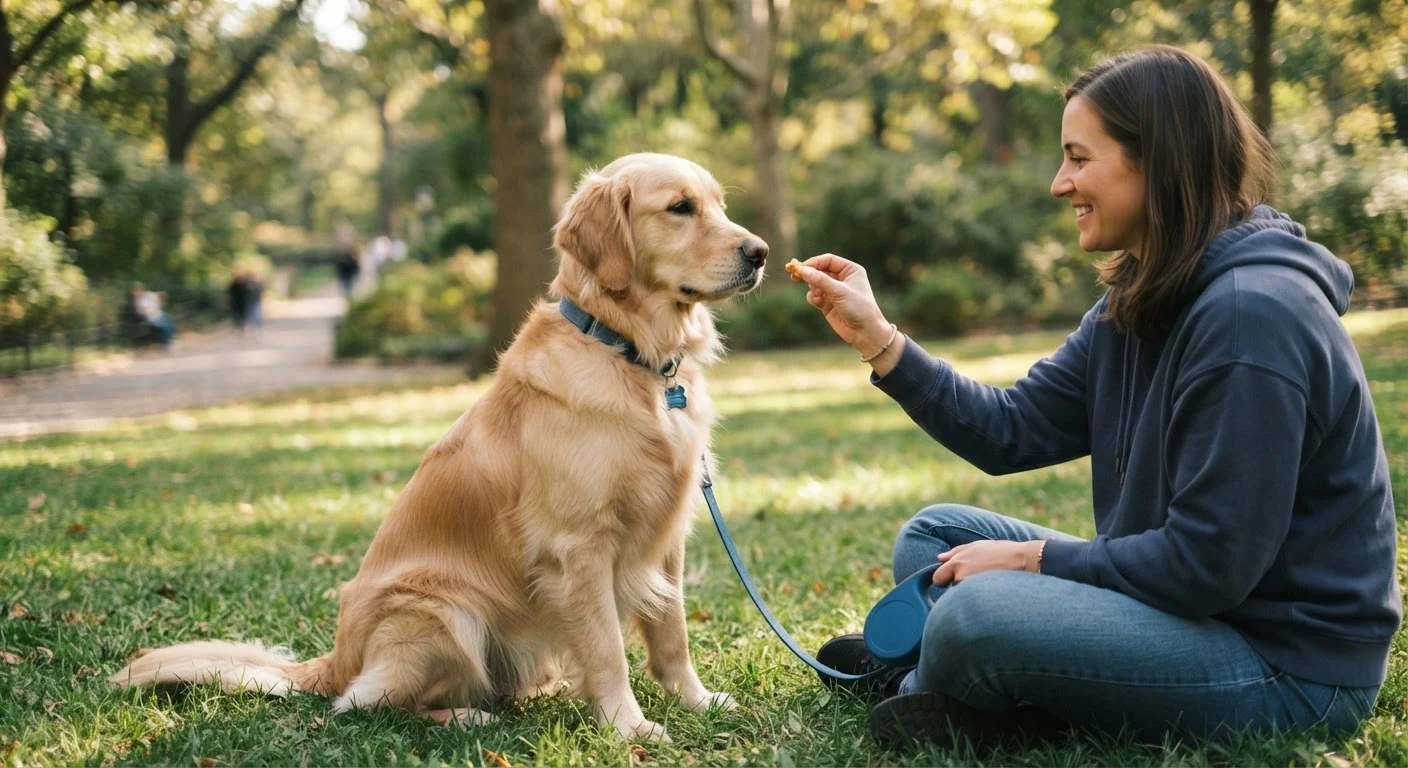
What Treat Refusal Actually Signals
When a dog that normally food-motivated suddenly refuses treats mid-session, most owners assume defiance. Behavioral science points elsewhere. A dog declining food is communicating that something in its internal state or external environment has shifted enough to override the appeal of the reward.
Food motivation exists on a spectrum affected by hunger level, emotional arousal, stress, and the perceived value of the treat relative to competing stimuli. Understanding which variable shifted is the starting point for troubleshooting - and it's a more productive frame than the stubbornness narrative that leads many owners to push harder and make things worse.
Using low-value treats in high-distraction environments.
Why it happens: Owners who train successfully at home assume the same treats will work everywhere. But a dog's competing interests outdoors - smells, other animals, movement - are far more stimulating than dry kibble.
Running training sessions that are too long.
Why it happens: Owners see early success and keep going, not recognizing that a dog's attention and willingness to work have a finite window - typically 3 to 5 minutes for focused repetition work.
Training when the dog is already full from a meal.
Why it happens: Life schedules don't always align with training schedules, and many owners don't consider satiation as a variable affecting food motivation.
Pushing forward when the dog is stressed or over-threshold.
Why it happens: Stress is not always obvious - subtle signs like yawning, lip-licking, and scanning away are easy to miss, especially for newer owners who interpret them as distraction rather than anxiety.
Repeating a cue over and over after the dog stops responding.
Why it happens: Owners interpret non-response as the dog not hearing or understanding, so they repeat the cue. In practice, this teaches the dog that the cue does not require an immediate response.
Rebuilding Motivation After a Flat Session
Once you've identified why engagement dropped, the fix is usually straightforward. End the current session immediately and give the dog a few minutes to decompress - sniffing freely, walking at their own pace, or simply resting. Trying to power through a disengaged dog reinforces frustration on both ends.
Audit your treat inventory. Training treats should be small (pea-sized), soft, and genuinely high-value - chicken, cheese, or commercial soft treats often outperform dry kibble in mid-session motivational value. If the dog has been on the same treat for weeks, novelty alone can refresh interest. Varying reward types - occasionally substituting a quick game of tug or a burst of verbal praise - also prevents the dog from becoming indifferent to any single reinforcer.
3-5 min
Effective focused training session length for dogs
Animal behavior practitioners generally recommend keeping active repetition-based training sessions to 3-5 minutes to maintain motivation and retention.
~10%
Daily caloric intake recommended for training treats
Veterinary nutrition guidance commonly suggests treats make up no more than 10% of a dog's daily caloric intake to avoid dietary imbalance.
For dogs who disengage in distracting environments, the fix isn't persistence - it's distance. Moving farther from the trigger (another dog, a crowd, street noise) often restores the dog's capacity to focus and accept food. Threshold management - keeping the dog below the arousal level where cognitive function shuts down - is the single most effective environmental adjustment available.
If refusal is consistent across sessions, rule out a medical cause. Dental pain, nausea, or a systemic health issue can reduce appetite selectively in high-stress contexts. A brief conversation with a veterinarian is warranted when treat refusal is new, persistent, or accompanied by other behavioral or physical changes.
This article provides general pet care and training information for educational purposes only. It is not a substitute for professional veterinary advice. If your dog shows persistent changes in appetite or behavior, consult a licensed veterinarian.